The Situation
Most of the garage stock around Oregon City went up between 1964 and 2003
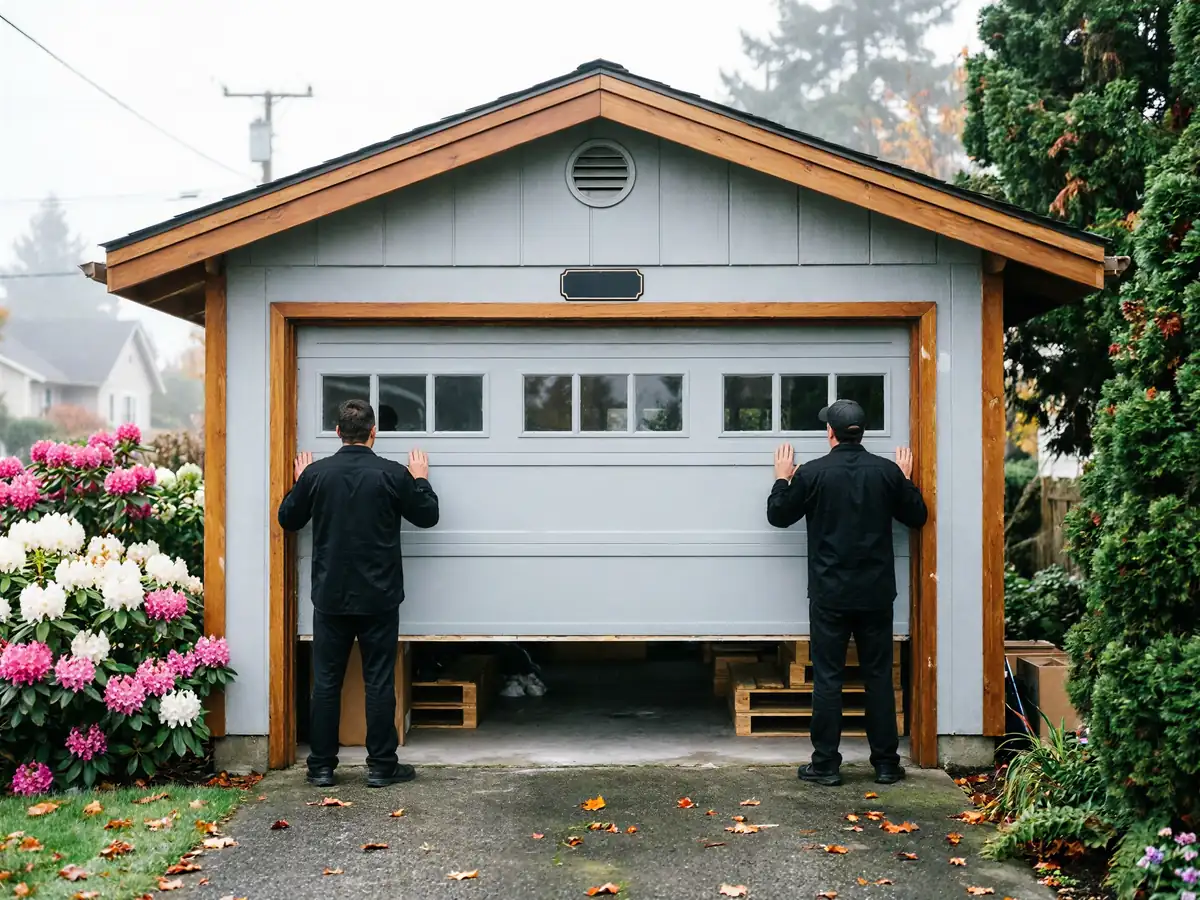
With the median landing close to 1982. That matters more than people think when the power drops. A chain-drive opener from that era usually has a manual release cord but no battery backup built in - backups didn't become common on mid-range units until well after most of these houses were framed. When the power cuts, the door is stuck wherever it was when the lights went out, and the only way through it is the manual release and your own back.
We see two patterns on service calls here
One is an opener that's original or close to it, still running on the house's first motor, where the gears have worn down enough that a power blip causes it to lose its limit settings entirely - it won't just stall, it'll open three inches and stop, or slam. The other is a newer opener bolted onto old track and hardware, which handles outages fine on its own but fights the original springs and rollers it's paired with. Neither is rare in a neighborhood built in the 1980s or 90s, which is most of the area we work in.
The Cost of This Job
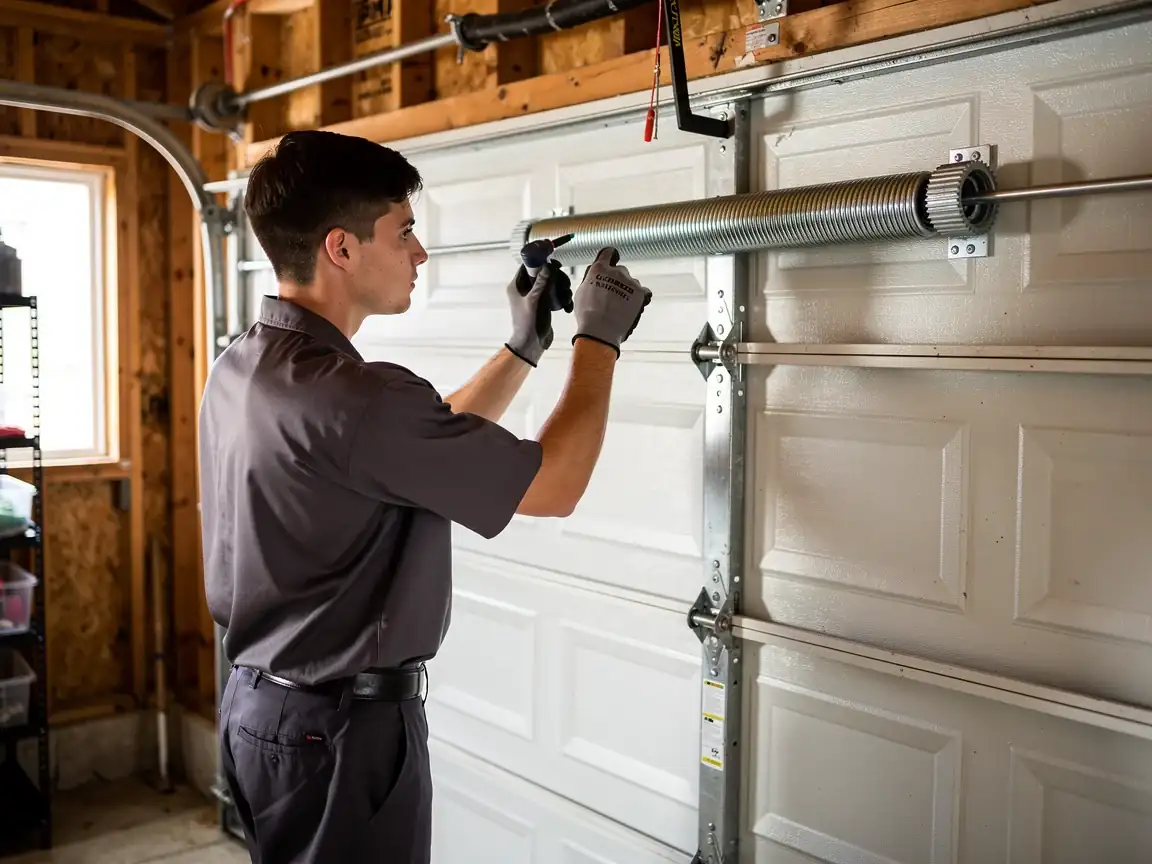
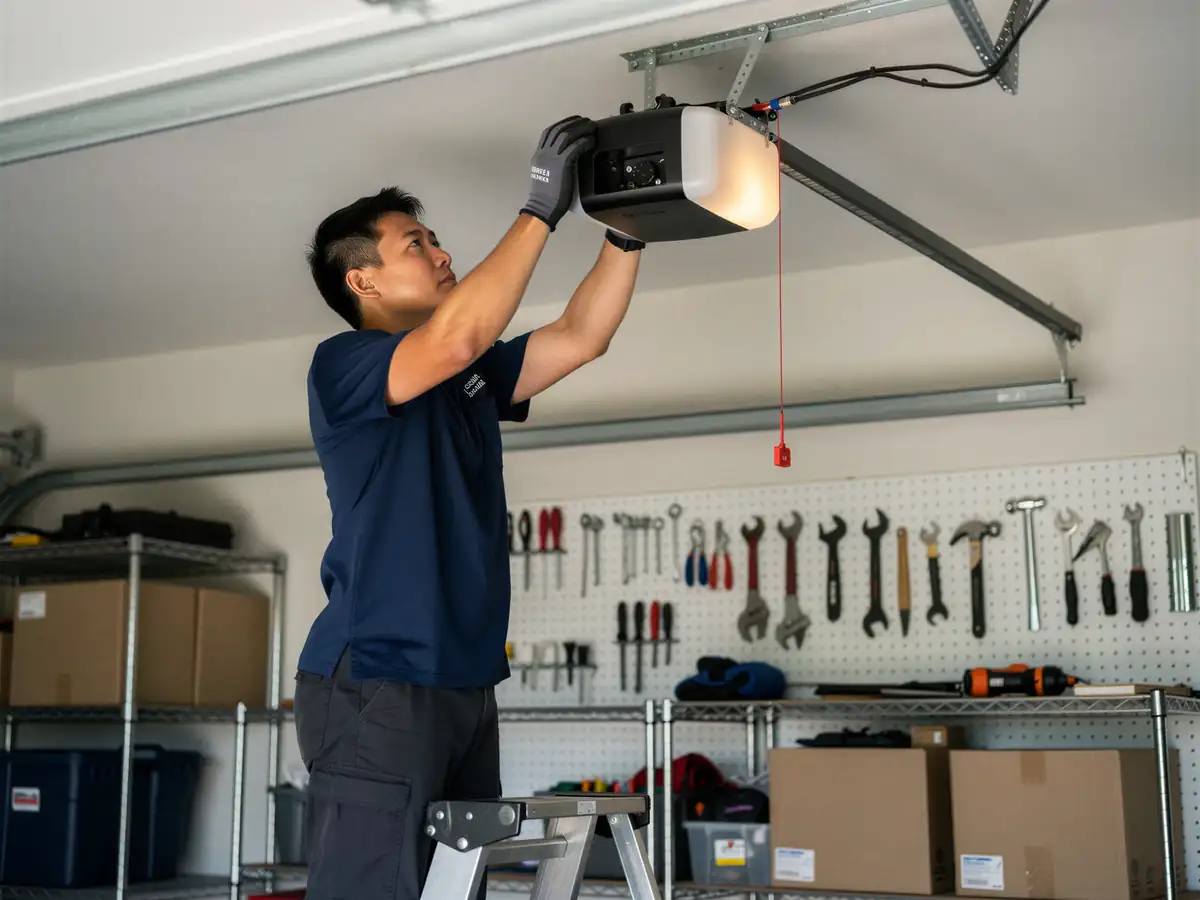
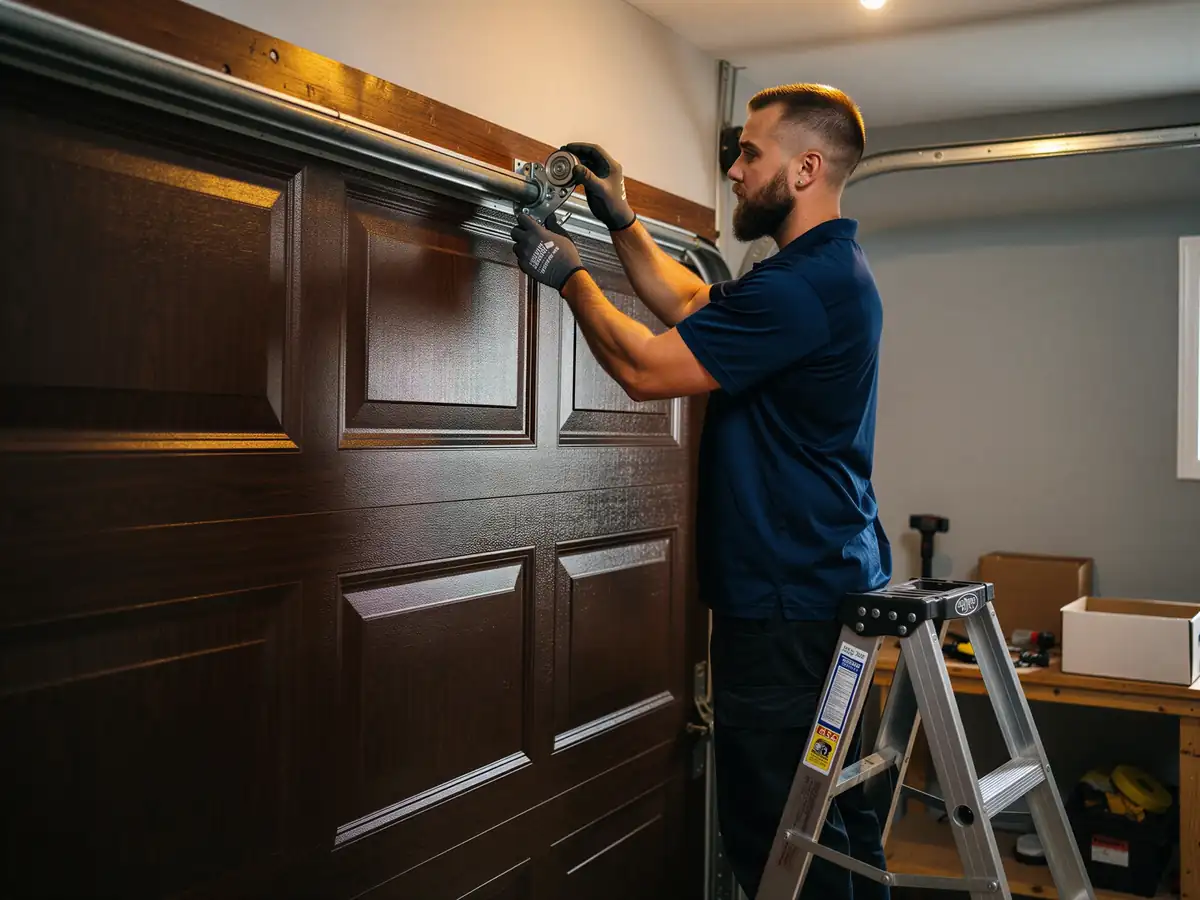
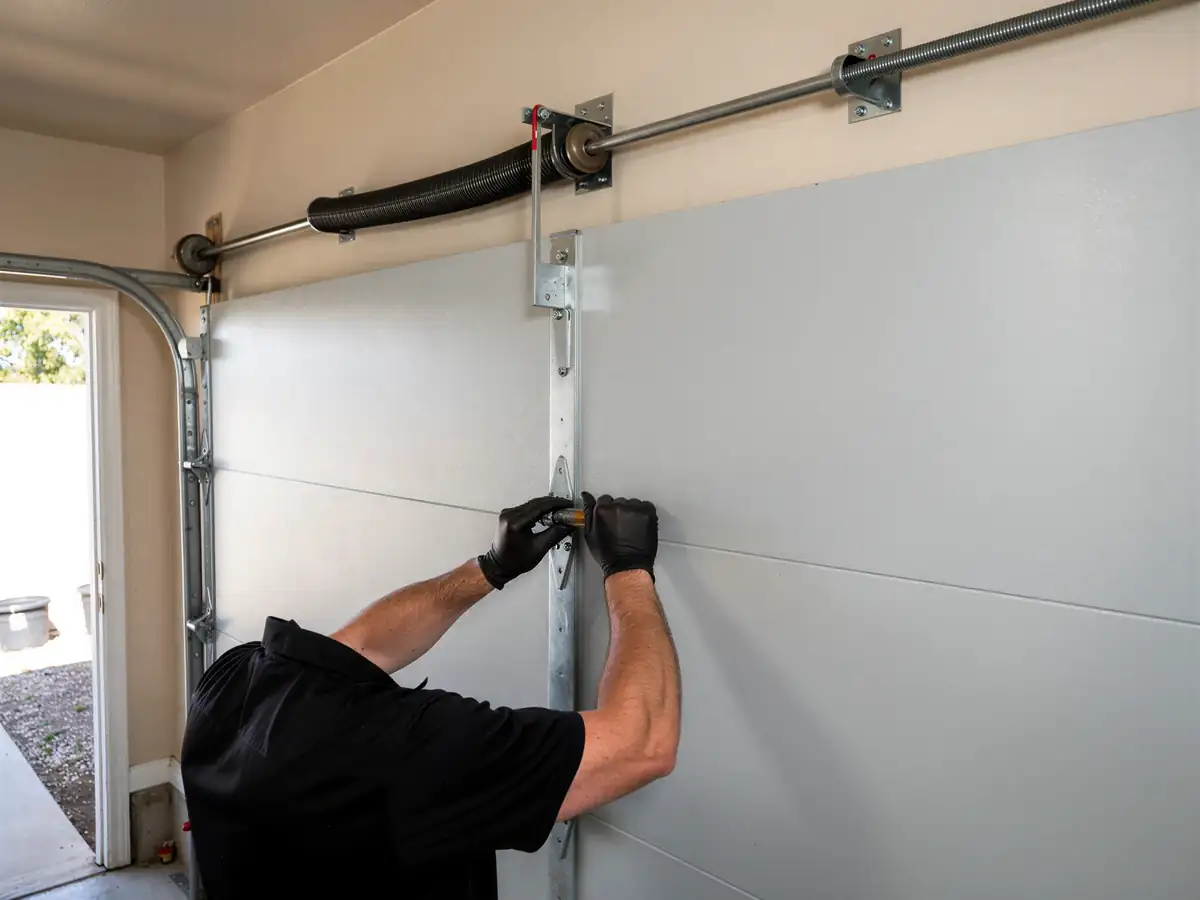
We can't give you a number without seeing the door, and we're not going to pretend otherwise. What we can tell you is what drives the cost up or down. If the opener itself is the only problem - the logic board, the circuit, the battery backup module - that's usually a straightforward swap. If the outage revealed a second problem, like a spring that was already weak and finally gave out when the door got forced open by hand during a blackout, you're looking at two jobs instead of one.
Age cuts both ways here. An opener old enough to match the 1982 median build year on a lot of these houses is often past the point where parts are easy to source - we're not stocking obsolete gear sprockets for units that stopped being made two decades ago, and we'll say so rather than quote you a repair that turns into a wild goose chase. For a lot of these houses, replacement ends up being the honest answer, not because we'd rather sell a new unit, but because the labor to keep chasing parts for an old board usually costs more than just moving to current hardware. With 70,535 owner-occupied houses in the service area and a median household income around $102,201, we try to be straight about which of those two paths you're actually on before you commit to either.
How Local Conditions Play In
The climate here sits in a cold-moderate band - not the deep freeze of the Rockies, but cold enough, often enough, that circuit boards and lubricant matter more than they would somewhere mild. An opener board that's marginal will often pick the coldest week of the year to fail, and a power cut on that same week is when you notice the backup battery (if the unit even has one) isn't holding a charge the way it did when it was new.
Across the broader area we service - from Oregon City out through Gladstone, West Linn, Oak Grove, Stafford, and on to Canby and Molalla - the housing stock runs mostly 1980s and 90s construction, same general cohort as the 1964-2003 range for Oregon City itself. That means a lot of these houses are hitting the age where the opener, the springs, and the wiring are all aging in the same stretch of years. When one fails during a cold snap, the others in the garage aren't usually far behind. It's worth treating a power-cut failure as a reason to look at the whole setup, not just reset the opener and move on.
Checking It Yourself
Before you call anyone, there's a quick check that tells you a lot
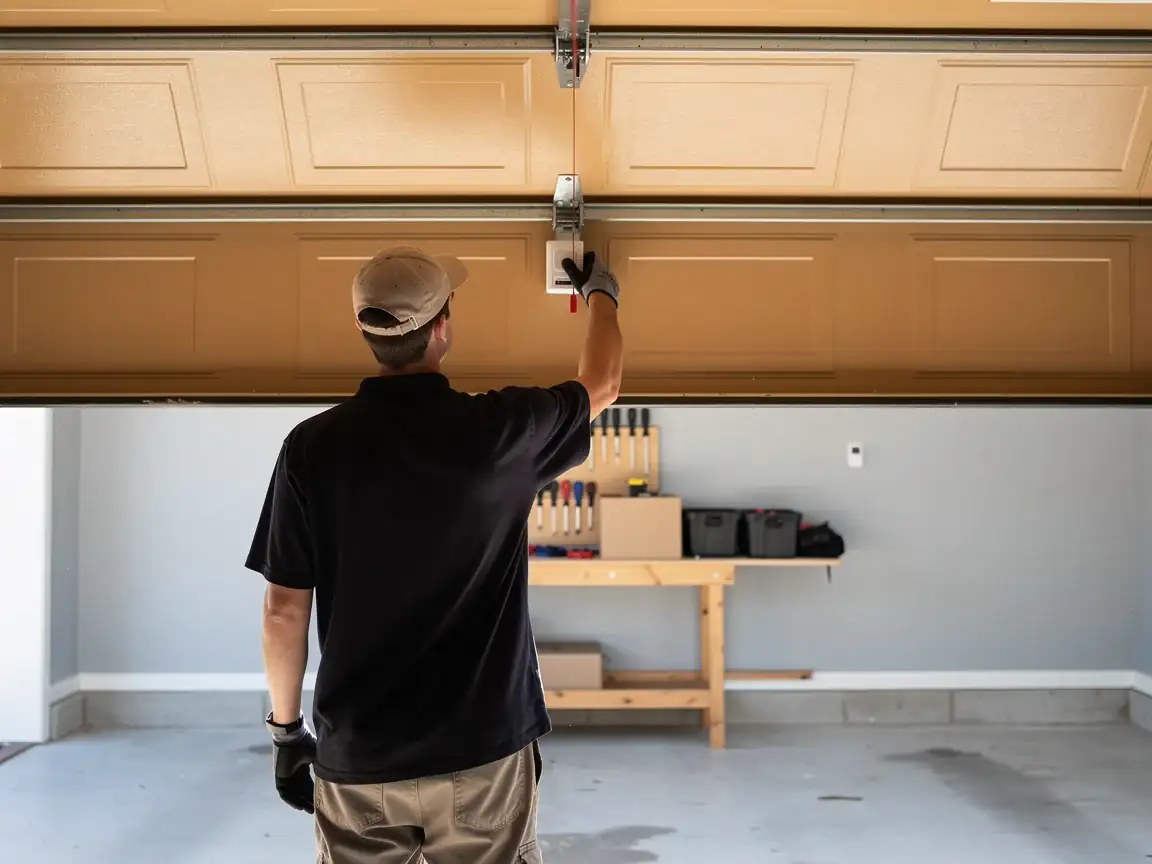
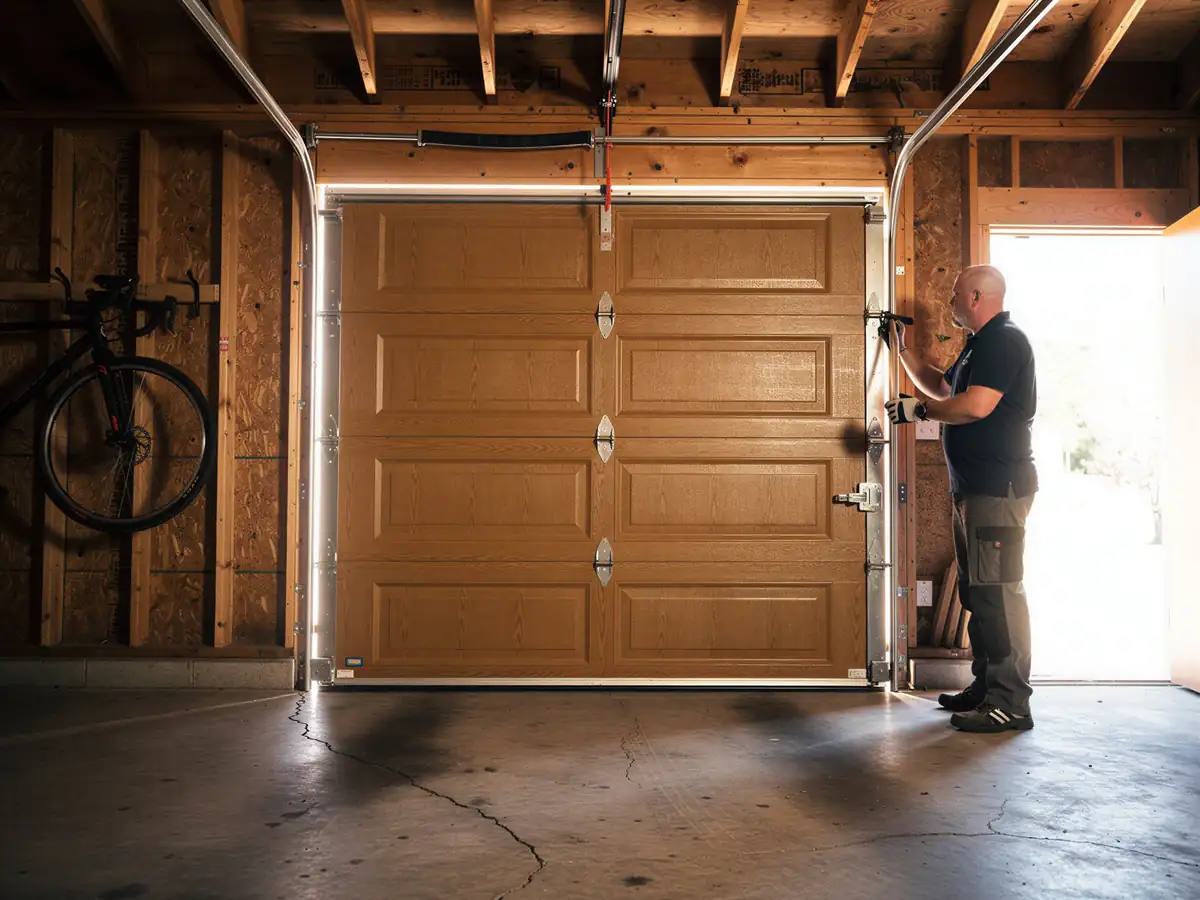
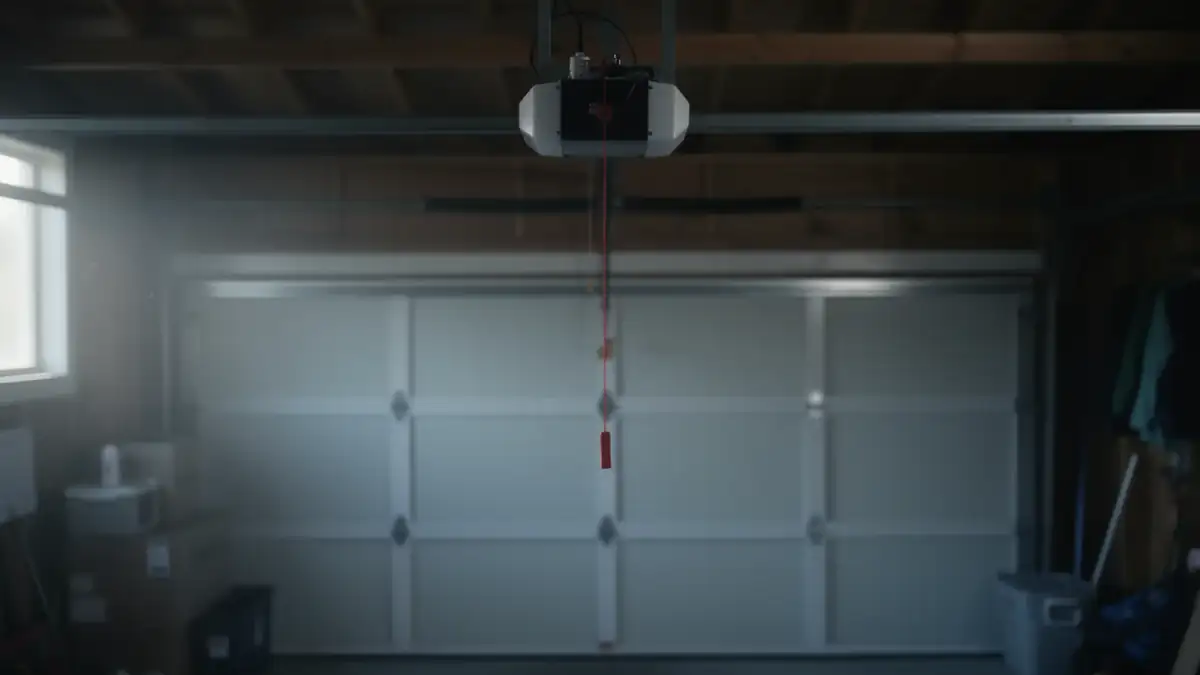
Find the manual release cord - the red handle hanging from the track near the opener head - and pull it with the door closed. If the door moves smoothly by hand and reseats into the release without a fight, your springs are doing their job and the problem is almost certainly the opener, not the hardware. If the door is heavy, drops fast, or won't stay where you leave it, that's a spring issue hiding behind what looked like a power problem.
Next, if your opener has a battery backup light
Check whether it's actually been lighting up during outages or just sitting there unlit. A backup that's present but dead is common enough in older installs that it's worth testing on purpose rather than finding out during the next outage. And if you've got an older chain-drive unit with no backup at all, know that going in - it's not a defect, it's just the generation of opener a lot of houses built in this area ended up with, and it changes what your options are when the power does go out.