Why It Happens Here
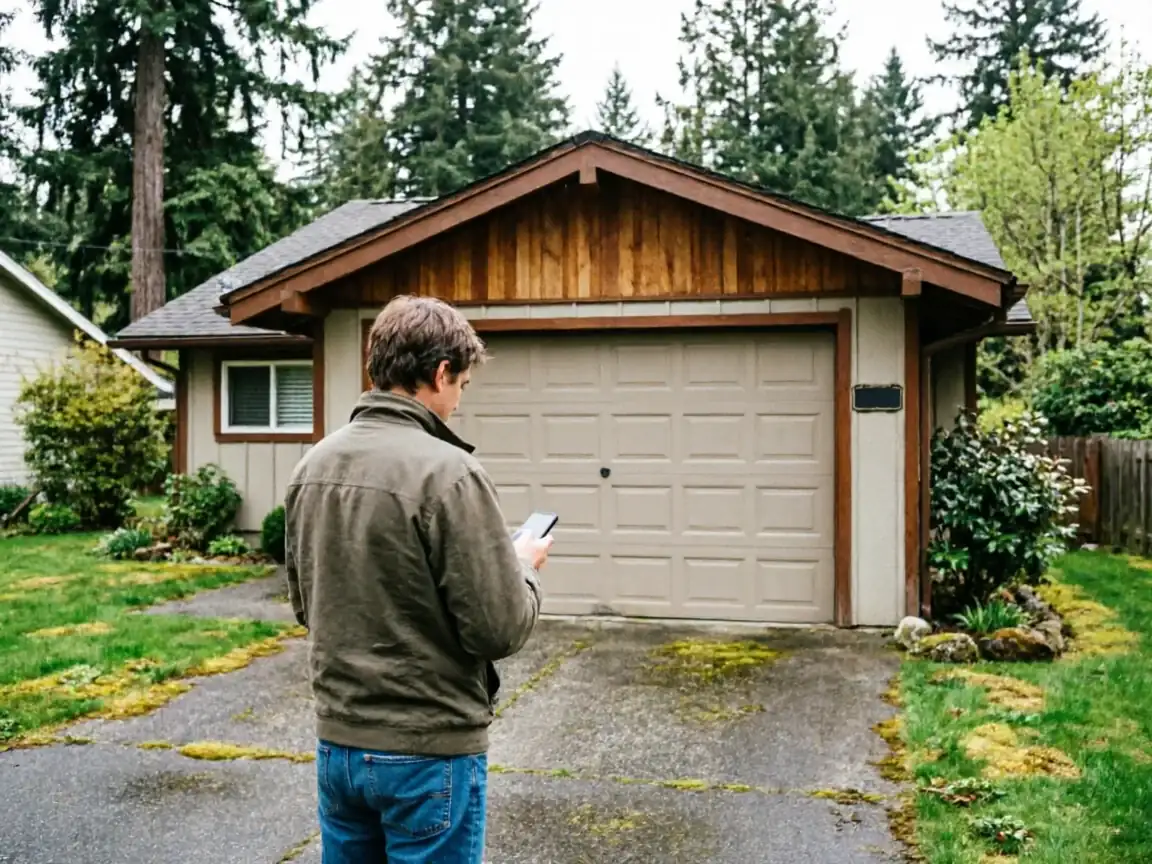
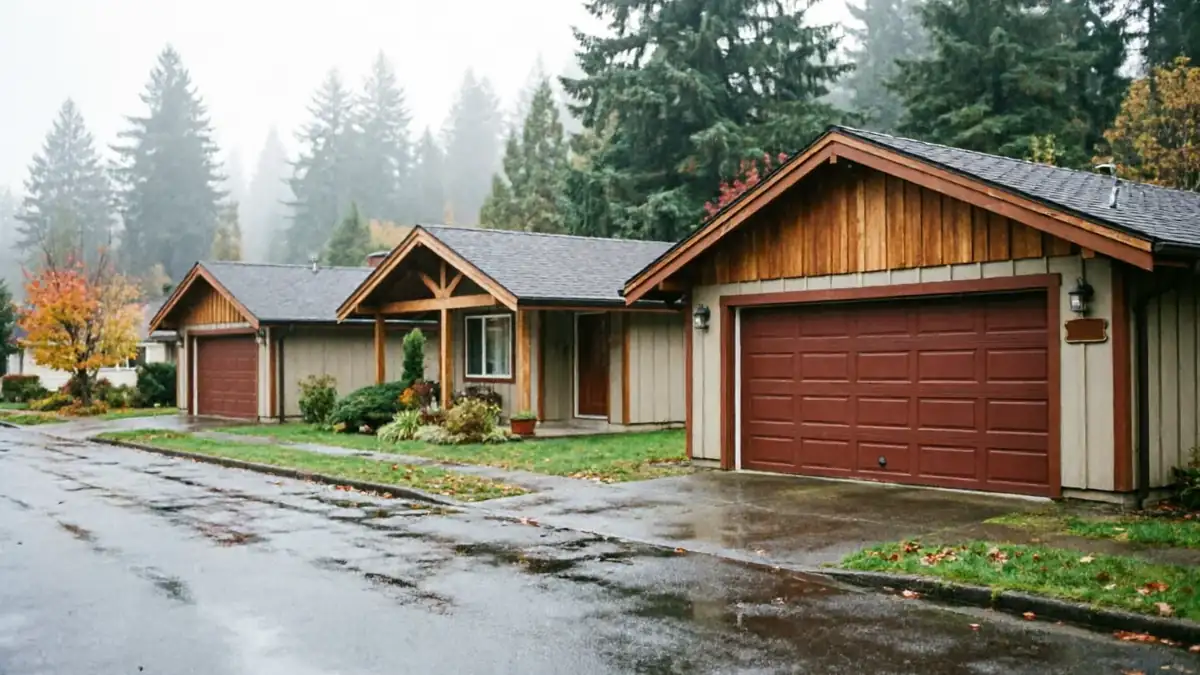
Most of the housing in Oregon City and the surrounding area went up between 1964 and 2003
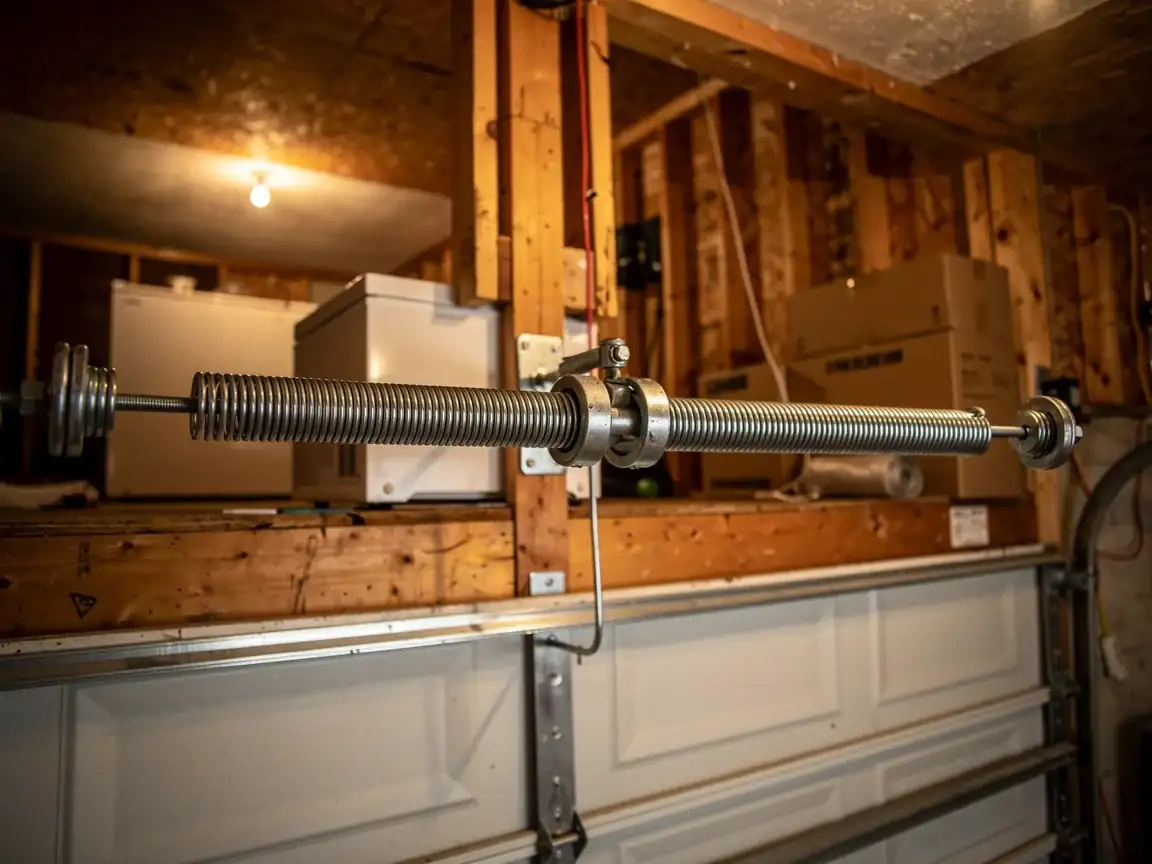
With the median build year landing around 1982. That matters more than people think. A torsion spring is rated for a number of open-close cycles, not years, but in practice most springs installed during that build-out window are now well past their working life. If your house falls in that range, the spring on your door is probably original or a first replacement from decades back, and it's due.
The climate here is the other half of it
Oregon City sits in a cold-moderate band, which means grease and lubricant on tracks and hinges thickens up in winter and the steel itself contracts slightly in cold snaps. That combination puts more strain on a spring or cable that's already near the end of its cycle count. We see the same pattern across the 1980s and 90s stock that makes up most of the local areas we work in - it's not a coincidence, it's the age of the hardware meeting the weather.
Newer builds in the area
And the handful of homes outside that 1964-2003 window, tend to have fewer of these failures simply because the springs haven't logged the cycles yet.
The Cost of This Job
We're not going to quote a number here, because a fair price depends on spring size, door weight, and whether the drum and cable need replacing along with the spring - and we're not going to guess at that over the phone or in a web page. What we can tell you is what drives the cost up or down.
A single door with a standard torsion spring is usually the simplest job. A double door, or a door with two springs instead of one, costs more because you're replacing more hardware and the labor runs longer. If the cable or the bottom brackets have started to wear - which happens more often on older stock from the 1964-2003 build range - that adds parts cost too.
Households in this service area have a median income around $102,000, and most of the homes we work on are owner-occupied, not rentals. That doesn't change what the job costs, but it does mean most of our calls are homeowners making a real decision about repair versus replacement, not landlords doing the minimum. We'll give you both options and a real number once we've looked at the door, not before.
The Symptom
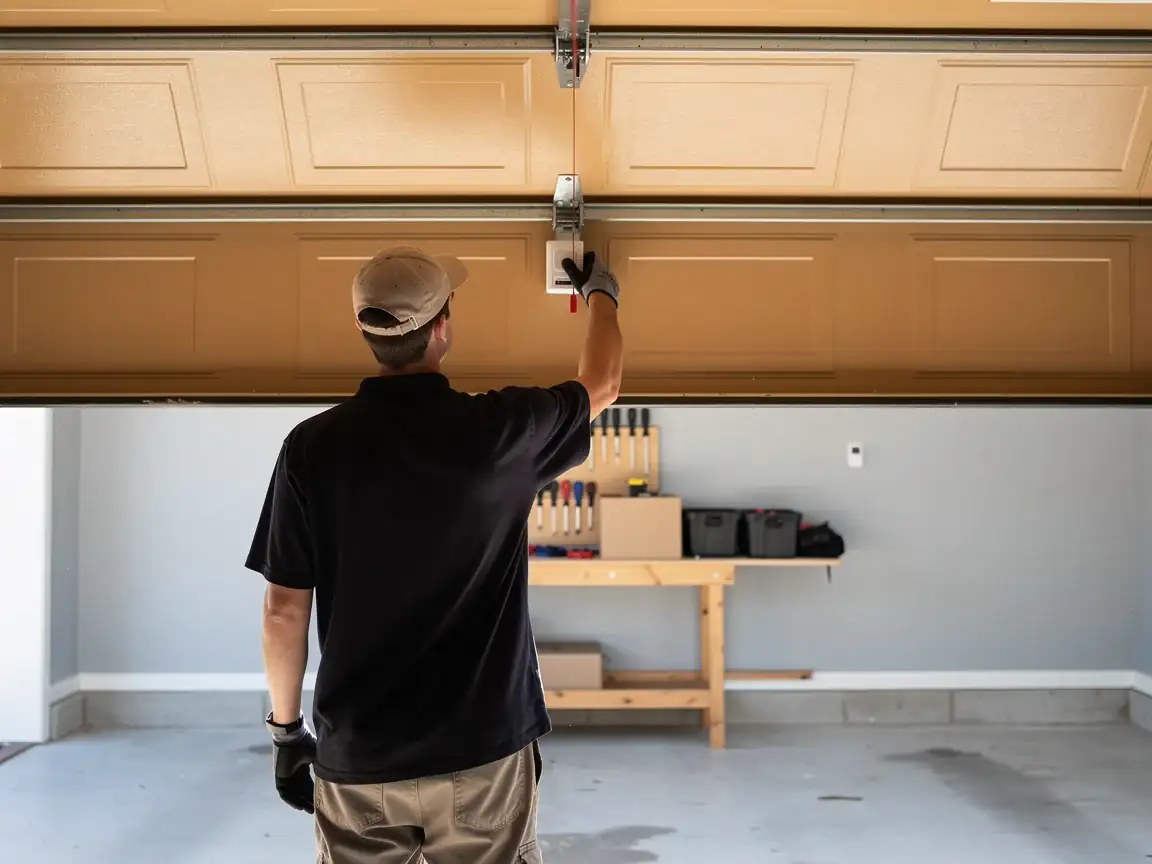
The most common call we get is a door that reverses halfway up, or won't lift at all, with the opener motor straining and making a grinding or humming noise instead of moving the door. Sometimes it's a loud bang from the garage - that's usually the spring letting go, not the opener.
On the older end of the local housing stock, especially homes from the 1960s through the 1980s, we also see a slower version of the same problem: the door gets harder to lift by hand over a period of weeks, and the opener starts working overtime to compensate before it finally gives out too. That's a spring losing tension gradually rather than snapping outright.
A door that drops suddenly when you release it manually is a spring that's already gone - don't try to force it with the opener. And if the door is off its tracks or visibly crooked, that's a cable or roller problem, not a spring problem, and it needs a different fix.
What the Repair Takes
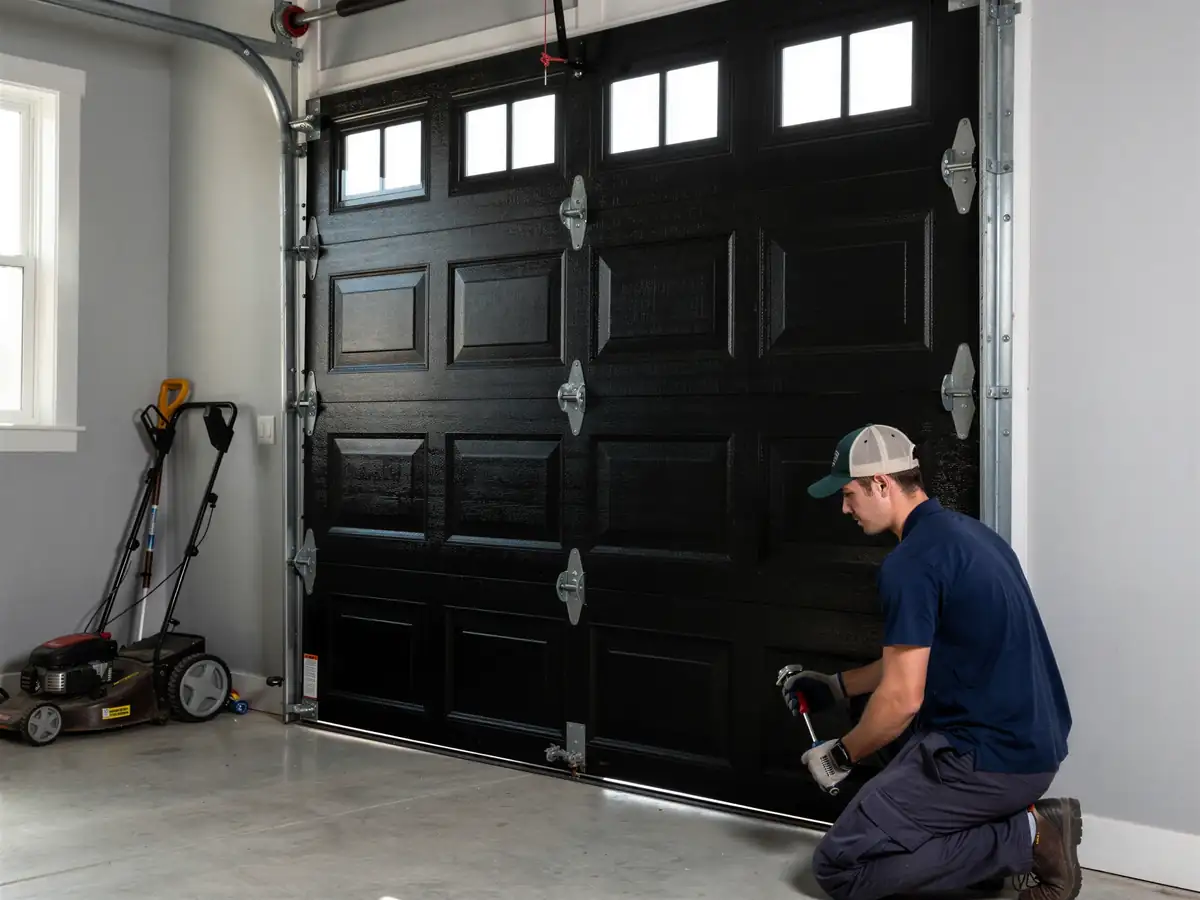
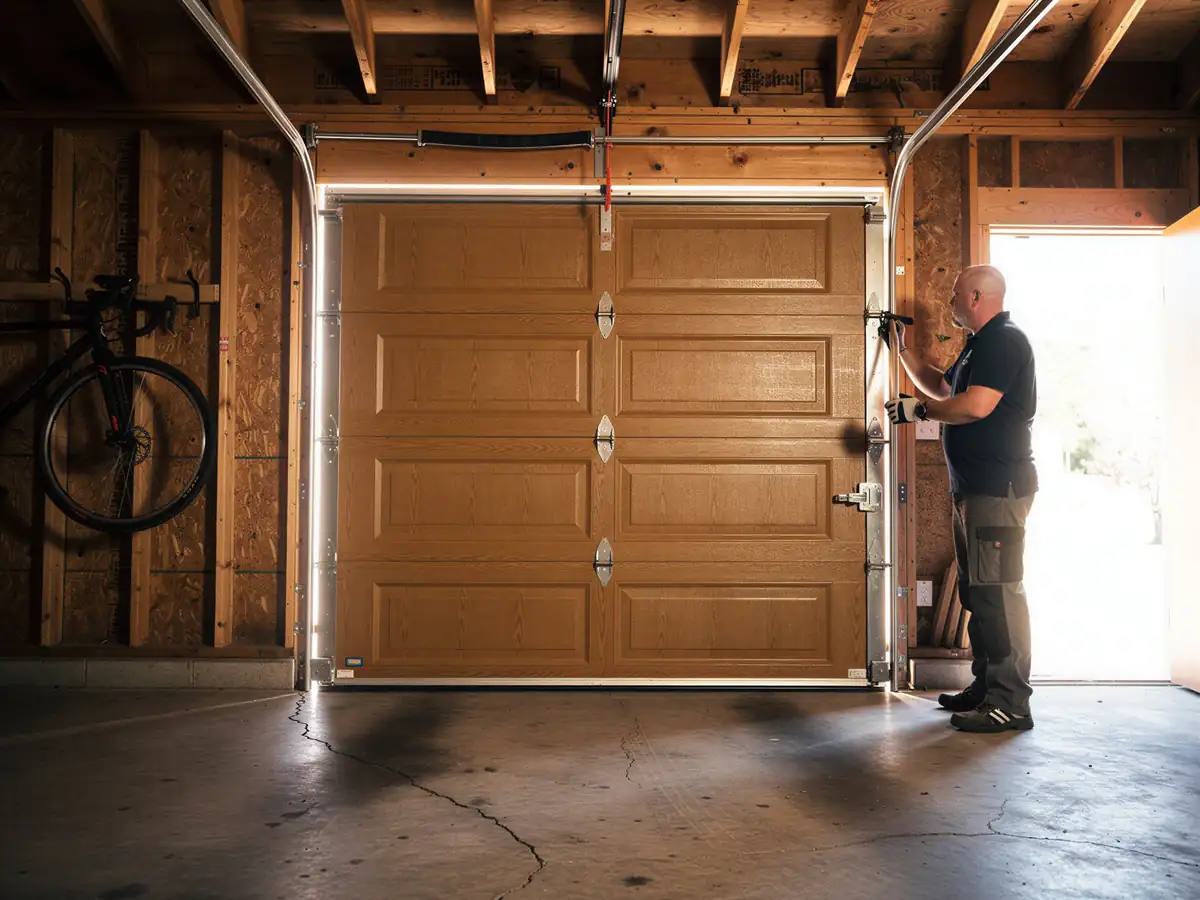
For a straightforward torsion spring replacement
We're usually in and out within a couple hours, assuming the spring size matches what's already on hand on the truck. The honest limitation here: some older spring sizes and some opener parts from original 1970s-80s installs aren't something we stock, and those can take a few extra days to get in. We'll tell you up front if that's the case rather than make you wait and wonder.
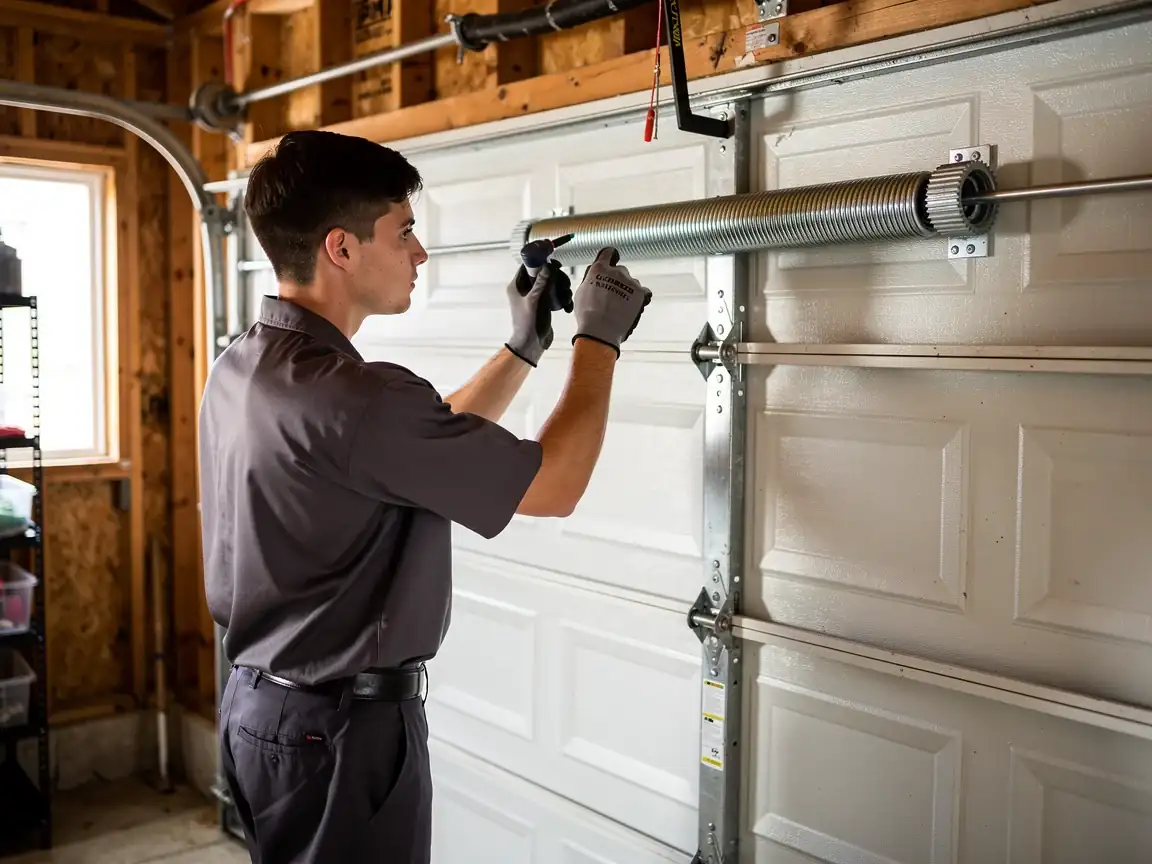
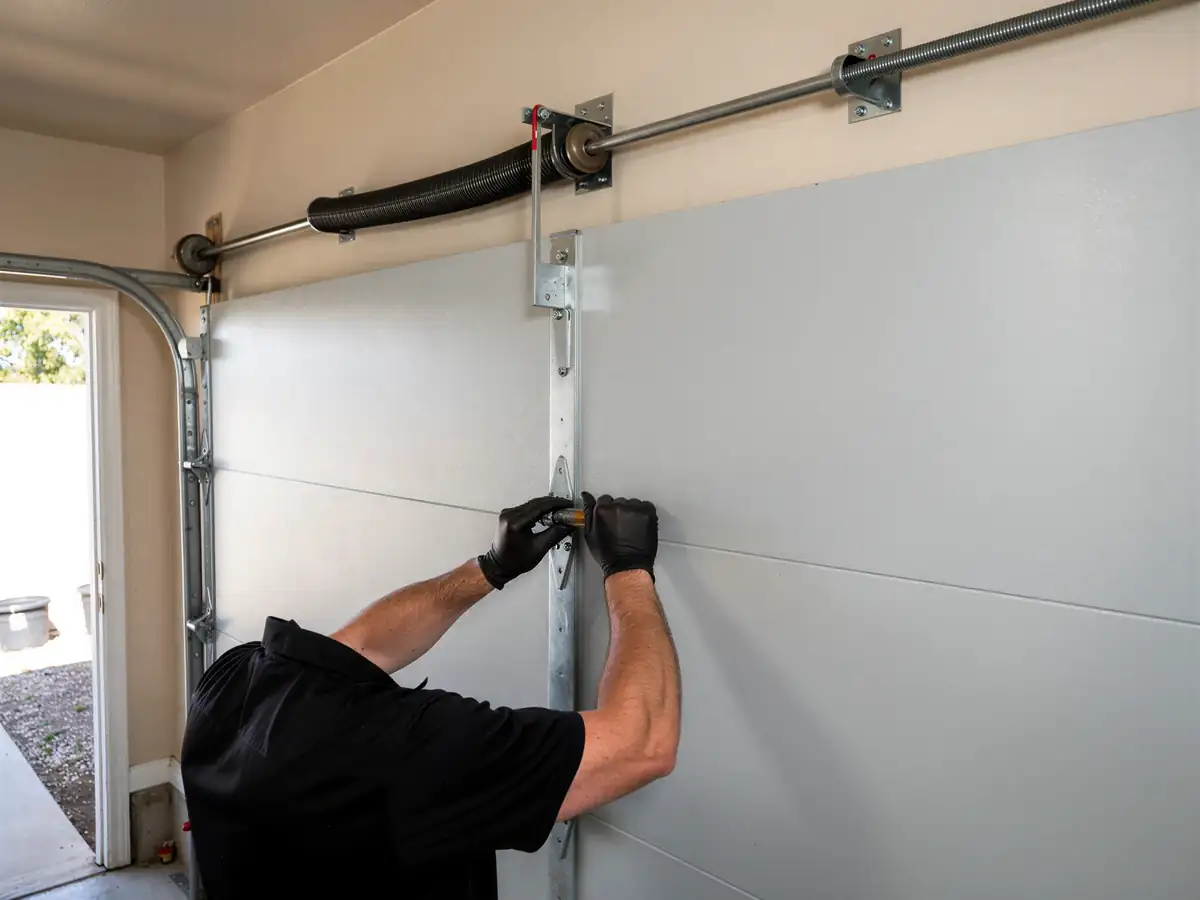
The repair itself involves releasing tension on the old spring safely
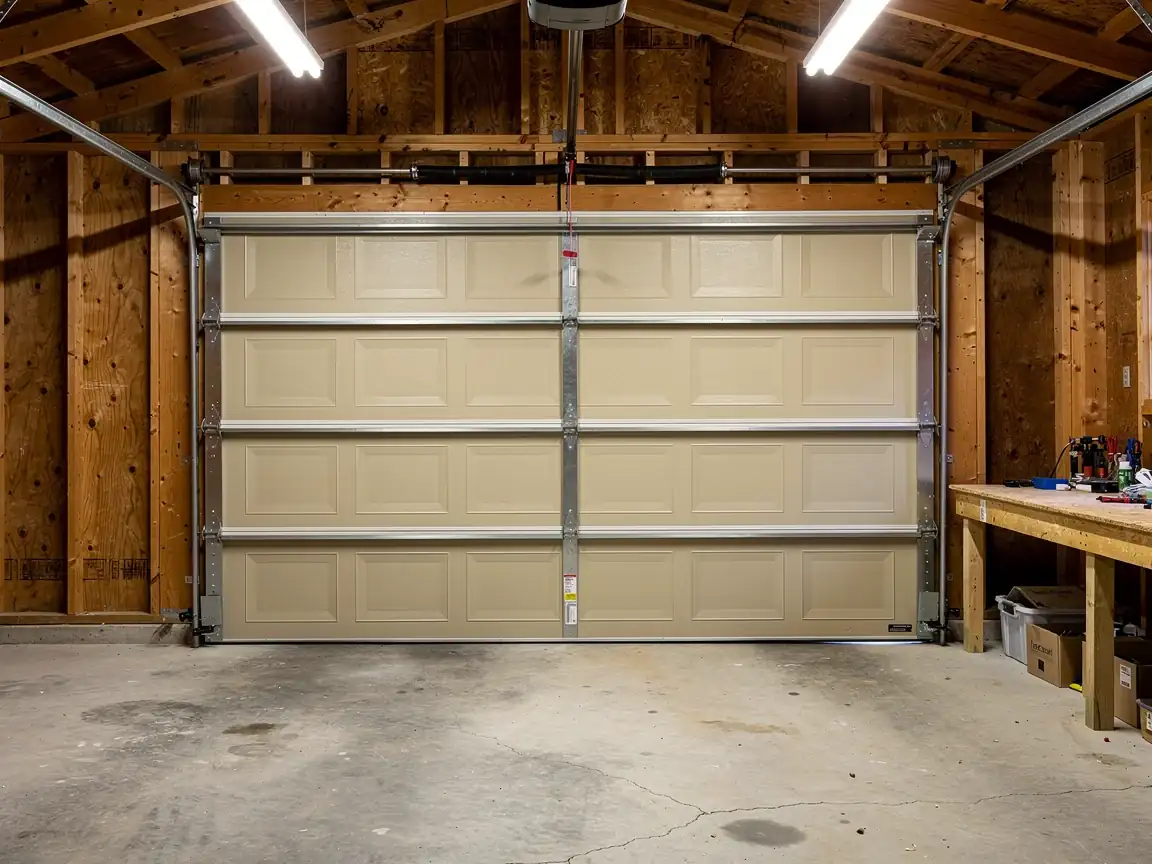
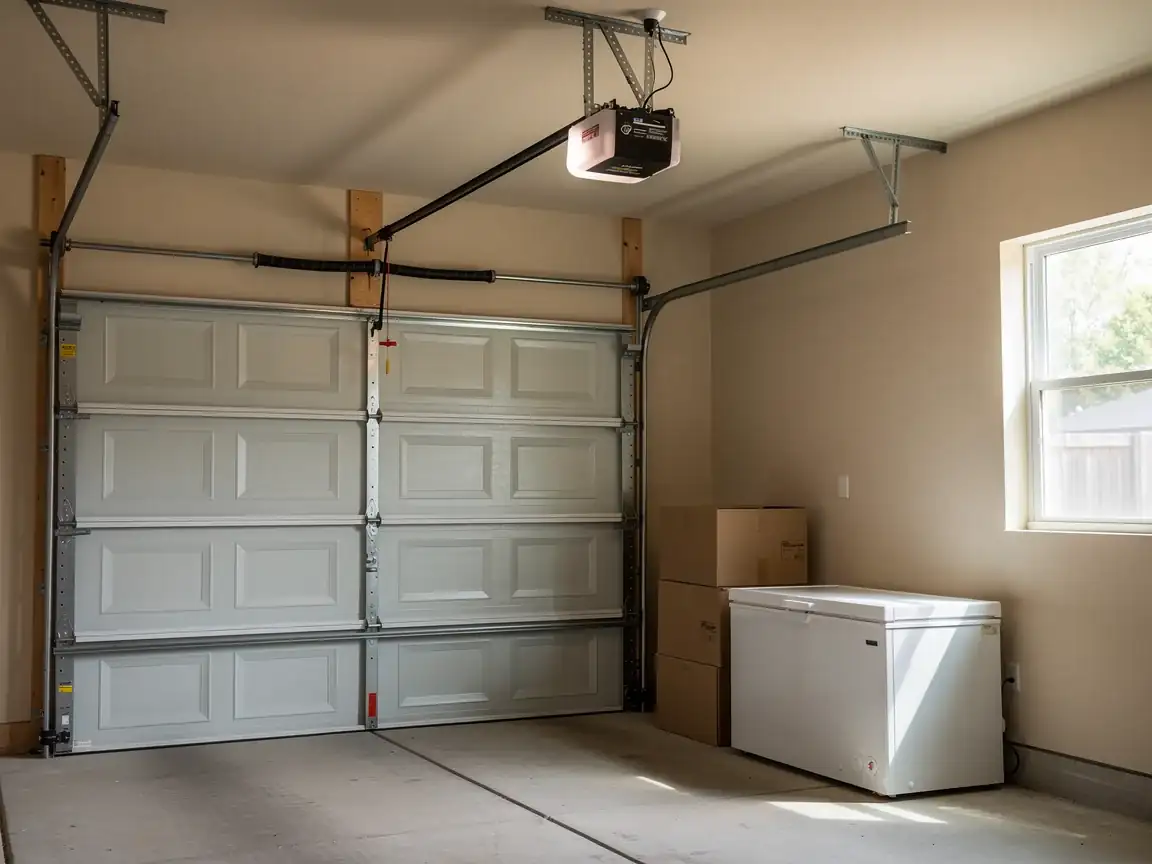
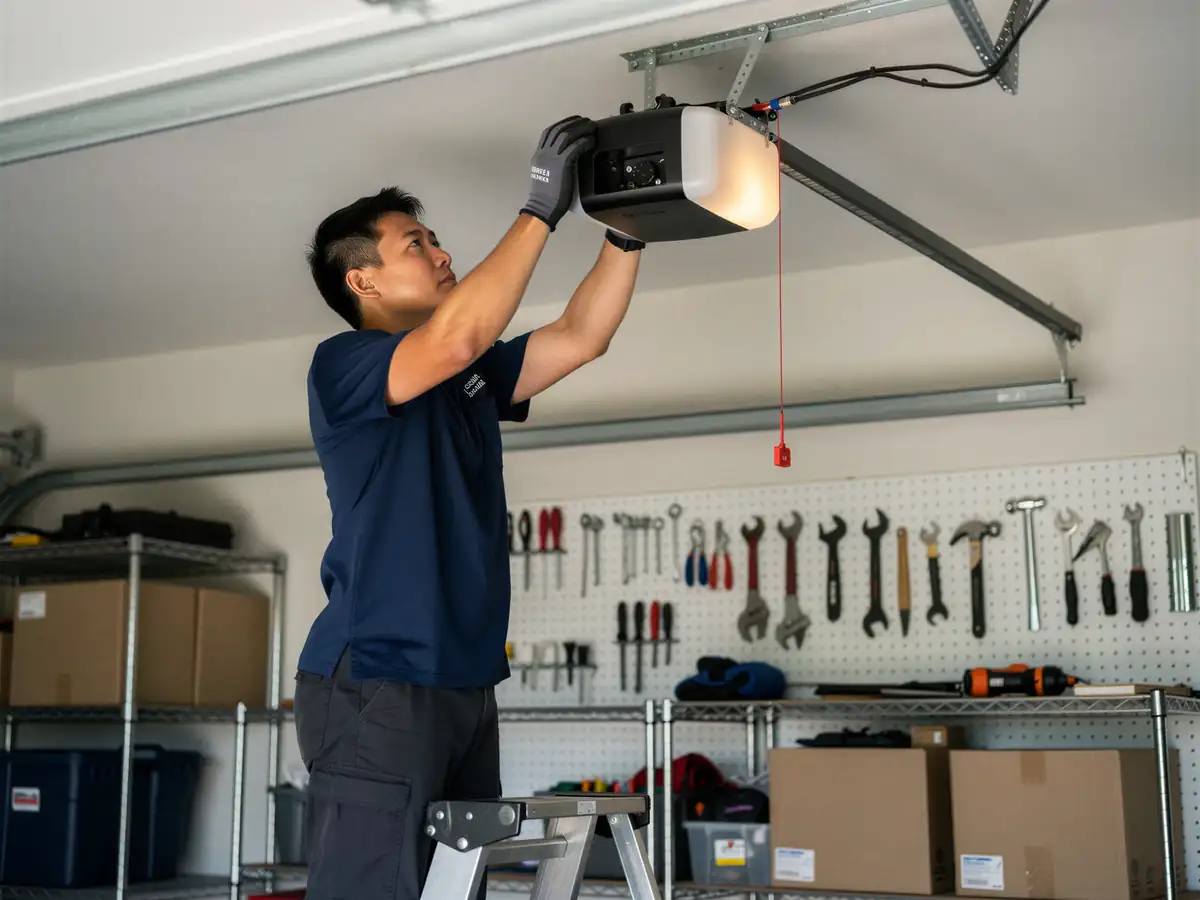
Replacing it with a correctly sized one rated for your door's weight, and checking the cables, drums, and bottom brackets while we're in there - because on a door that's 20 or 30 years old, if one part's worn, others usually aren't far behind. We also check the opener's force settings afterward, since a new spring changes how much work the opener has to do.
- 30 years
We don't recommend patching a spring or welding a break
It's not a repair that holds, and it puts you back in the garage within months. Full spring replacement is the only fix we'll do.