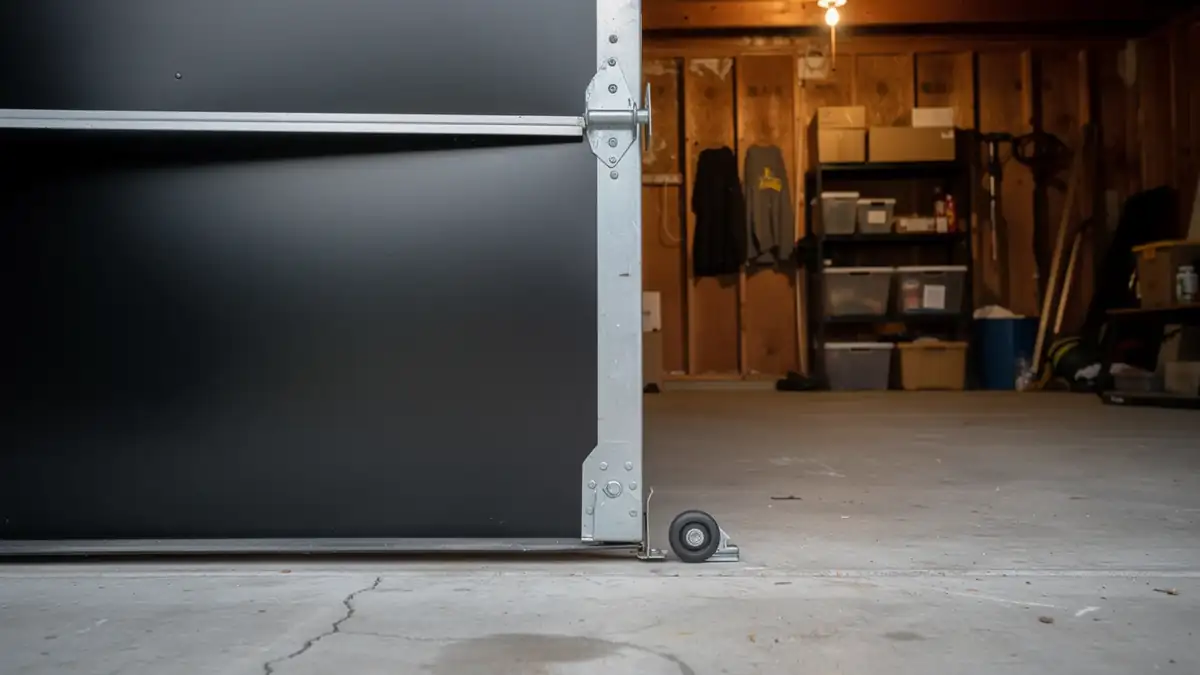
The Situation
A door that's off track doesn't usually fail all at once
It drifts. One side rides a little lower than the other, the rollers start chewing into the edge of the track, and eventually a cable jumps or a hinge bends enough that the panel won't sit flush. Most of the calls we get in Oregon City are on houses built between 1964 and 2003 - that's the bulk of the stock here, with a lot of it dating to the 1980s and 90s. Doors from that era were built with lighter gauge track and steel rollers that weren't meant to run forty years without adjustment.
What we see most often
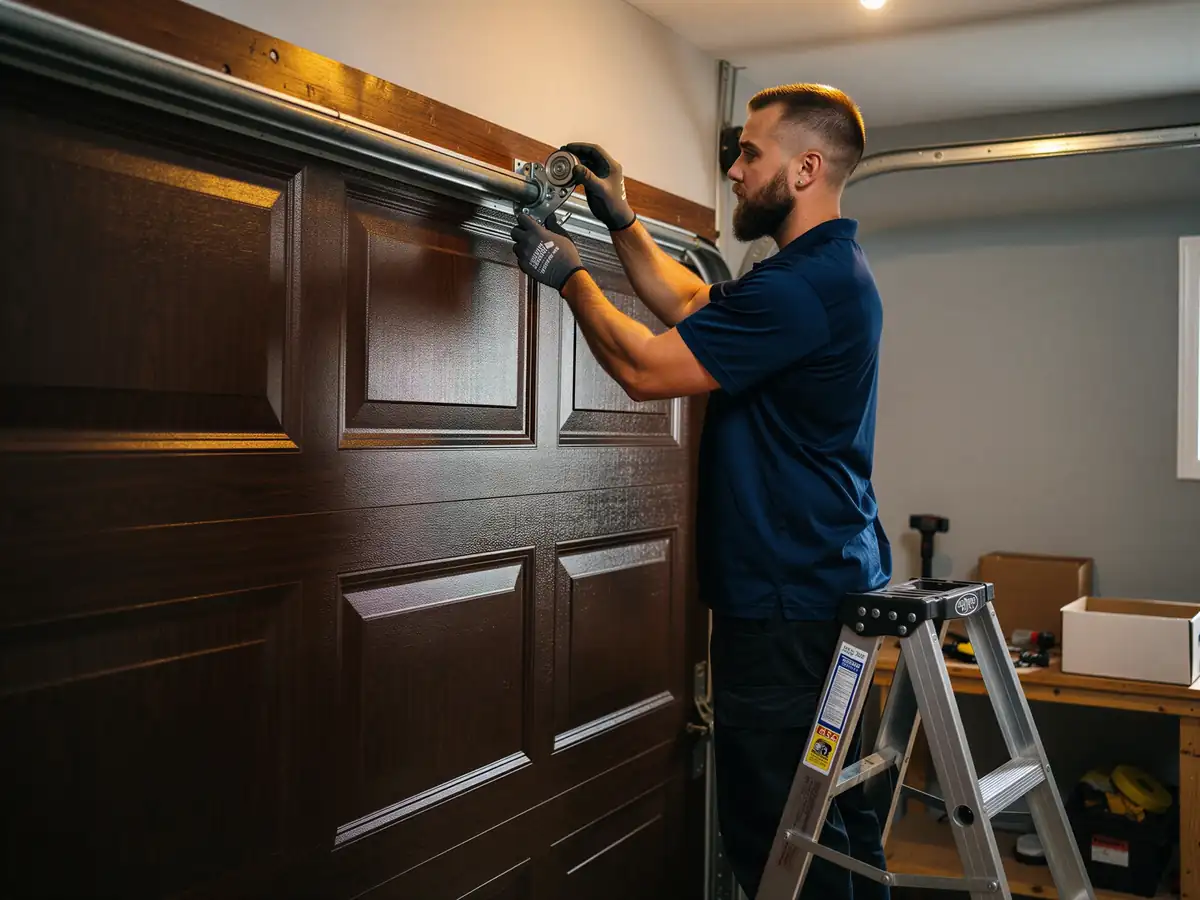
A roller has worn down enough that it's no longer riding square in the track, or a track bracket has worked loose from the jamb. On older double-wide doors especially, one side can sag slightly from age, and that uneven pull is enough to walk a roller right out of the channel. It's rarely dramatic. It's usually a slow drift that someone finally notices when the door starts scraping or binding halfway up.
The fix depends entirely on what's actually bent versus what's just worn
A track that's been knocked out of alignment can often be pulled back into place. A track that's bent - from a car bumping it, or just decades of flex - usually needs to be replaced rather than hammered straight, because a track that's been bent once tends to go again.
The Cost of This Job
We're not going to put a number here that doesn't hold up once we're standing in front of the door, because off-track problems vary a lot in scope. A simple roller swap and track realignment is a different job than replacing a bent track section, and a door that's off track because a cable snapped is a different job again - that one involves tension and isn't something to push back into place by hand.
What we can tell you is what drives the cost up or down: how many rollers need replacing, whether the track itself is salvageable or needs a new section, and whether the hardware on your door is a standard size or something older that needs a part we have to source. On houses from the 1980s and 90s stock common across this area, we often find original hardware still on the door, which can mean a slightly longer job just locating the right roller or bracket.
The honest answer is we price this on site, after we've opened the door and watched it run. Anyone quoting an off-track repair over the phone without seeing the door is guessing, and that guess is usually wrong in one direction or the other.
How Local Conditions Play In
Oregon City sits in a cold-moderate climate band, and that matters more for an off-track door than people expect. It's not extreme cold doing the damage - it's the repeated swing between wet and dry, and the way steel track and hardware respond to moisture over a long winter. Track brackets that were screwed into jamb framing decades ago can work loose as the wood around them swells and shrinks with the season. A bracket that's a quarter inch loose doesn't sound like much, but it's enough for a roller to walk out of the channel the next time the door cycles.
On the older end of the local housing stock - places built closer to 1964 than to 2003 - we also see original steel rollers that have gone stiff or slightly out of round from years of damp garages. Those don't glide anymore, they drag, and a dragging roller is a roller that's more likely to jump the track rather than ride through it smoothly.
None of this means the door is unsafe to use in the meantime, but it does mean a door that's drifted off track once in a cold, damp winter is a good candidate to drift again next winter if the underlying bracket or roller issue isn't addressed, not just pushed back into place.
Checking It Yourself
Before you call anyone, look at the track on both sides of the door with the door down
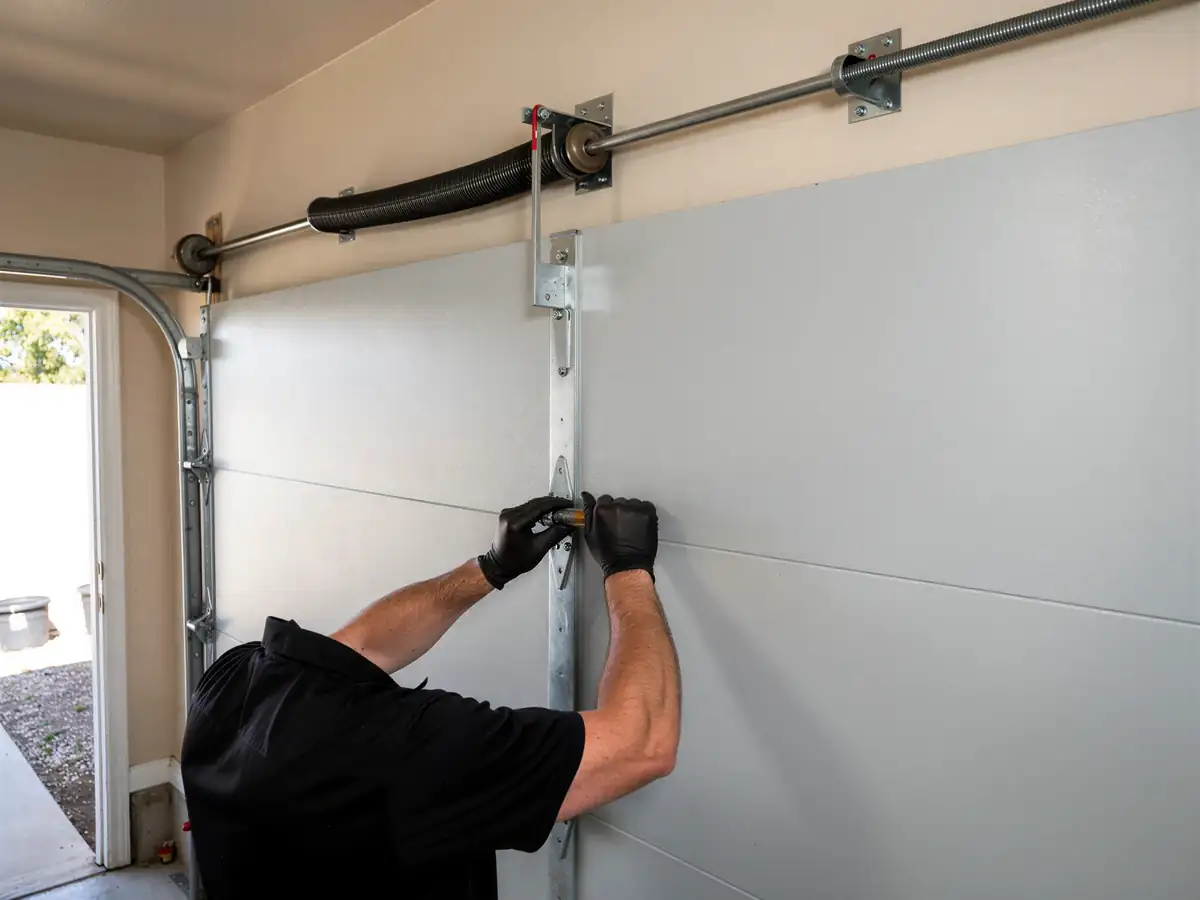
Check whether the brackets holding the track to the frame are tight - give them a gentle push and see if there's any play. If one side moves and the other doesn't, that's likely your problem.
Next, run the door partway (manually
With the opener disconnected, or by watching one full cycle) and look at the rollers. If you see a roller that's cracked, flattened on one side, or sitting at an angle instead of straight in the track, that roller is the weak point.
What we'd ask you not to do
Don't try to force a door back into alignment by hand if a cable has come off a drum, and don't keep running the opener if the door is visibly crooked - that just bends the track worse and can pull a panel out of shape. If the door is binding, grinding, or won't sit flush at the bottom, that's the point to stop using it and get it looked at, since running a misaligned door through its cycle a few more times is usually what turns a bracket fix into a track replacement.