The Situation
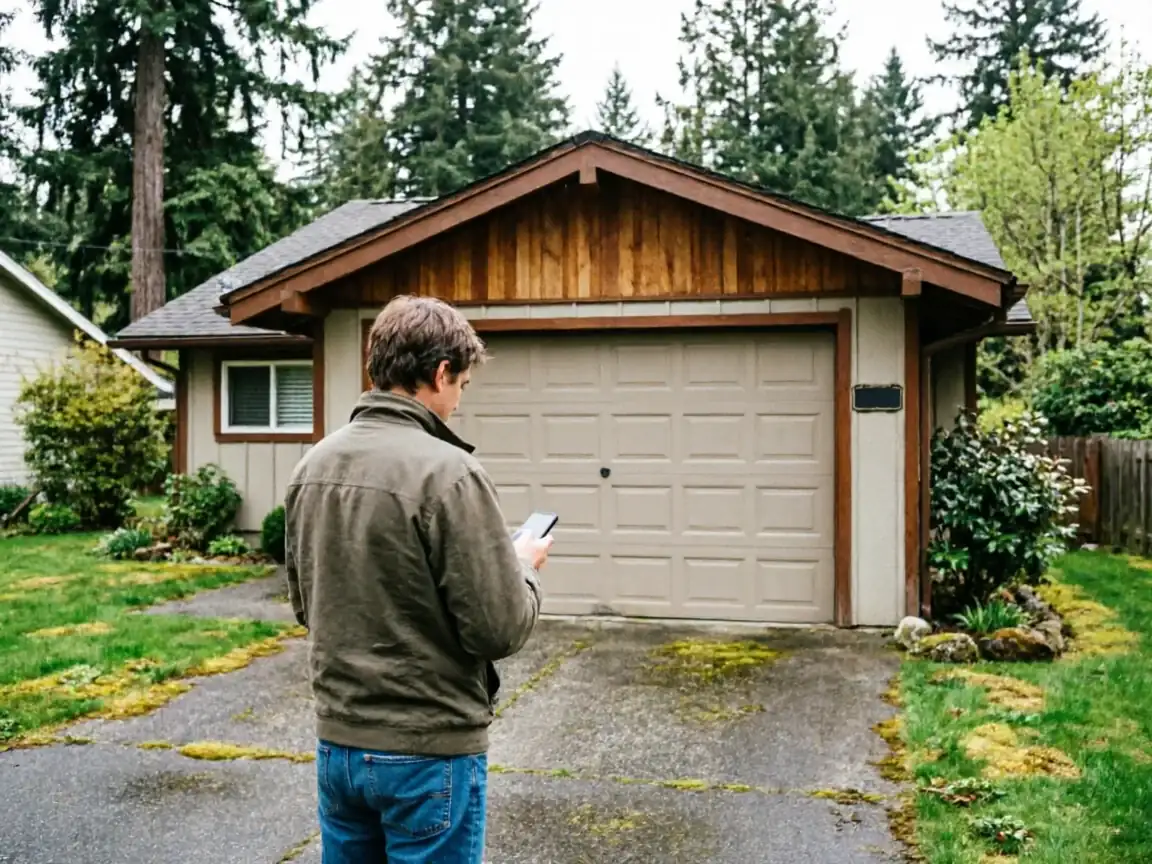
Most houses around Oregon City went up between 1964 and 2003
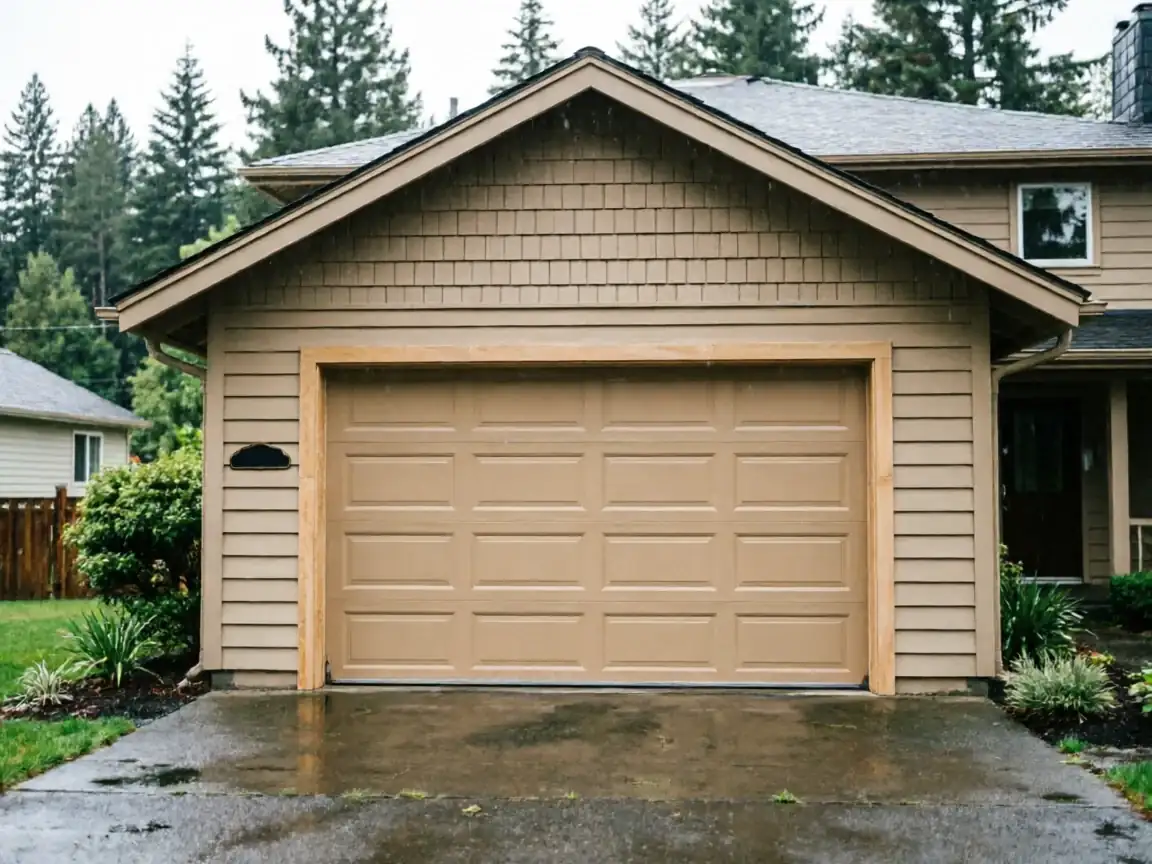
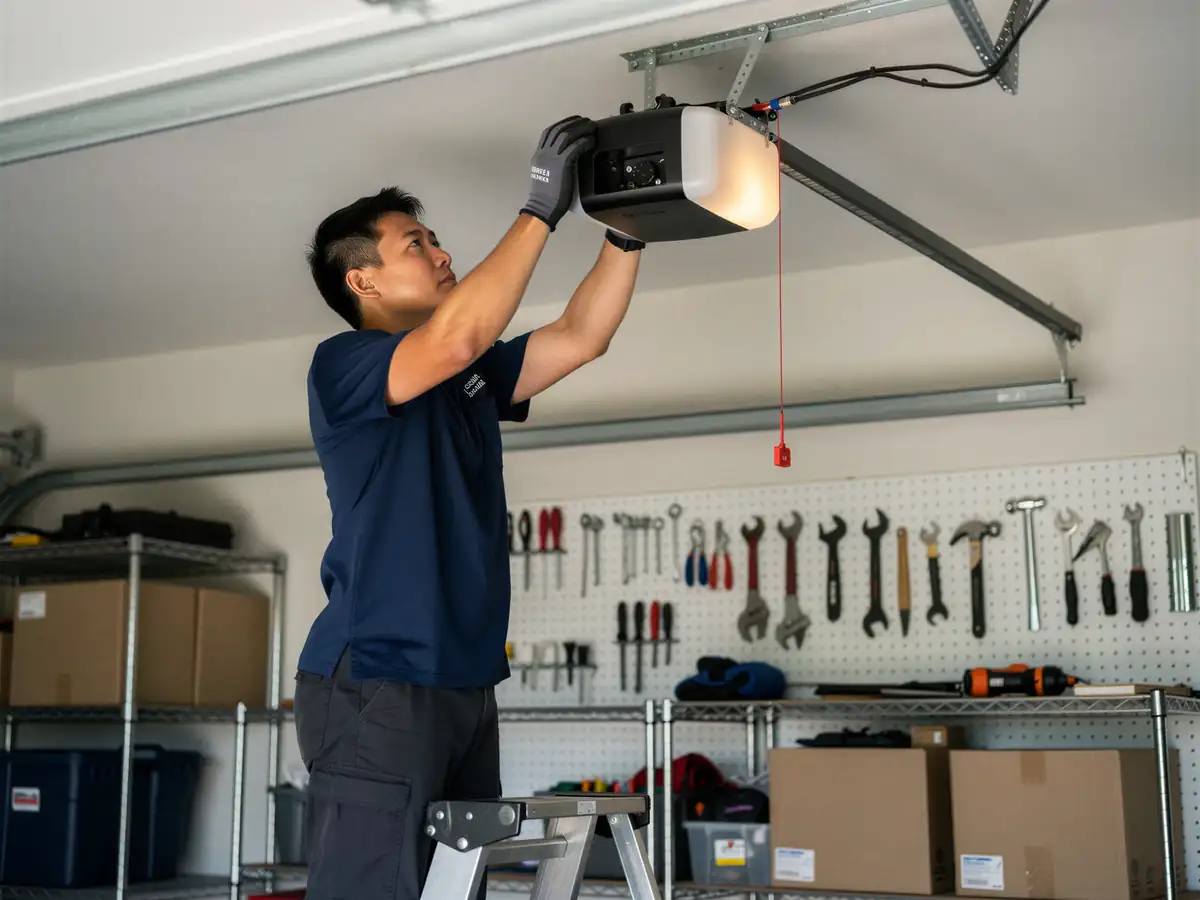
With the median sitting around 1982. That's not ancient, but it means a lot of original garage doors and openers are now 25 to 40 years into a life that was never meant to be indefinite. We see the same pattern across the 31 named areas in this stretch, from West Linn to Gladstone to Oak Grove: doors from the 1980s and 90s stock still hanging on, some with the original springs, some with openers that have outlived three remotes.
- 40 years
The question isn't whether an older door can be fixed
Almost anything can be fixed. The real question is whether fixing it puts good money into a door that's already lost most of its service life, or whether you're better off putting that same money toward a door built for how this area actually weathers. That depends on what's actually wrong, not just how old the door looks.
The Cost of This Job
We can't give you a number here without seeing the door, and we're not going to invent one. What we can tell you is how to think about it. A single broken spring or a bent roller on a door that's otherwise sound is almost always worth repairing, regardless of the door's age. A door with a rotted bottom panel, a warped track, and an opener that's been straining for years is a different conversation - you're not paying for one fix, you're paying for three, and the next one is probably already lining up.
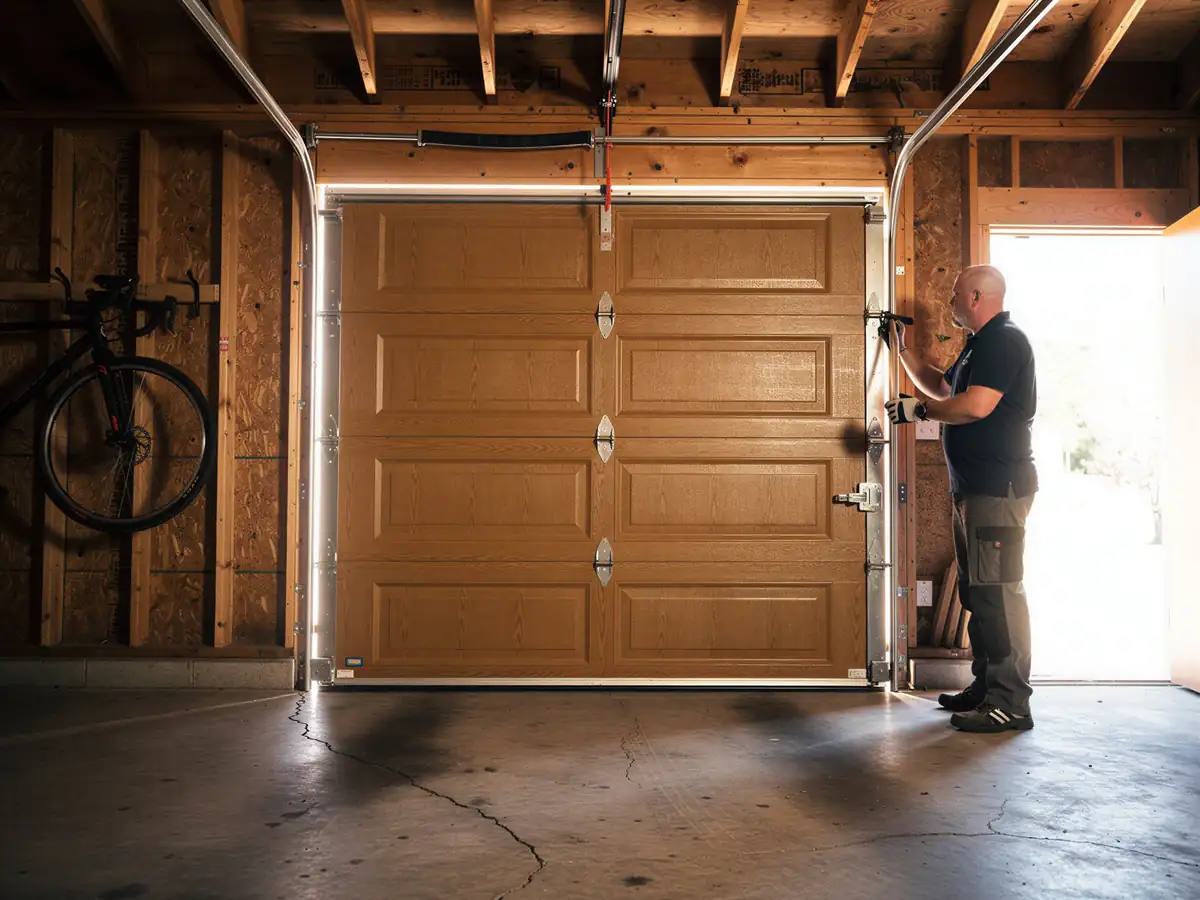
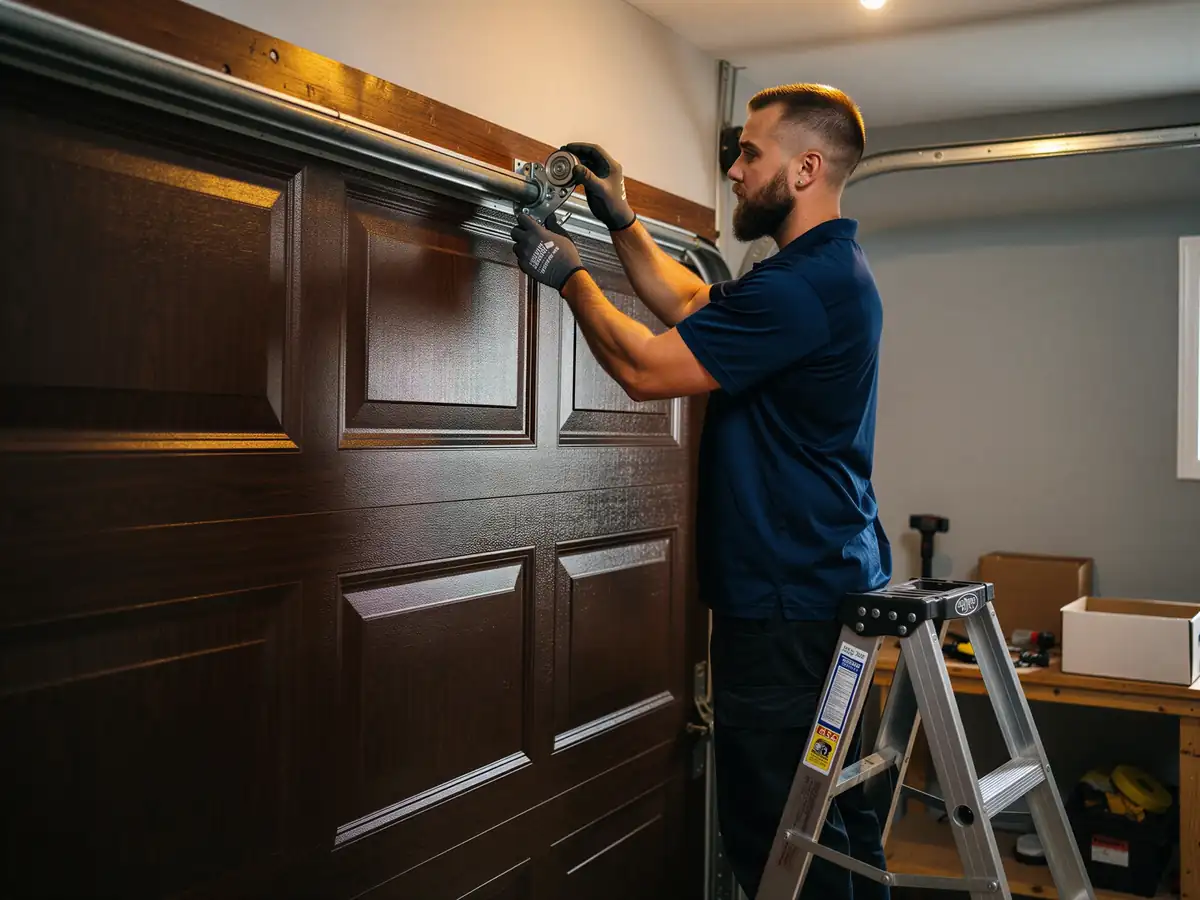
The honest limit here: if your door was installed when the house was built in the 1980s or 90s, the hardware behind the panel - drums, bearings, the torsion tube - is original parts that nobody stocks in matching sizes anymore. Sometimes a repair means adapting newer hardware to an old frame, and sometimes that adaptation isn't worth the labor compared to a clean replacement. We'll tell you which one you're looking at before we touch anything.
How Local Conditions Play In
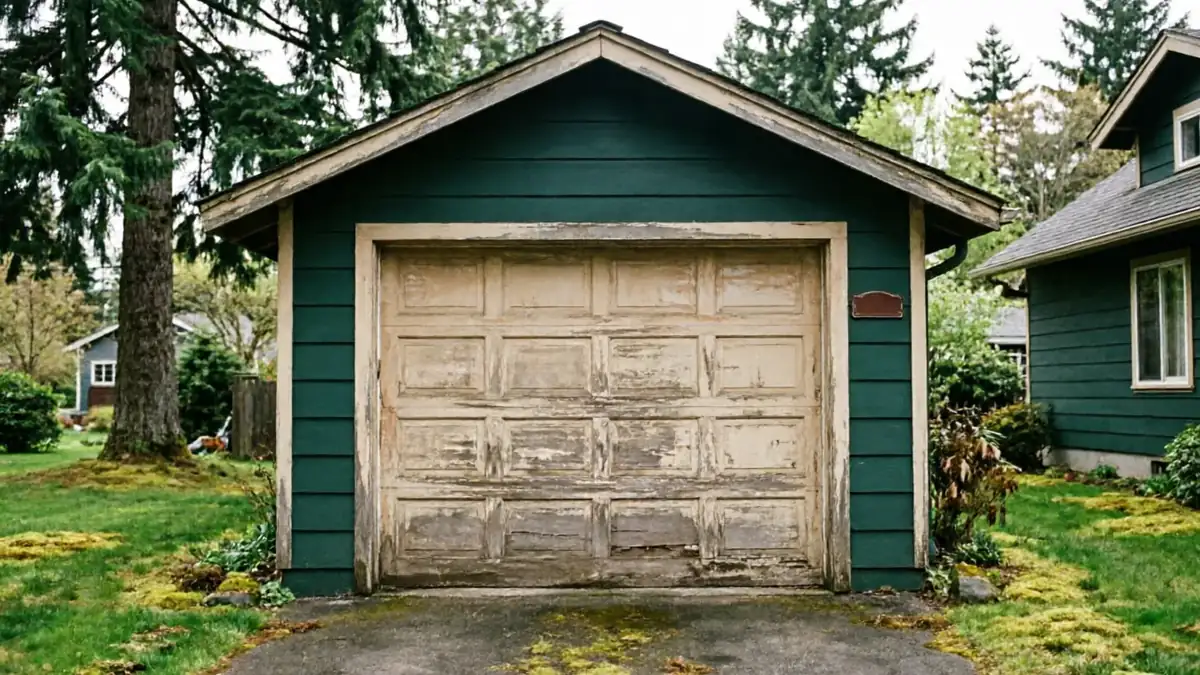
This is a cold, moderate climate - not the brutal freeze-thaw cycles of somewhere further east, but steady damp cold that works on wood and steel differently than dry heat does. Doors built in the 1964-2003 era common to this area often used wood composite bottom sections or early steel panels without the insulation and sealing standards that came later. Decades of damp winters find the seams first: swelling at the bottom panel, rust starting at screw heads and hinge pins, weatherstripping that's gone flat and lets water track up under the door.
An older door that's spent forty years in this kind of weather usually shows it where you can't see it from the driveway - inside the panel layers, around the bottom bracket, at the track mounting points bolted into a garage frame that's settled over the decades. That's the piece that changes the calculation on whether a repair holds. A spring repair on a door with sound panels is a good job. A spring repair on a door with a soft, water-damaged bottom panel is a repair on a door that's already failing somewhere else.
Checking It Yourself
Before you call anyone, a few things you can check without tools
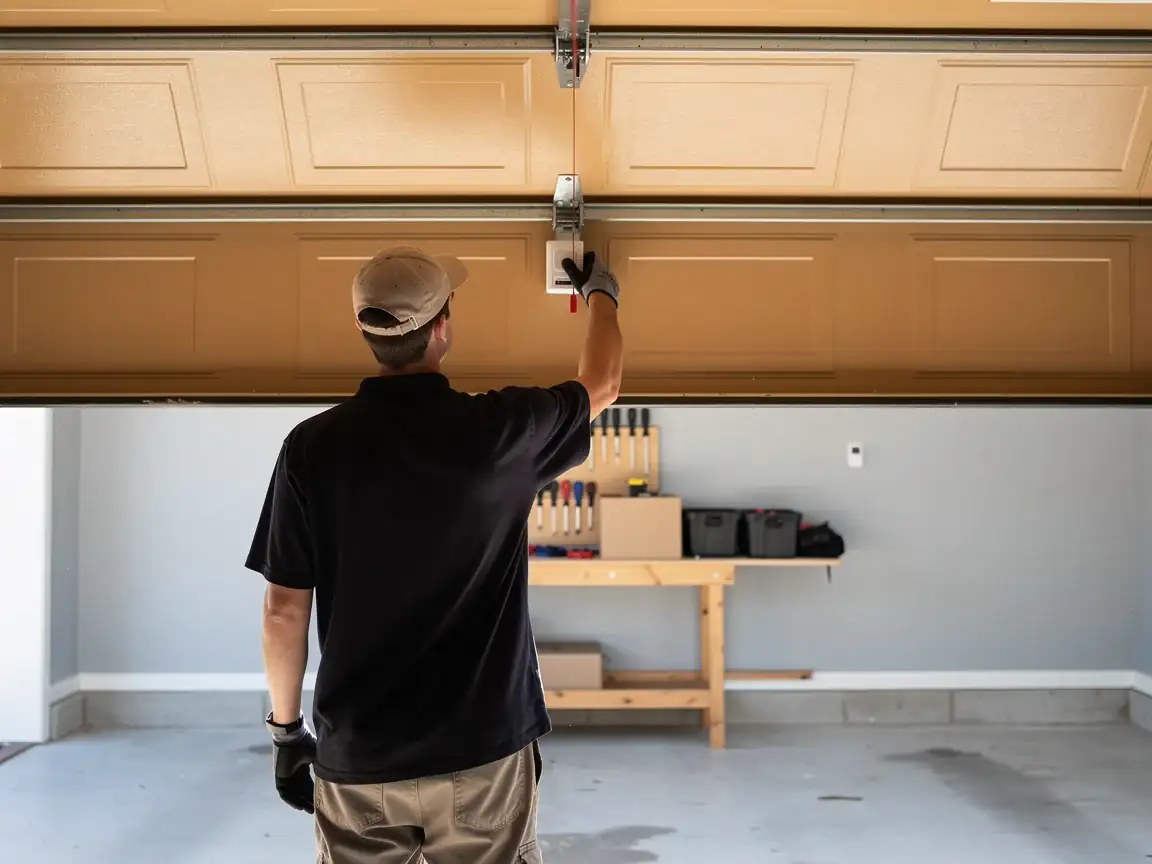
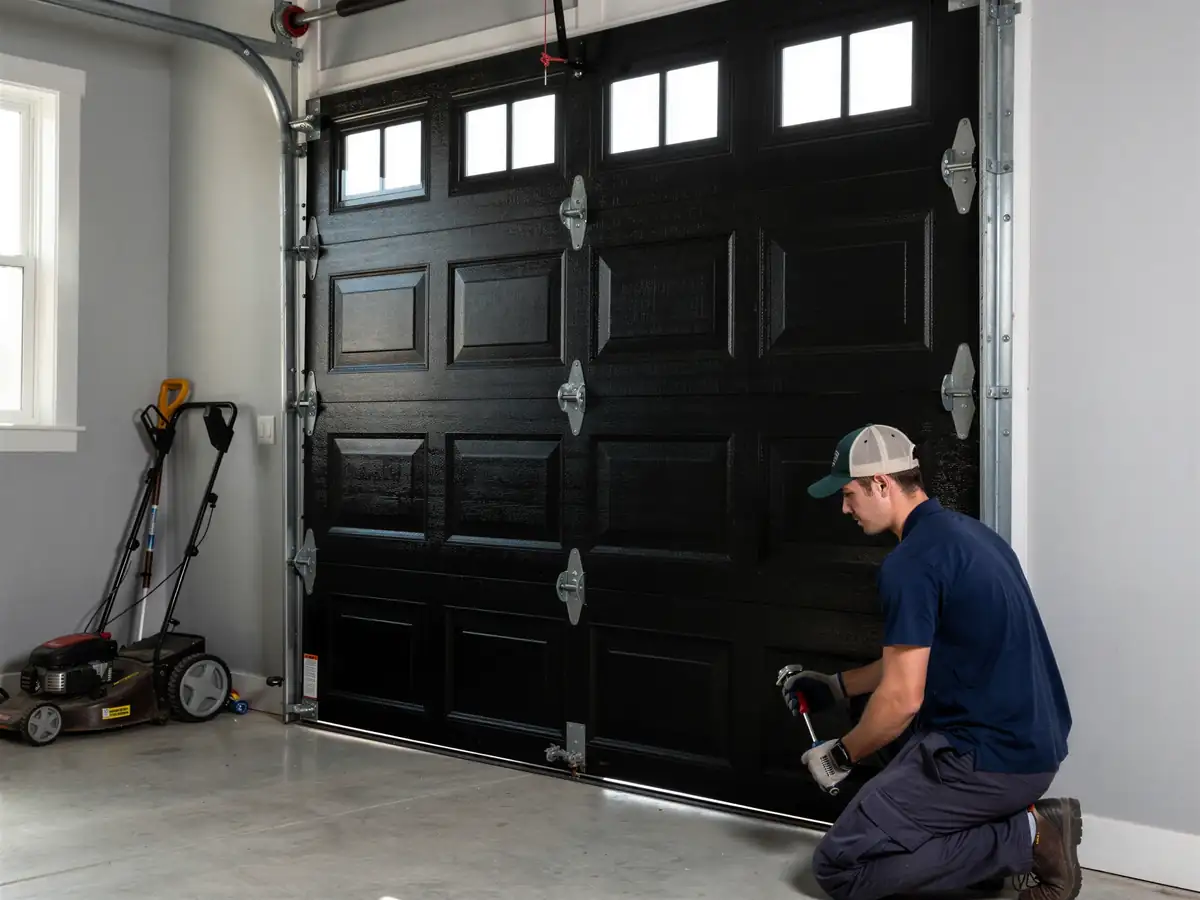
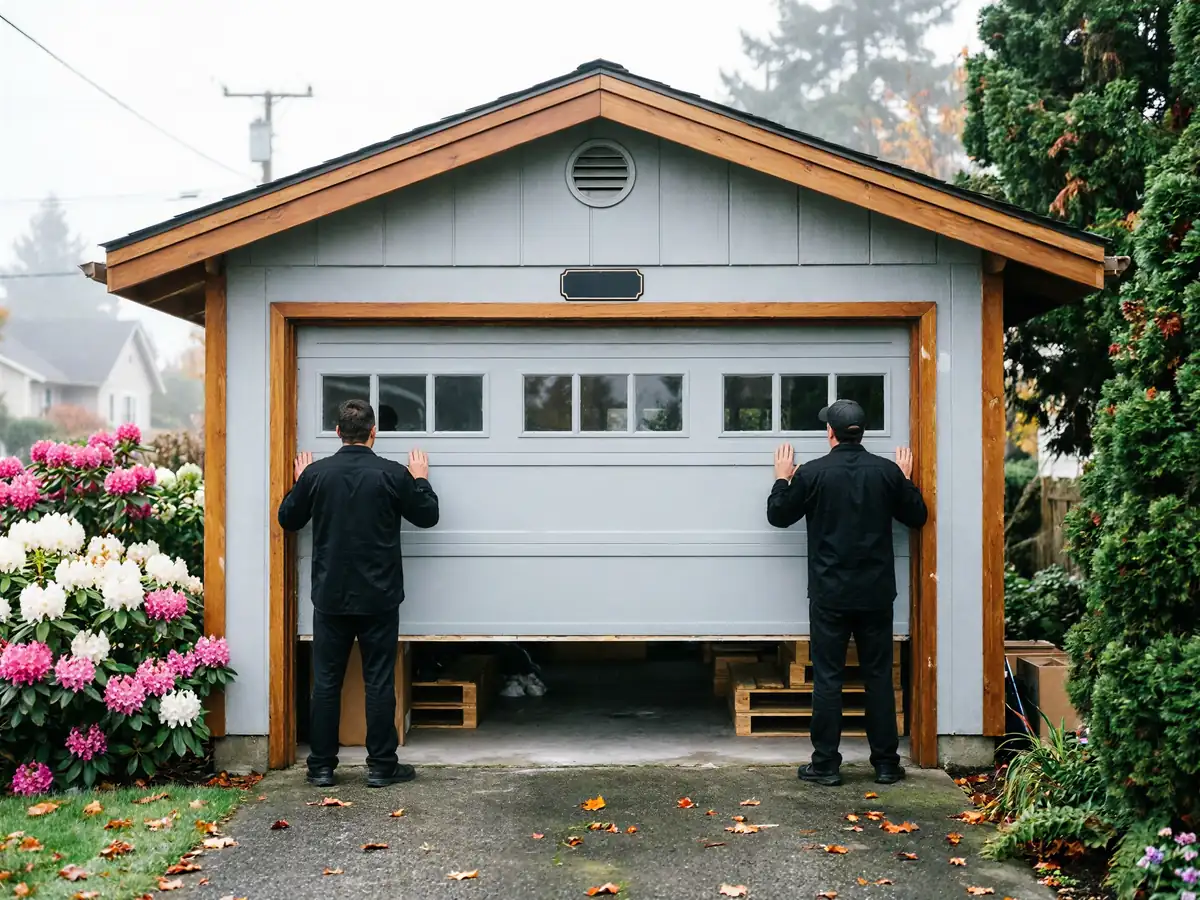
Push on the bottom corners of the door panel - if it gives or feels soft, that's moisture damage working from the inside, and no spring adjustment fixes that. Look at the bottom edge for black staining or flaking paint, a sign water has been sitting there through winters. Run a hand along the weatherstripping at the bottom; if it's cracked, flat, or missing, cold damp air and water have been getting in for a while, which speeds up what's happening inside the panel.
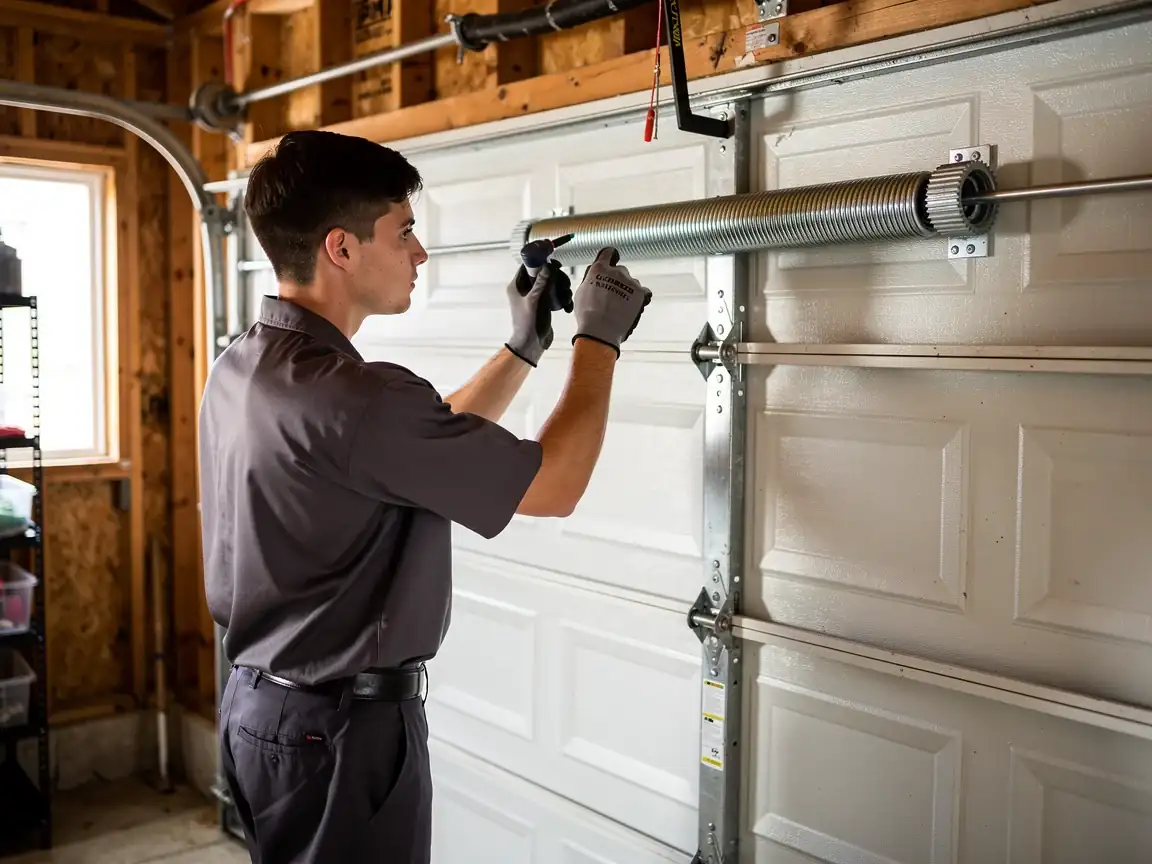
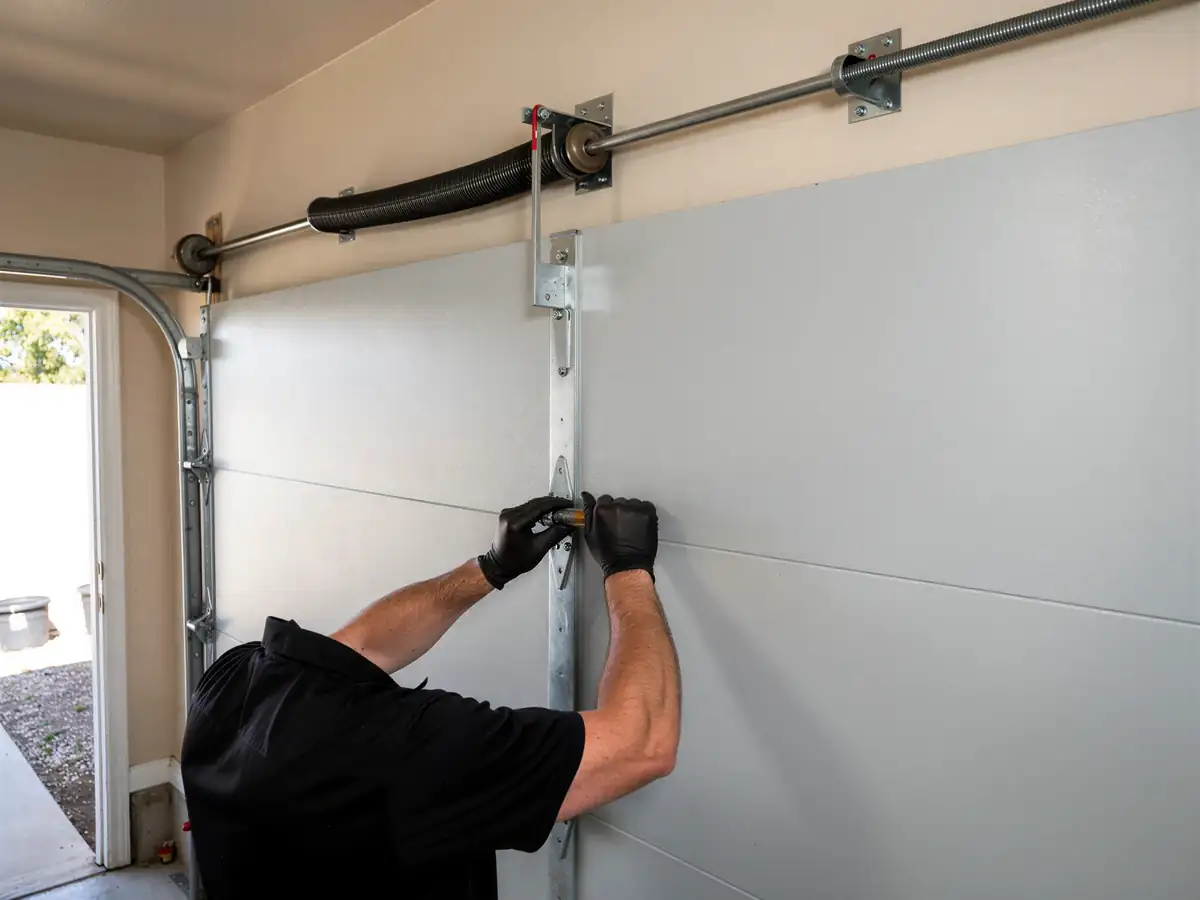
Check the springs above the door
If you see a visible gap in the coil, stop opening the door manually and call someone, that's a broken spring and it's not a DIY fix. Last, look at how the door sits when closed: if one side hangs lower than the other, the tracks may have shifted with age, which is common in houses from the 1980s and 90s where the original hardware has had decades to work loose. None of this tells you the final answer, but it tells you what you're dealing with before anyone gives you a number.