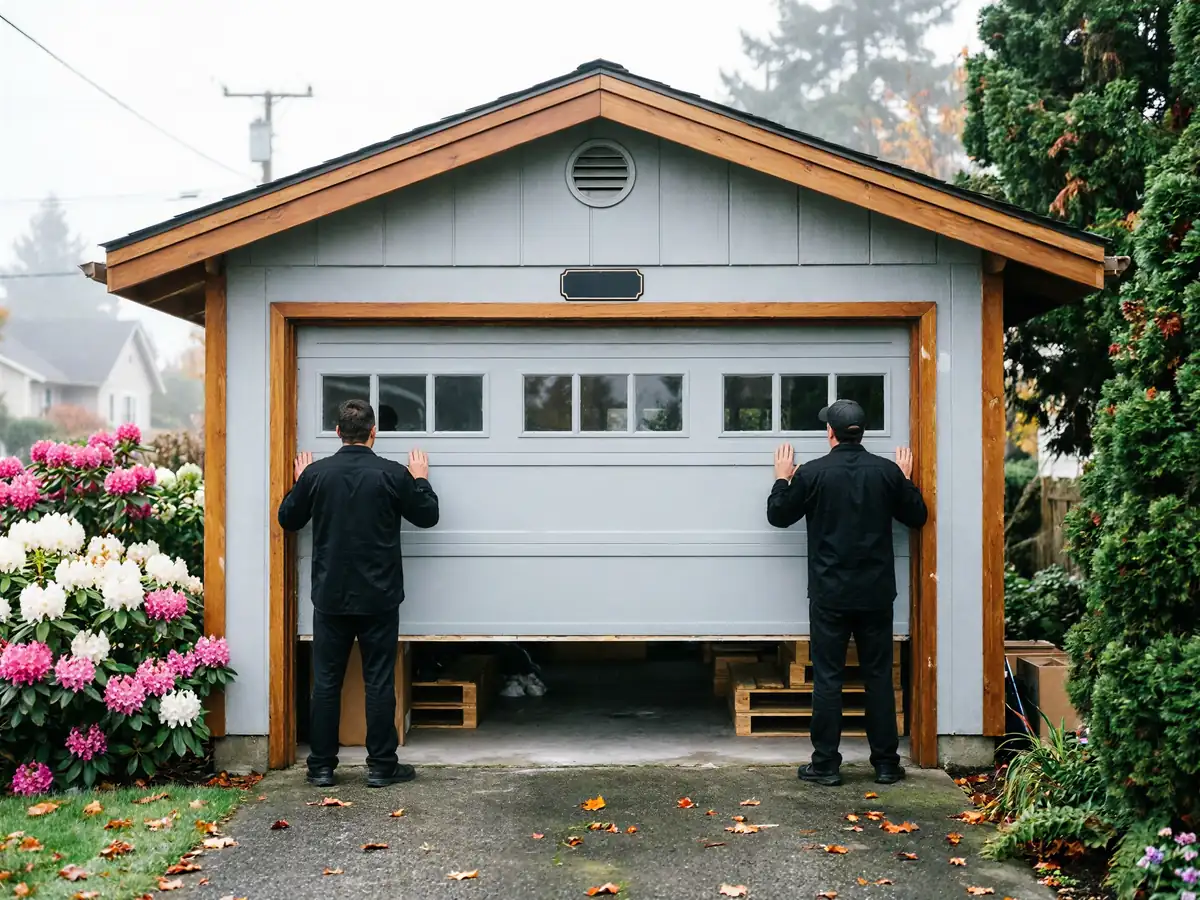
Why It Happens Here
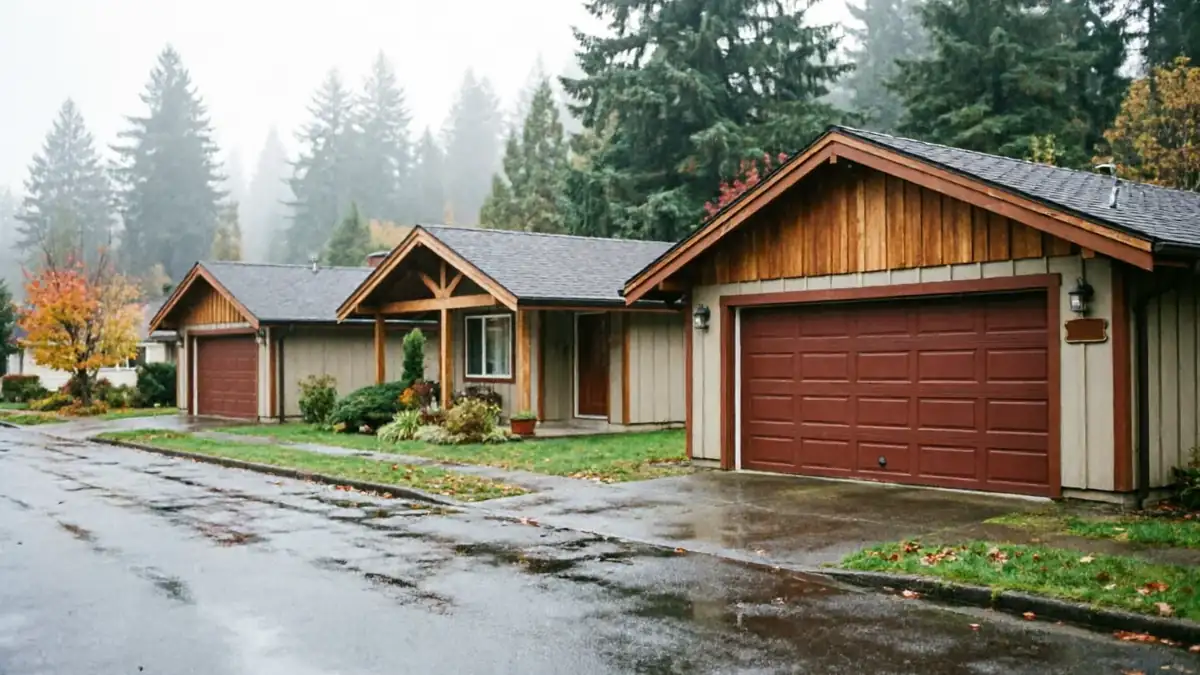
Most of the garage doors we get called out for in this area went up somewhere between 1964 and 2003
With the bulk of that stock dating to the 1980s and 90s. That matters for panels specifically, because doors from that era were built in sectional runs that manufacturers don't always carry anymore in matching steel gauge, texture, or color. A single dented panel on a door that old often can't be ordered as an isolated part - you're hunting a run that may be discontinued.
The cold, moderate climate across this part of Oregon adds a second failure path
Steel panels here take on moisture through winter without the deep freeze-thaw cycling that cracks panels outright in harsher climates, but the wet season does work on panel seams and the foam-core bond behind them. Over 20-plus years that bond can separate quietly, so a panel looks fine until a stray basketball or a backed-up trailer hitch puts a crease in it and the whole section buckles rather than just denting.
Garages built before the 1990s in this area also tend to run narrower panel sections than current door lines
Which is its own matching headache when you're trying to blend one new panel into an old run instead of replacing the whole door.
The Cost of This Job
We don't have a flat number to hand you here, because panel replacement pricing swings on three things we can't know until we're looking at your door: whether the exact panel is still in production, whether we're matching into an existing run or replacing the whole door, and whether the track and hinges took damage along with the panel.
What we can tell you is the honest trade-off. On a door built in the 1980s or 90s - which describes a large share of homes across this service area - a single discontinued panel sometimes costs nearly as much to special-order and ship as replacing the full door with a current line. That's not an upsell; it's just where discontinued-stock pricing lands. We'll tell you straight if your door falls into that category instead of running up a quote on a part that isn't worth sourcing.
If the panel is a common size and still in production, it's a much more contained repair - new panel, rehang, check the hardware, done. We walk you through which situation you're in before any work starts, not after.
The Symptom
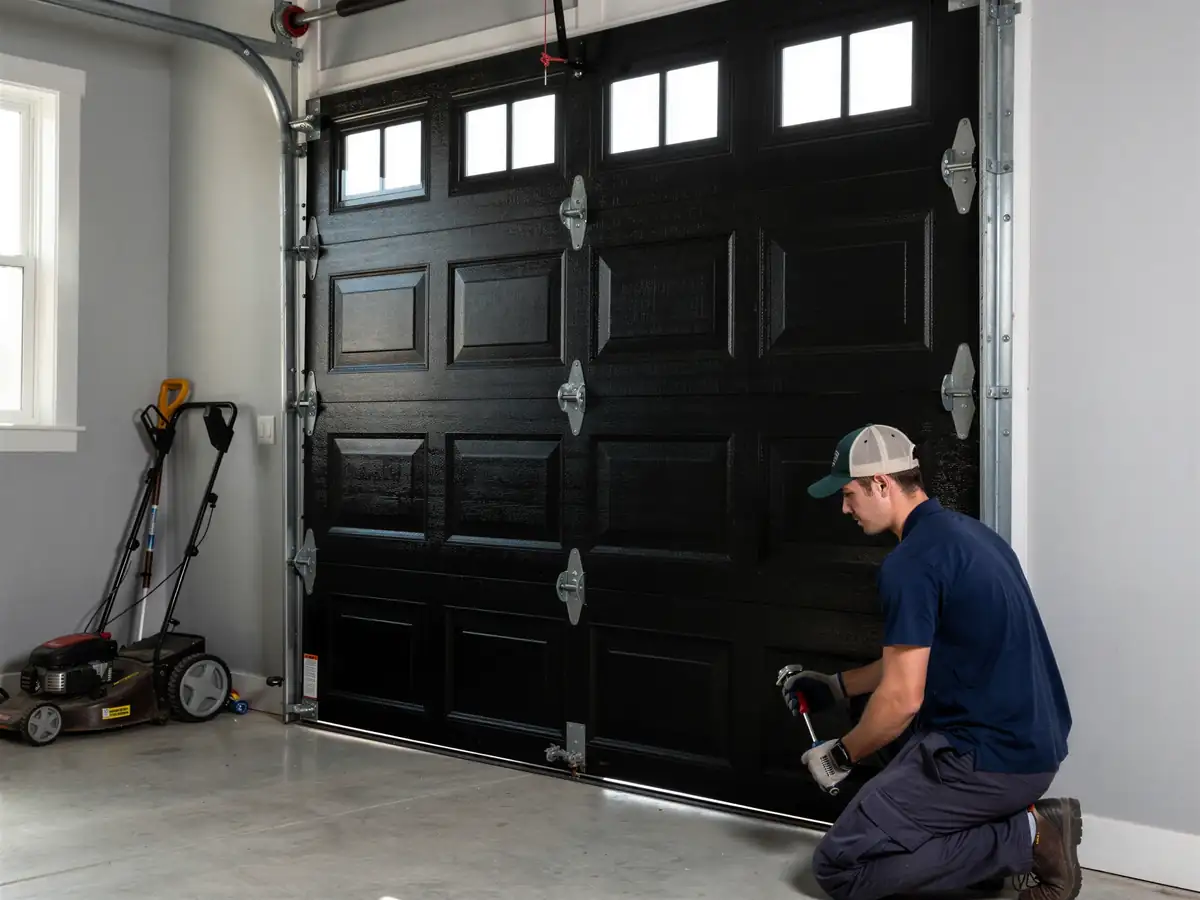
The panel job usually starts with one of two calls. First is visible damage - a crease, a puncture, or a section that's bowed inward after something hit it, car bumper, trailer tongue, a ladder that got away from someone. Second, and less obvious, is a door that's started binding or running rough on one side even though nothing looks broken. That second one is often a panel with a separated foam core flexing slightly out of plane as it travels, which throws off roller alignment without any dent to point to.
On older sectional doors common across this area, a damaged panel can also pull the whole section out of square enough that the door won't seal tight at the bottom corners anymore, letting in more cold air and moisture than the rest of the door. If you're noticing a draft at one corner of the garage that wasn't there before, that's worth a look alongside any visible panel damage.
We don't push full-door replacement on every call. If the panel's a straightforward swap and the rest of the door and hardware are sound, we replace the panel and leave the rest alone.
What the Repair Takes
We start by identifying the door's make, model, and section size
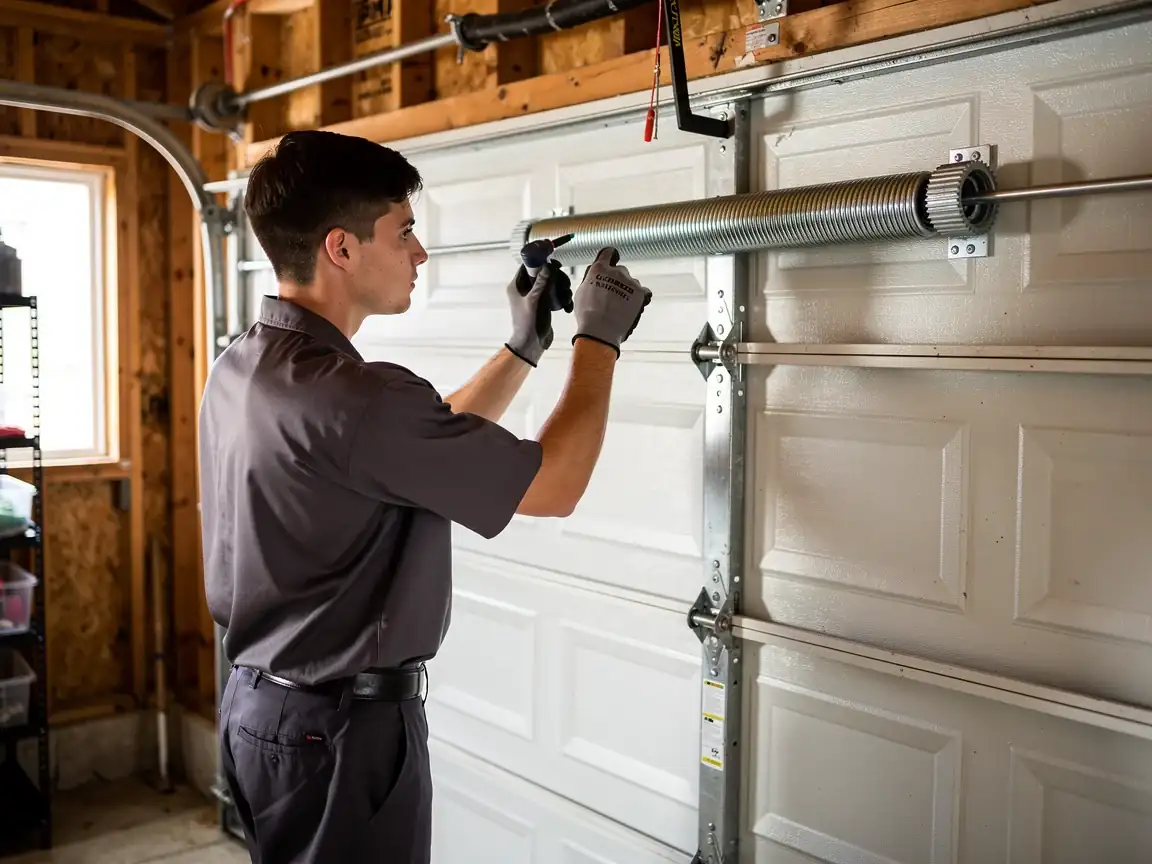
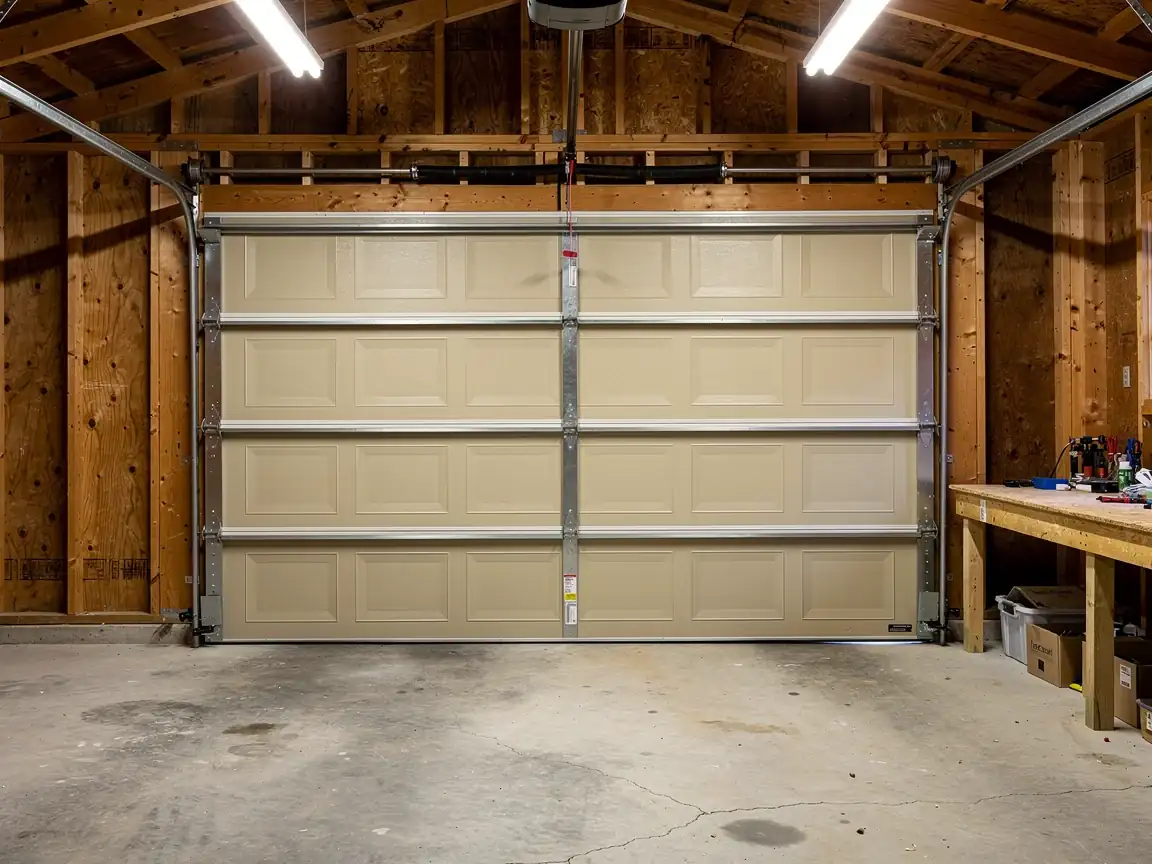
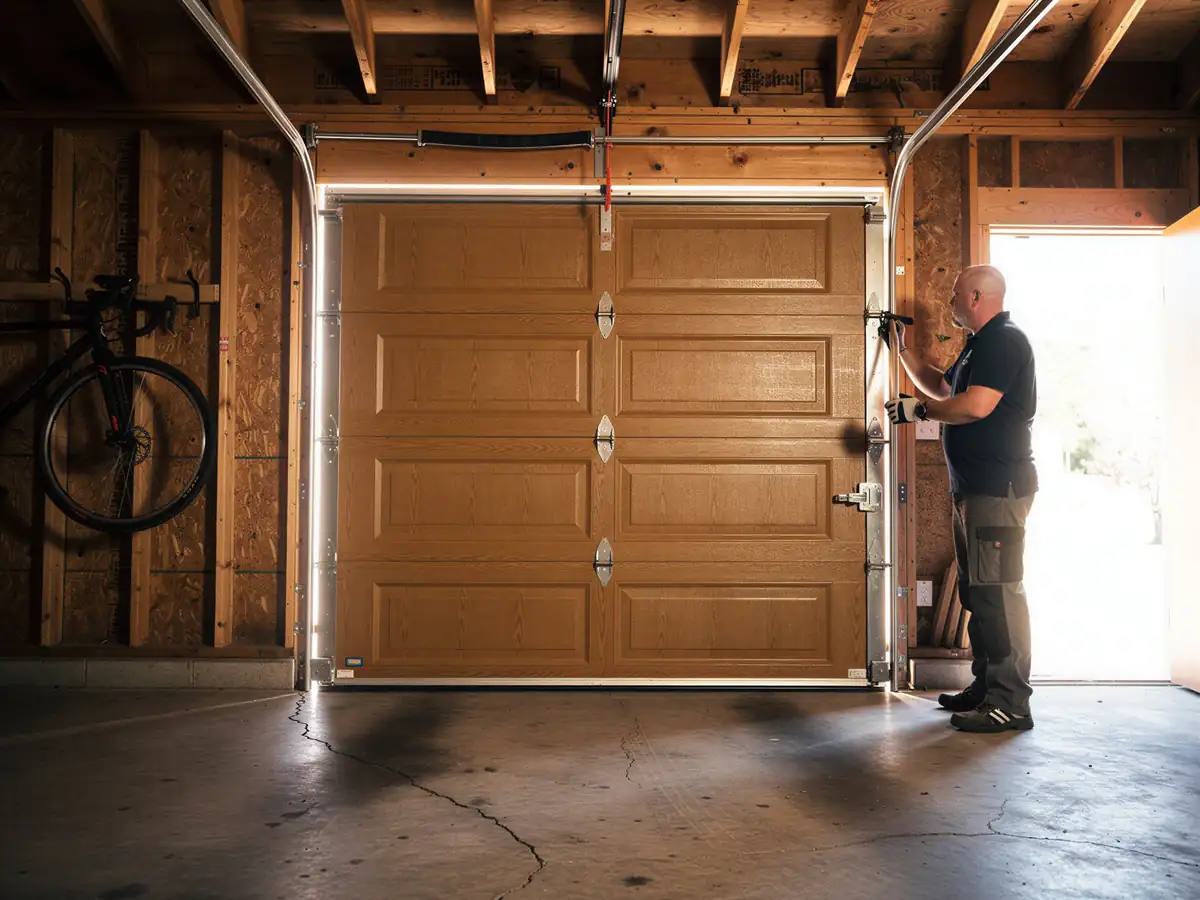
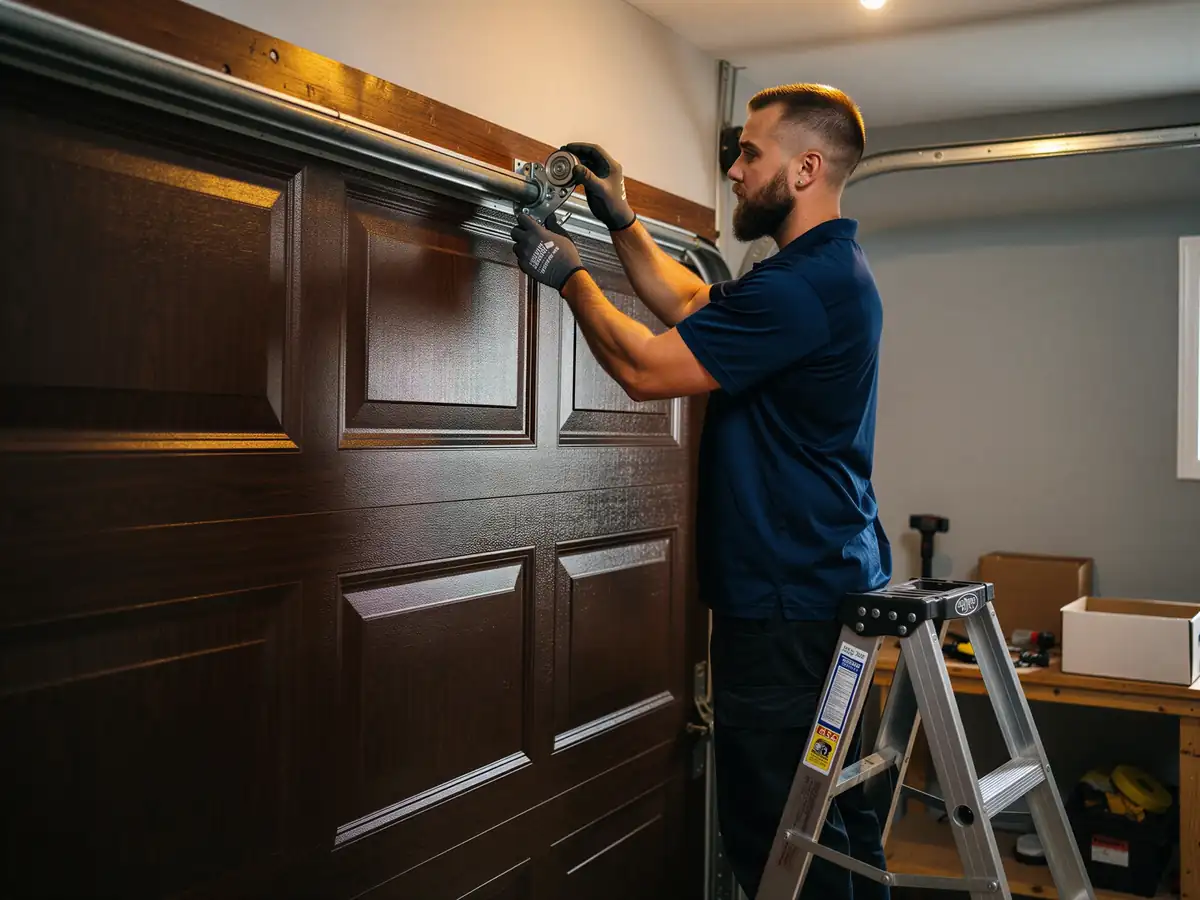
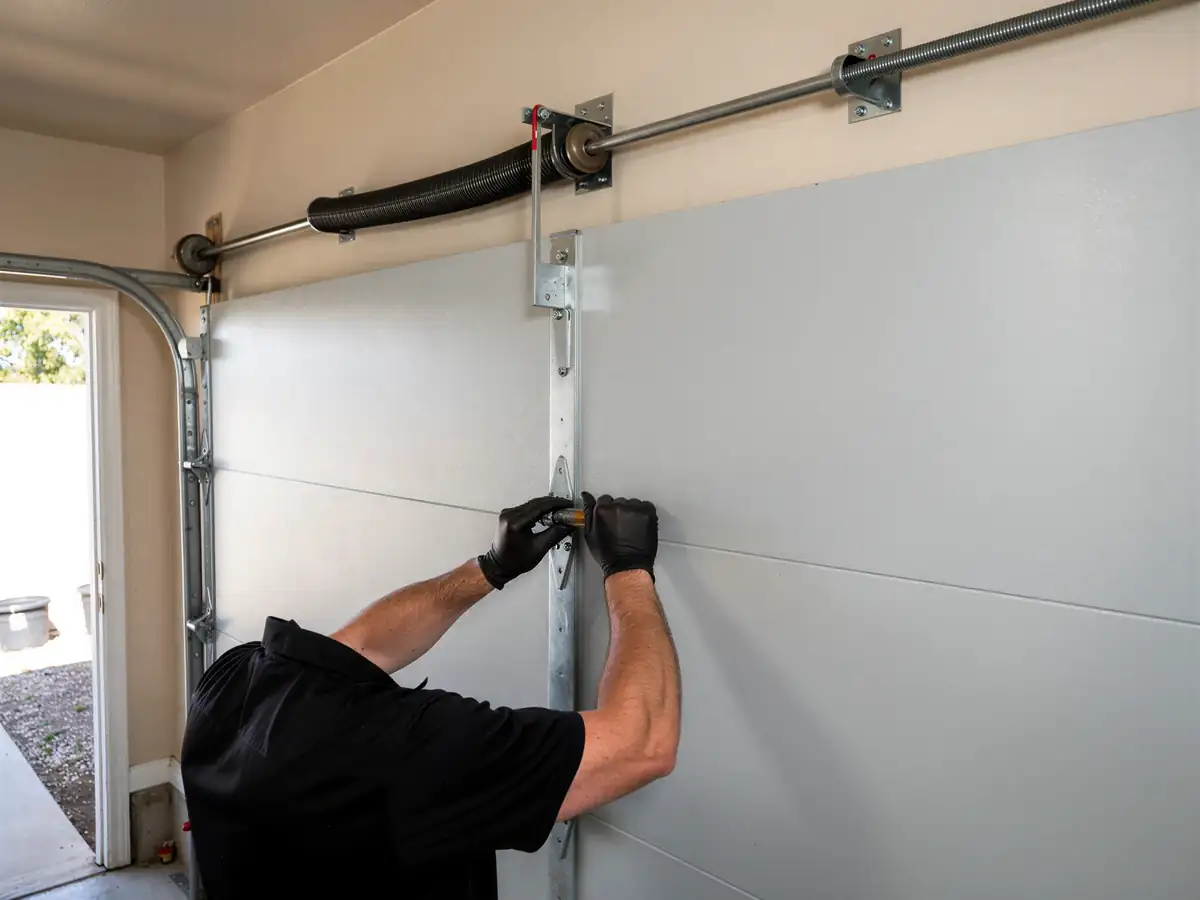
Which on older doors is the part that actually determines the job. If a matching panel is available, the swap itself is mechanical: disconnect the section, unbolt the damaged panel from its neighboring hinges, fit the new one, re-hang, and run the door through a full cycle to check travel and seal.
If the panel isn't available and the door is a full-door replacement instead, that's a longer job
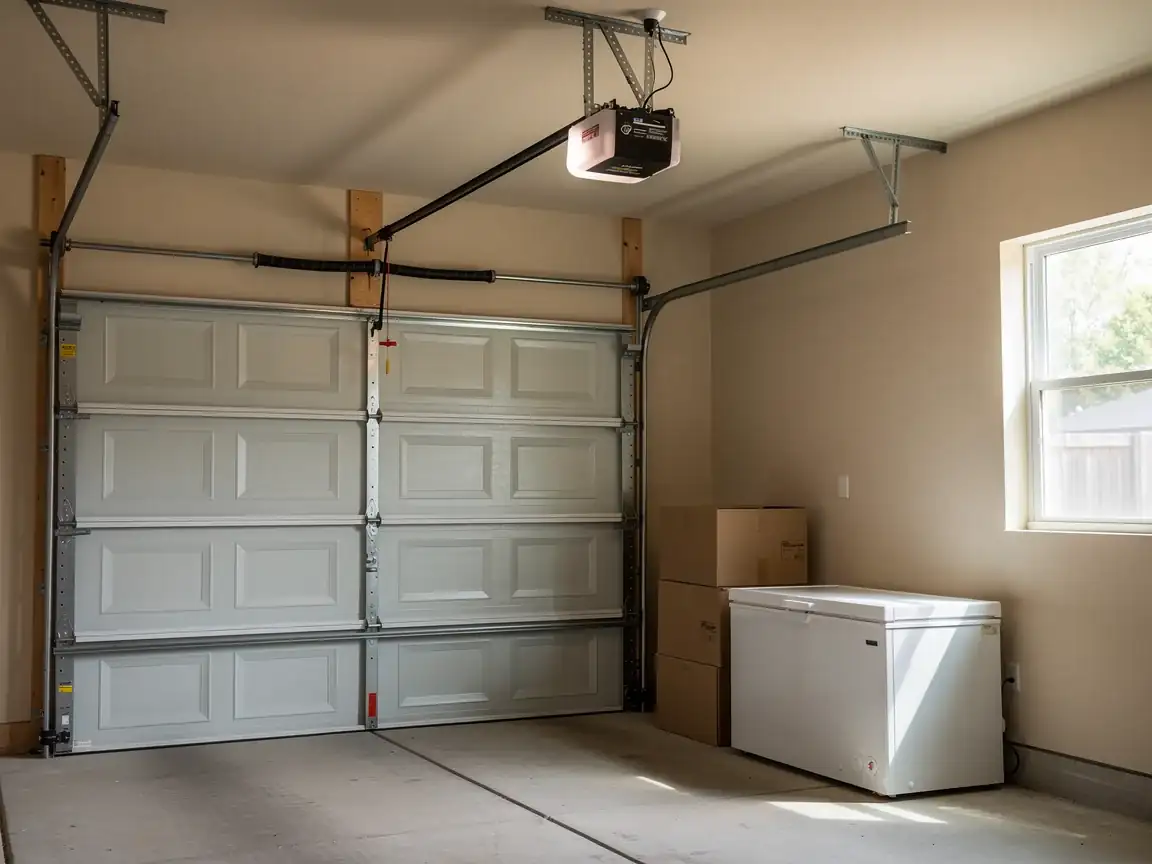
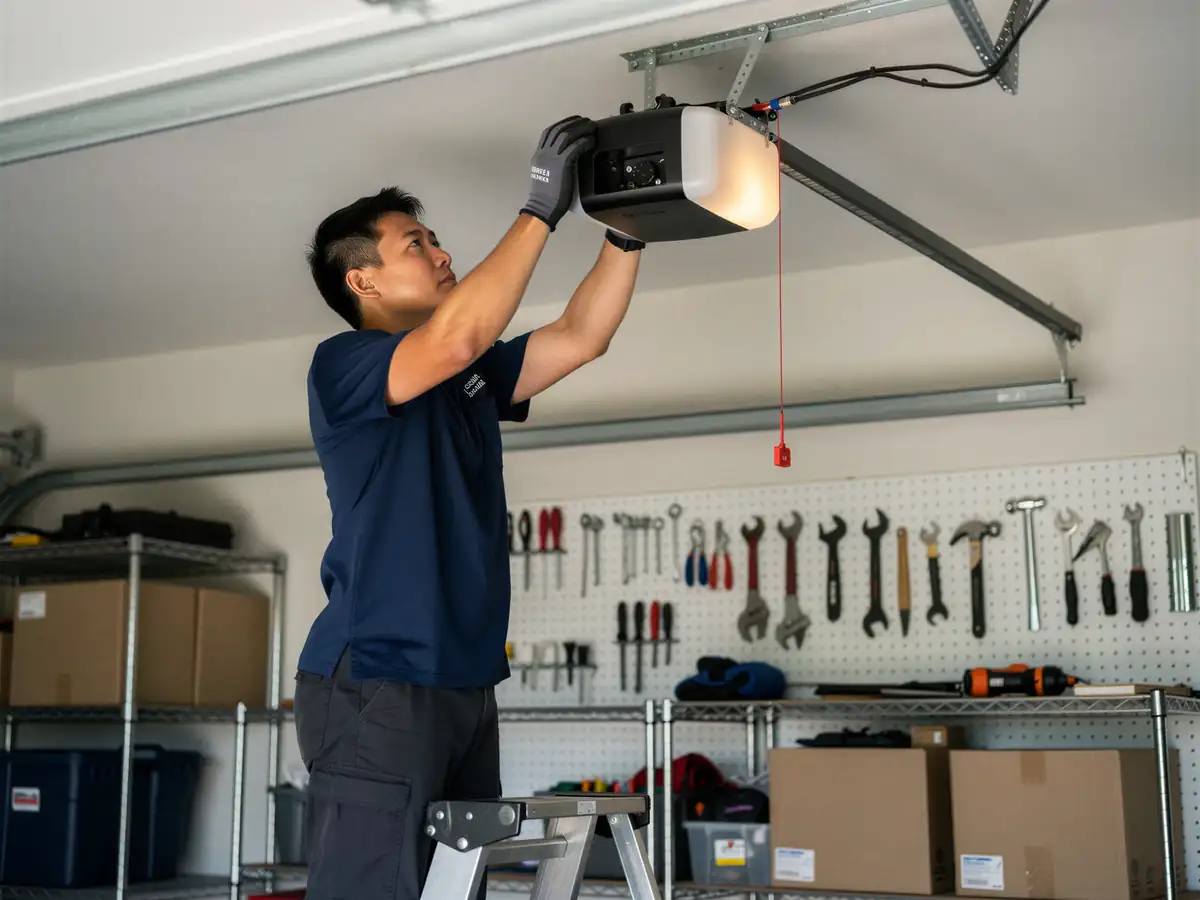
Old door down, new door hung, opener bracket and sensors re-mounted and tested.
One limitation worth saying plainly
We can't guarantee an exact color or texture match on a single replacement panel for an older door, even when the panel itself fits. Steel finishes shift over 20-plus years of manufacturing runs, and a factory-fresh panel next to a sun-faded original section will usually show a seam. We'll tell you that up front rather than let you find out after the door's back together.