Why It Happens Here
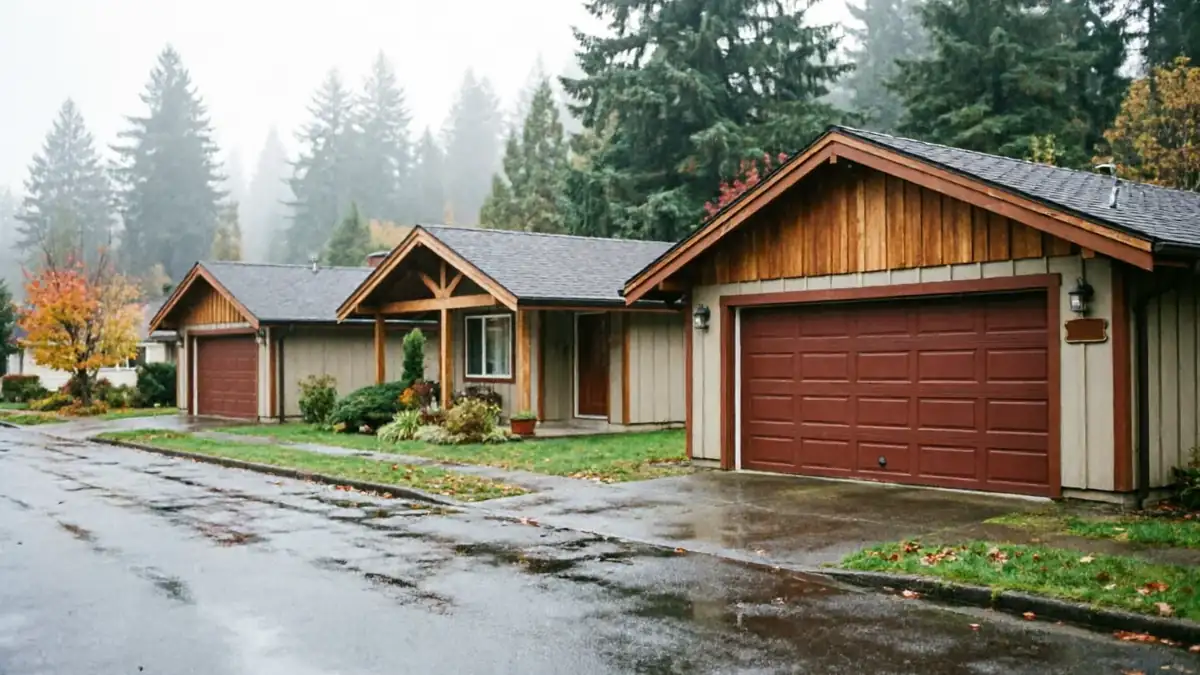
Most of the garage doors we look at across this service area sit on houses built between 1964 and 2003
With the bulk of that stock going up in the 1980s and 90s. That matters because a door and opener installed during that window is now old enough that its lubrication, weatherstripping, and factory grease have broken down long before anyone thinks to call about it. Nothing fails all at once - it's a slow fade.
The other piece is the climate band this area sits in
Cold and moderate, with enough damp months each year to work on exposed steel. Tracks collect moisture, hinges rust from the pin outward, and springs that never see oil start to squeal and then bind. In a dry climate this same door might coast for years past its service interval. Here, skipping maintenance on a 20-, 30-, or 40-year-old system is how a quiet winter morning turns into a door that won't move at all.
We see this across the 31 named areas we cover, not just one neighborhood
The housing eras are consistent enough that the same failure patterns show up from one town to the next. The door doesn't know it's overdue until the day it refuses to open.
The Cost of This Job
We're not going to quote a number here, because what a maintenance visit actually involves depends on the door's age and what's been neglected - that's a conversation for an inspection, not a page. What we can tell you is what drives the cost up or down.
A door from the 1980s or 90s that's never had the rollers, hinges, and cables checked usually needs more than a quick lube job - worn rollers and a dry torsion spring often get addressed in the same visit once we're already in there. A newer door, or one that's had regular attention, is a shorter job because there's less to catch up on.
The honest limitation: if a door has gone 15 or 20 years with zero maintenance in this climate, we may find rust or wear that maintenance alone won't fix. At that point we tell you straight rather than charging you for a lube job on a spring that's close to the end of its cycle count. Catching that early, before the failure, is the whole point of a maintenance visit instead of an emergency call.
The Symptom
The complaint we hear most from owners with houses in the 1964-2003 range is a door that's gotten loud - a grinding or squeaking that wasn't there a year ago - or one that hesitates partway up before the opener strains to finish the job. Both point to the same root cause: dry hinges and rollers, or a torsion spring that's lost tension from age and cold-weather cycling.
Sometimes it shows up as the door closing crooked, one side dropping faster than the other, which usually means a cable or roller on that side is further gone than its twin. Owners also mention the door reversing on its own partway down - that's often a sensor alignment issue that moisture and temperature swings can nudge out of true over a damp winter.
None of these are dramatic on day one. They're the kind of thing you get used to and stop noticing, until the morning the door doesn't move at all. If any of this sounds like your door, it's worth a maintenance call before it becomes a repair call.
What the Repair Takes
A standard maintenance visit covers the whole moving system
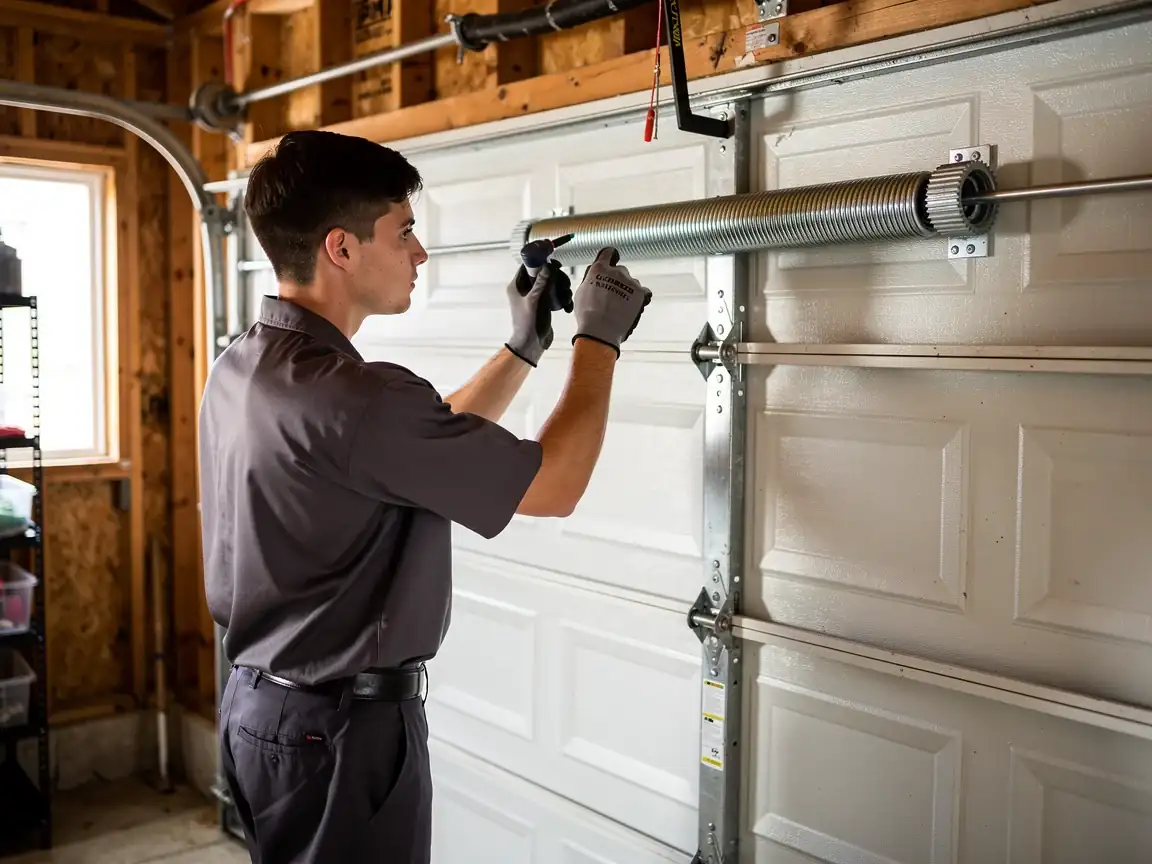
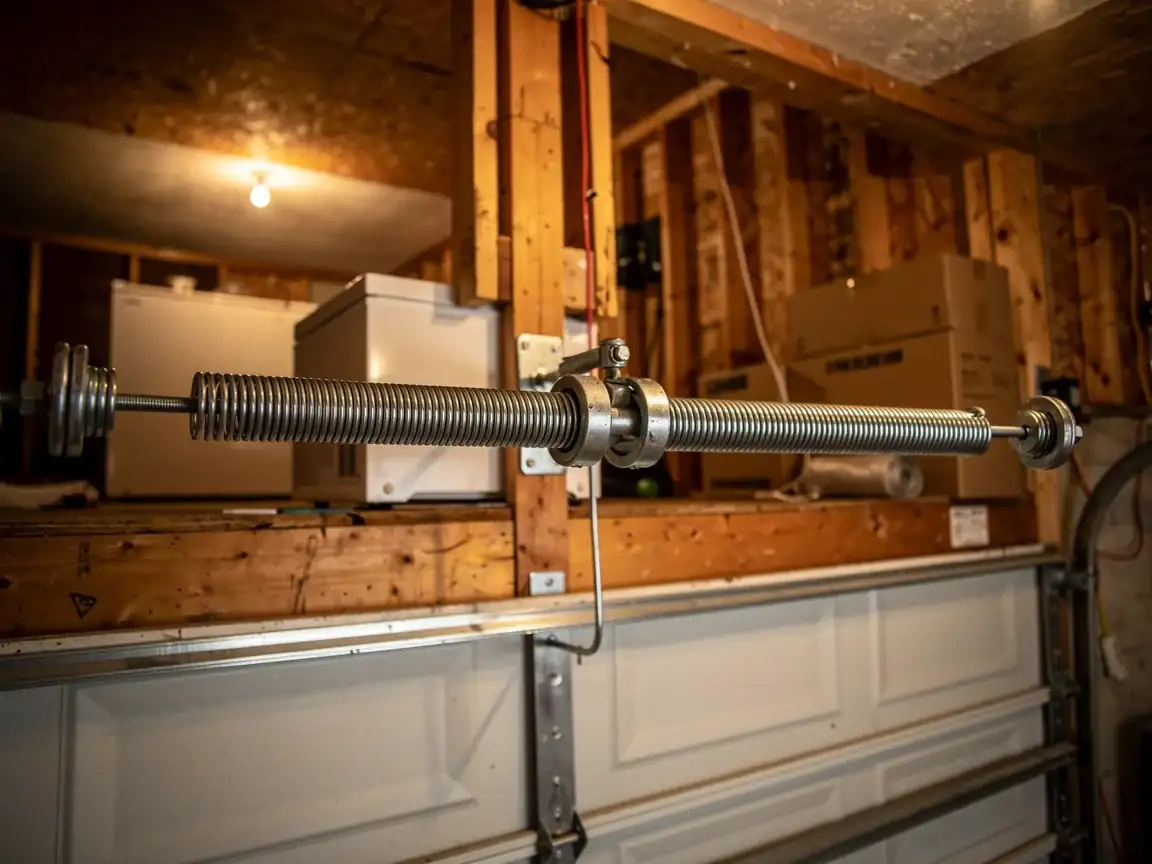
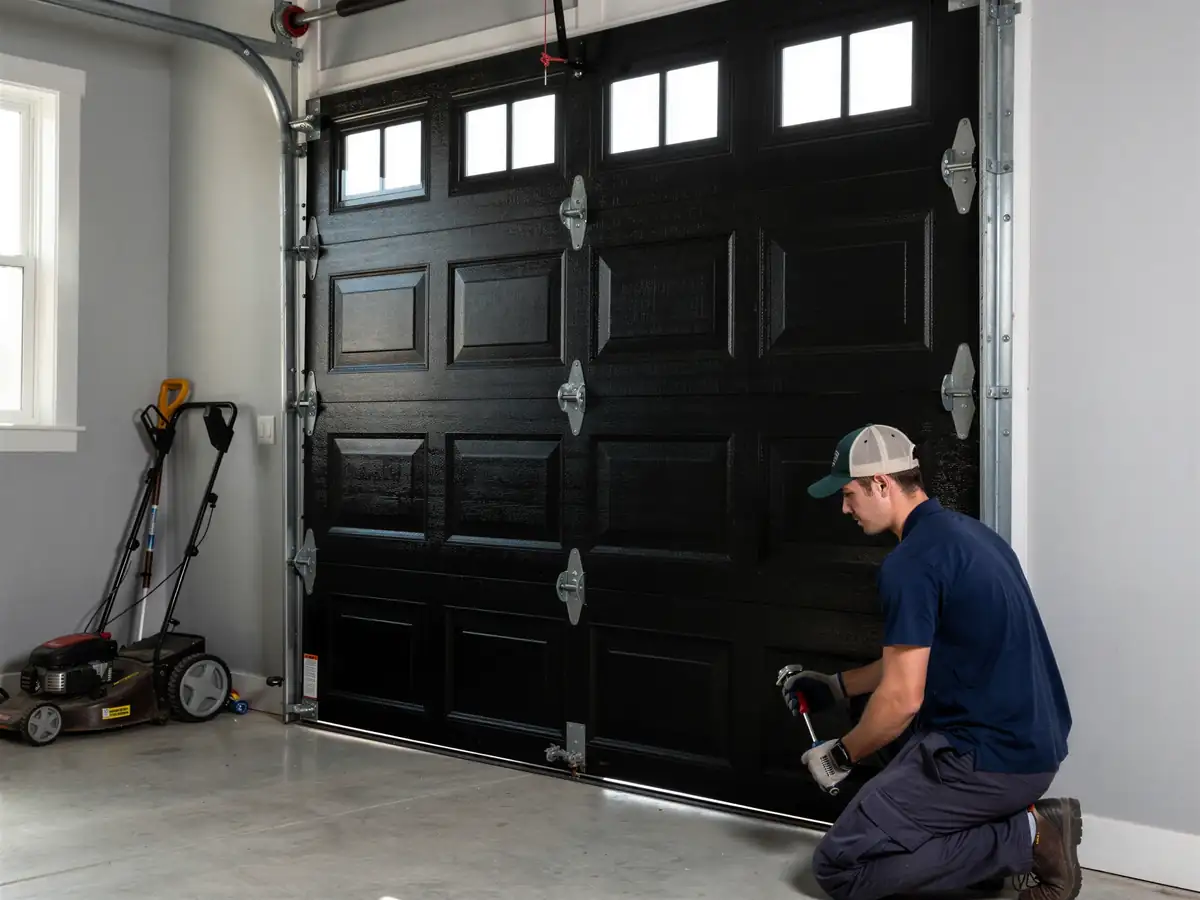
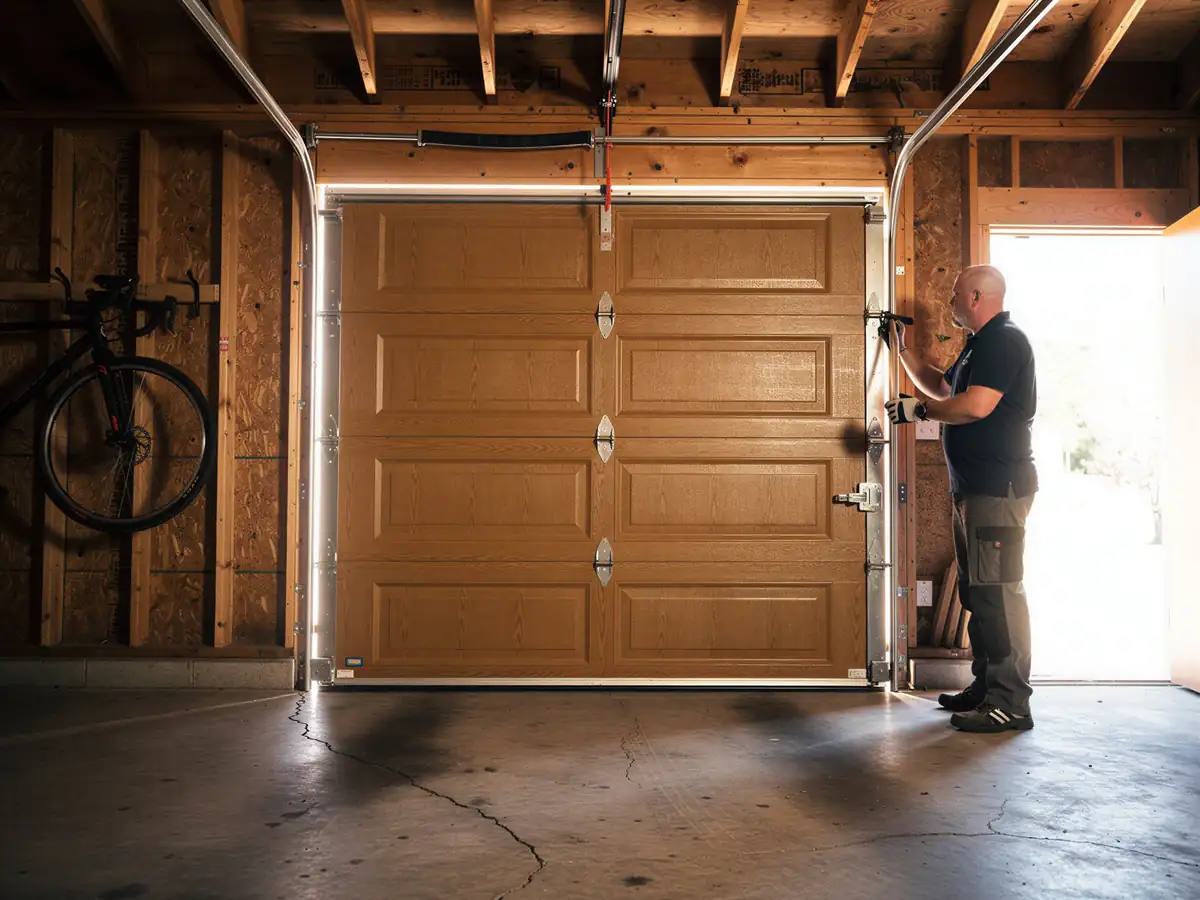
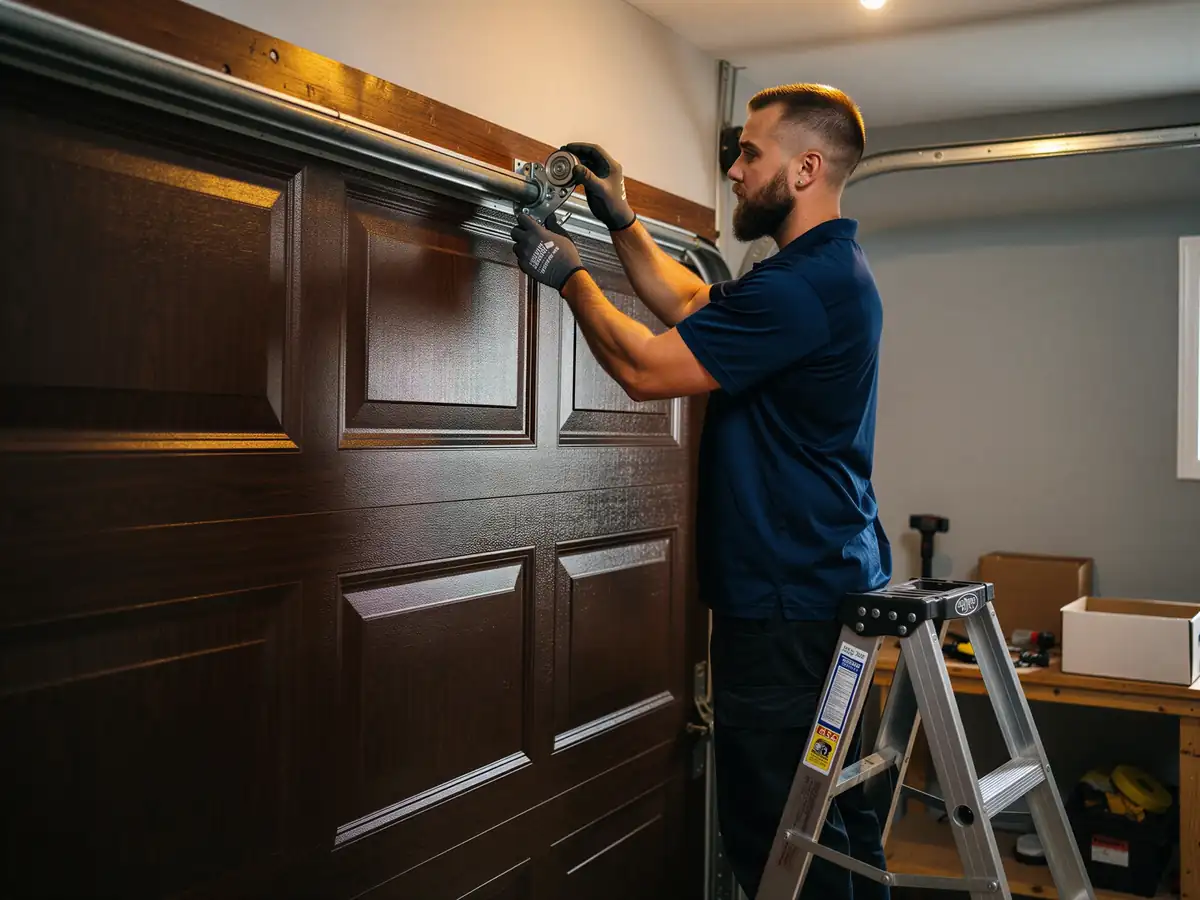
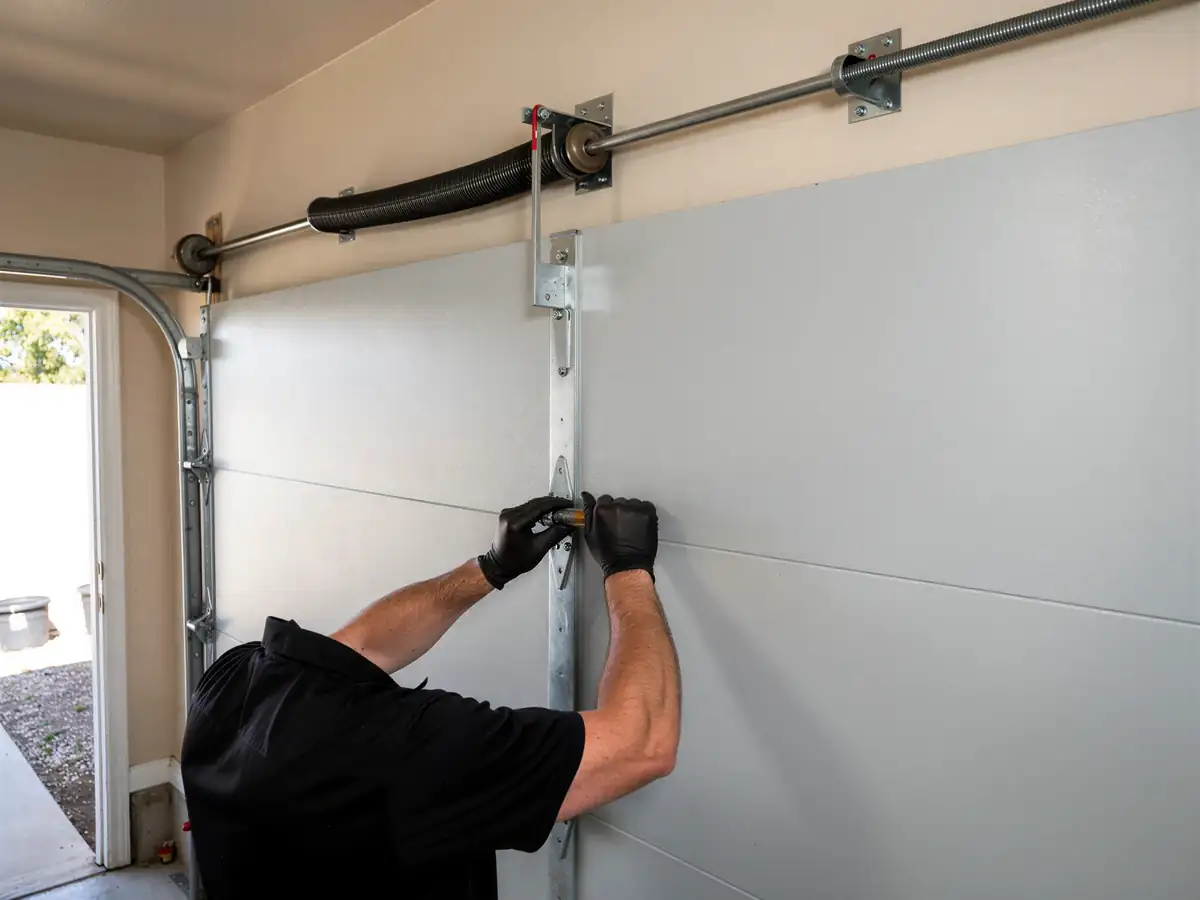
Lubricating hinges, rollers, and the torsion spring, checking cable wear, tightening hardware that's worked loose, and testing the balance and auto-reverse safety function. On a house from the 1980s or 90s stock common across this area, we're also checking whether the original hardware is still within spec or whether cold-climate wear has pushed a part past where lubrication alone helps.
What we don't do on a maintenance visit is replace major components as a matter of course
If a spring or cable is sound, we service it rather than swap it. We'll tell you when something's close to the end of its life so you can plan for it, but we're not going to sell you a new spring on a door that's still cycling fine.
Most visits are straightforward once we're in front of the door
The exception is houses where nothing has been touched in a decade or more - those take longer because we're catching up on wear that should have been addressed in stages, not all at once.