Oregon City houses built 1964-2003 rely on weatherstripping that's decades old. Here's why draughts show up now and what checking the seal actually involves.
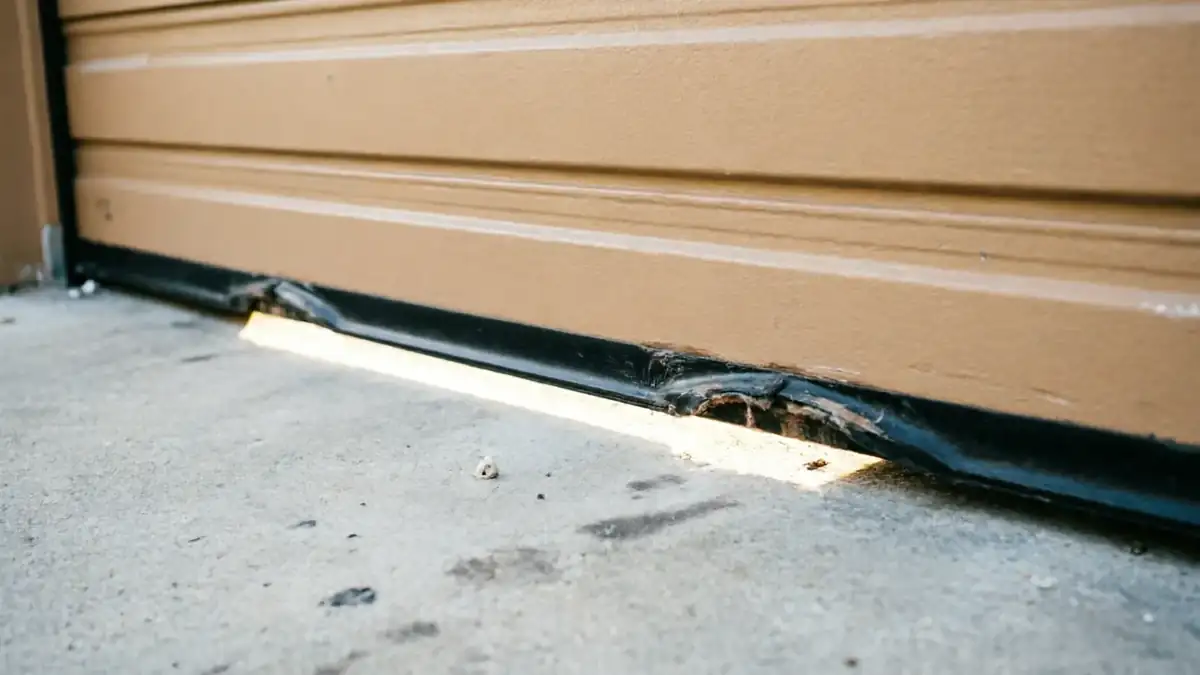
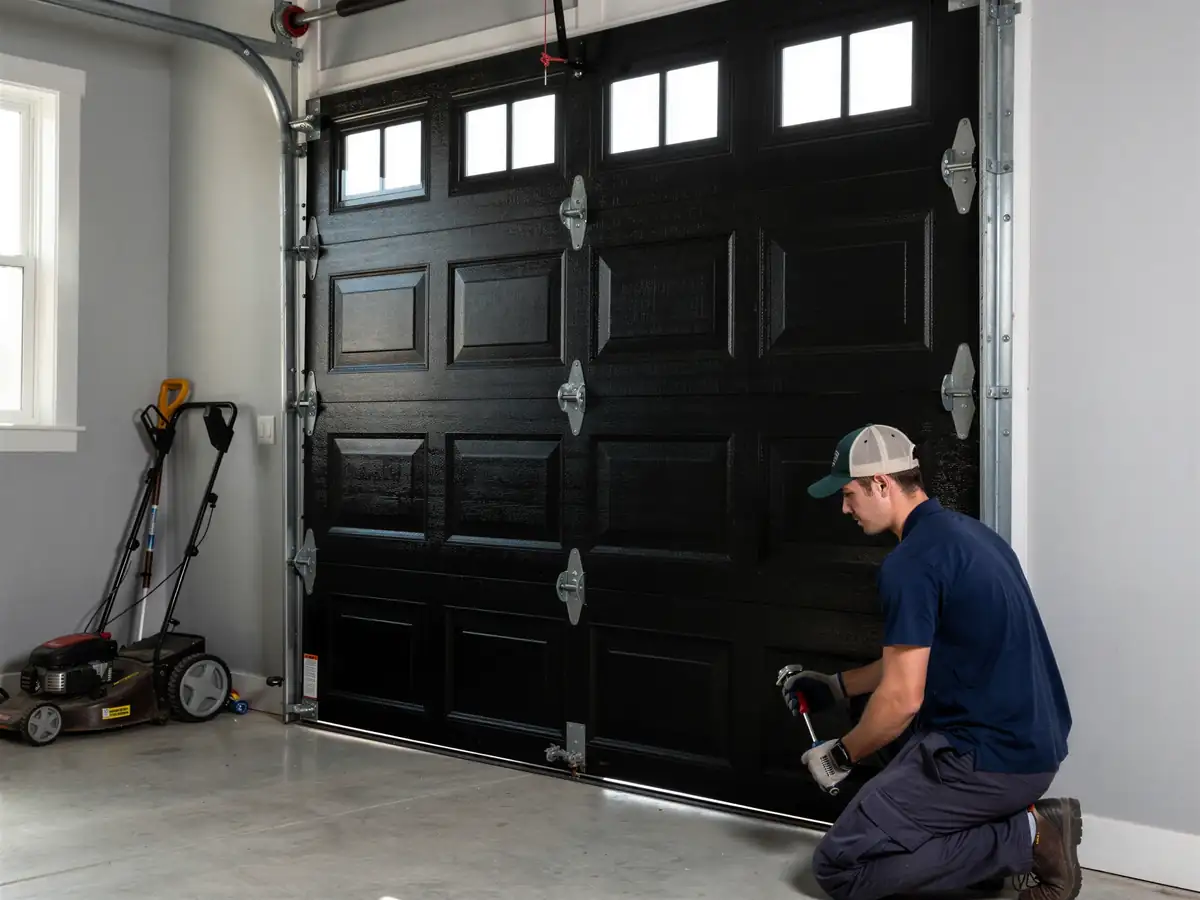
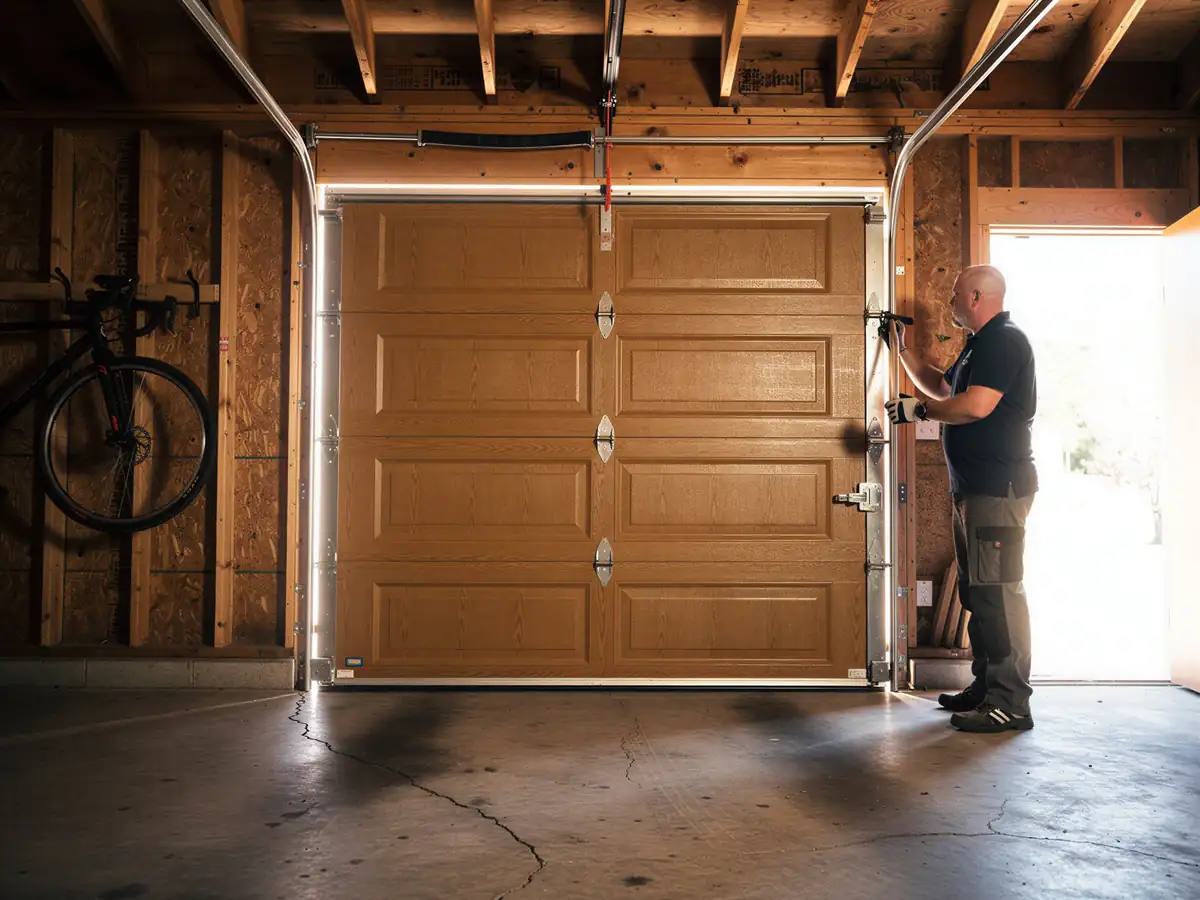
Most houses in this part of the service area, including the stretch between Oregon City, Gladstone, and Jennings Lodge, went up between 1964 and 2003, with the bulk of that stock dating to the 1980s and 90s. That's a wide build window, but it means a lot of garage doors are original or close to it, and the bottom seal and side weatherstripping on a door that age has usually hardened, cracked, or pulled loose from the track over the years. You feel it as a draught along the floor, or a cold line across the slab a foot or two inside the door. It's not a structural problem. It's a rubber one. The seal is a wear part, same as a tire, and after fifteen or twenty winters it stops doing its job even if the door itself still opens and closes fine. On an older torsion setup especially, the seal retainer can also be bent or missing hardware, which lets the bottom seal sit crooked instead of flat against the slab. That gap doesn't need to be big to move a surprising amount of air. We see this most on doors that haven't been touched since they were installed, which given the age of housing stock here is a lot of doors.
The Cost of This Job
We don't have a flat number to hand you here, because the right fix depends on what's actually failing. A straight bottom seal replacement is a different job from replacing bent track retainer or re-squaring a door that's racked slightly out of plumb, and pricing that over the phone without seeing the door is a good way to get it wrong. What we can tell you is what drives the cost: whether it's seal-only or seal-plus-hardware, and whether the door needs adjustment to sit flat again once the new seal is in. If a seal keeps failing fast after replacement, that's usually a sign the door itself is out of square, which is a separate repair, not a seal problem. We'll tell you which one you've got before we quote anything.
How Local Conditions Play In
This area sits in a cold-moderate climate band, which means the seal isn't fighting extreme heat that bakes rubber brittle in a season, but it is fighting repeated cycles of damp cold and temperature swings through the winter months. Rubber that spends the season going from wet and near-freezing overnight to warmer and damp by afternoon hardens and cracks faster than the same part would in a drier, more stable climate. That's a slower failure than you'd see somewhere with harsh summer heat, but it's steady, and it's why a seal that looked fine two winters ago can be stiff and gapped now. We'd call this out for weather seals and draughts specifically: it's not one bad storm doing the damage, it's the accumulation of cold, wet winters on rubber that was never meant to last the life of the house.
Checking It Yourself
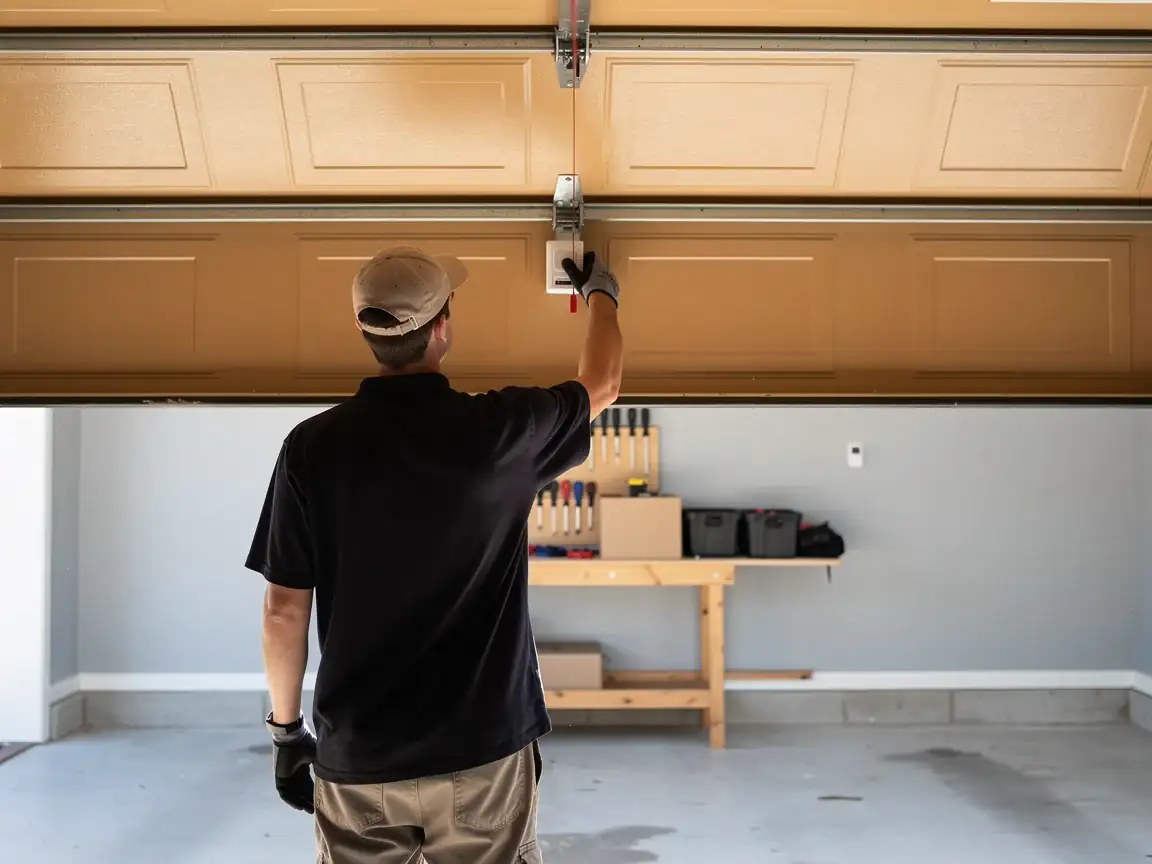
Close the door at night and walk the inside perimeter with a flashlight off. If you can see daylight, or feel moving air along the bottom edge or either side, that's your draught source. Run a hand along the bottom seal - if it's stiff, flat on one side instead of round, or pulling away from the retainer track, it's done. Check the corners first; that's where seals fail earliest because the door's weight and the slab's unevenness both concentrate there. If the gap is uneven, bigger on one side than the other, that points to the door being slightly racked rather than just a worn seal, and that's worth a call rather than a seal swap, since a new seal on a racked door won't seal right either. We're at /.
Cold, damp weather is harder on weatherstripping than a stable climate is. The seal hardens and shrinks slightly as it gets cold, which opens small gaps it wouldn't have in milder weather. If the seal was already worn, winter is when you'll notice it most.
Is a draughty garage door worth fixing or should I replace the whole door?
If the door opens, closes, and sits square, a seal replacement usually solves it. Replacement makes more sense when the door itself is bent, racked, or old enough that other parts are failing alongside the seal - we'd tell you which situation you're in before recommending either.
How old does a seal need to be before it fails?
We don't have a fixed number for that, since it depends on sun exposure, how often the door is used, and the specific seal. Given the age of housing stock in this area, a lot of seals are original to the door and well overdue.
Ready to get your garage door sorted?
Tell us what it’s doing and where you are in Oregon City - we’ll take it from there.