The DIY Question
Beavercreek's housing stock centers on 1979
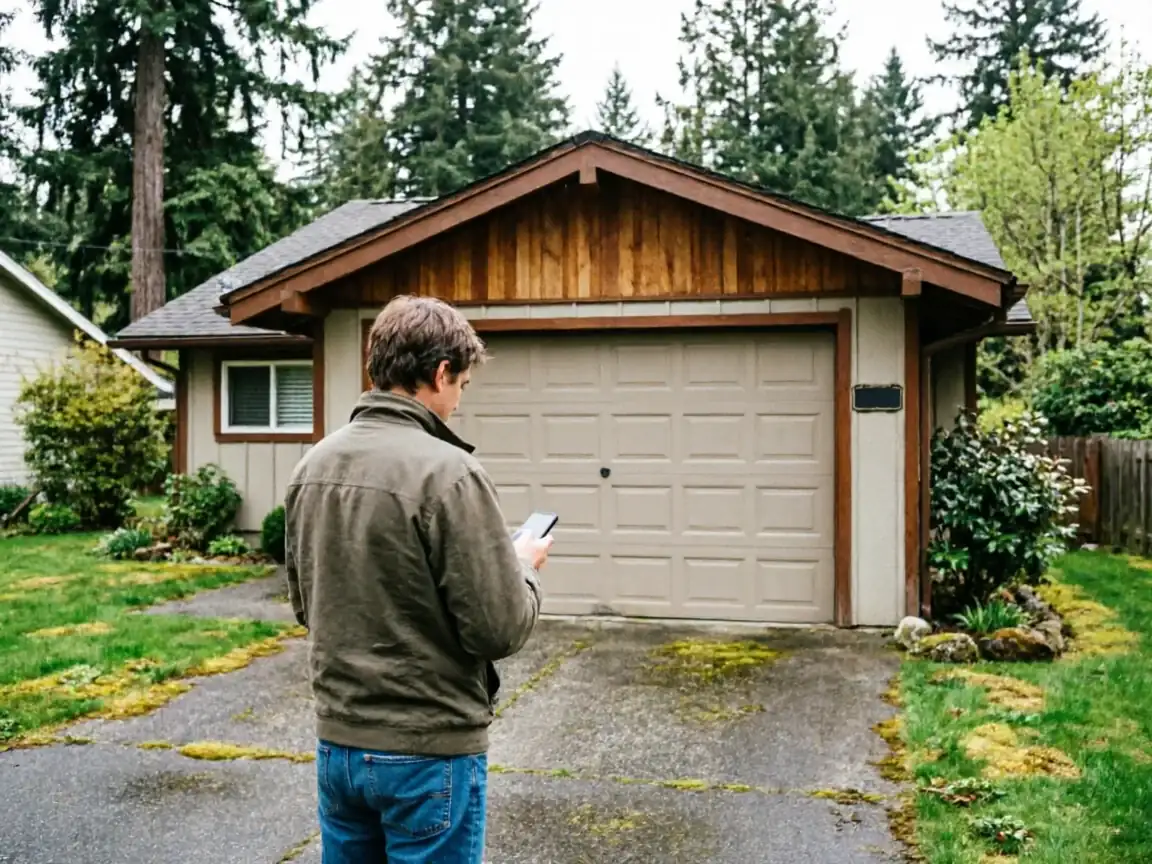
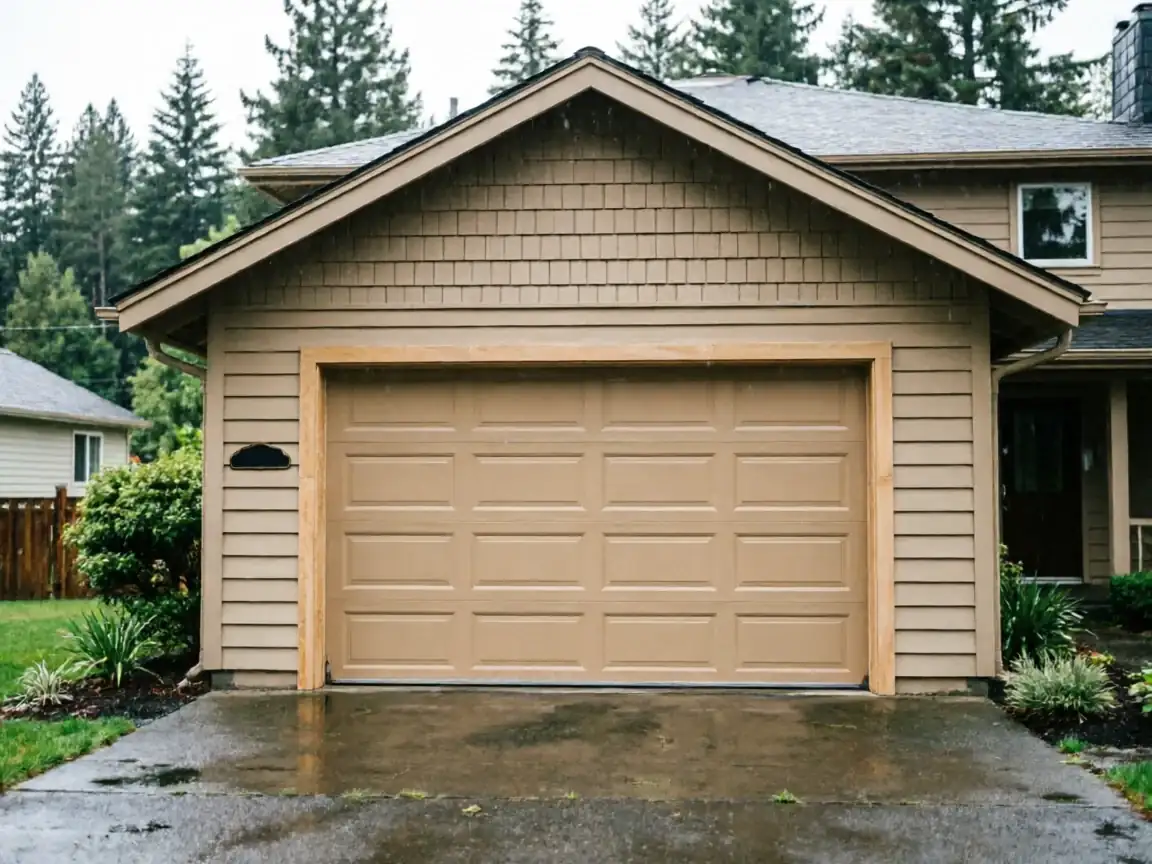
A little earlier than the 1982 median we see across the wider area we cover out of Oregon City. That few years matters more than it sounds. Doors and openers from the late 1970s often ran on hardware that's since been phased out - different spring winding cones, different track brackets, sometimes a header clearance that doesn't match what's sold off the shelf today. A homeowner pulling a new door kit off a shelf and expecting it to bolt onto a 1979 frame runs into mismatched track widths more than people expect.
Can you install a new door yourself?
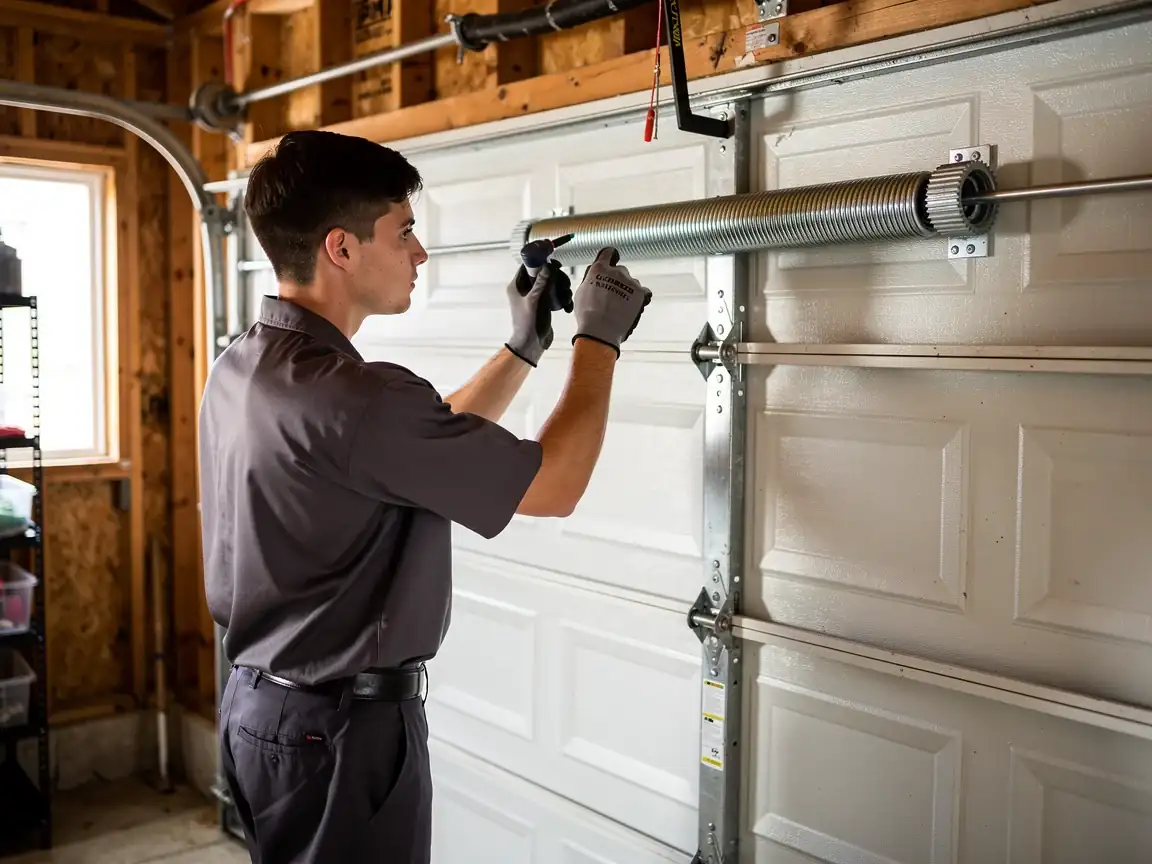
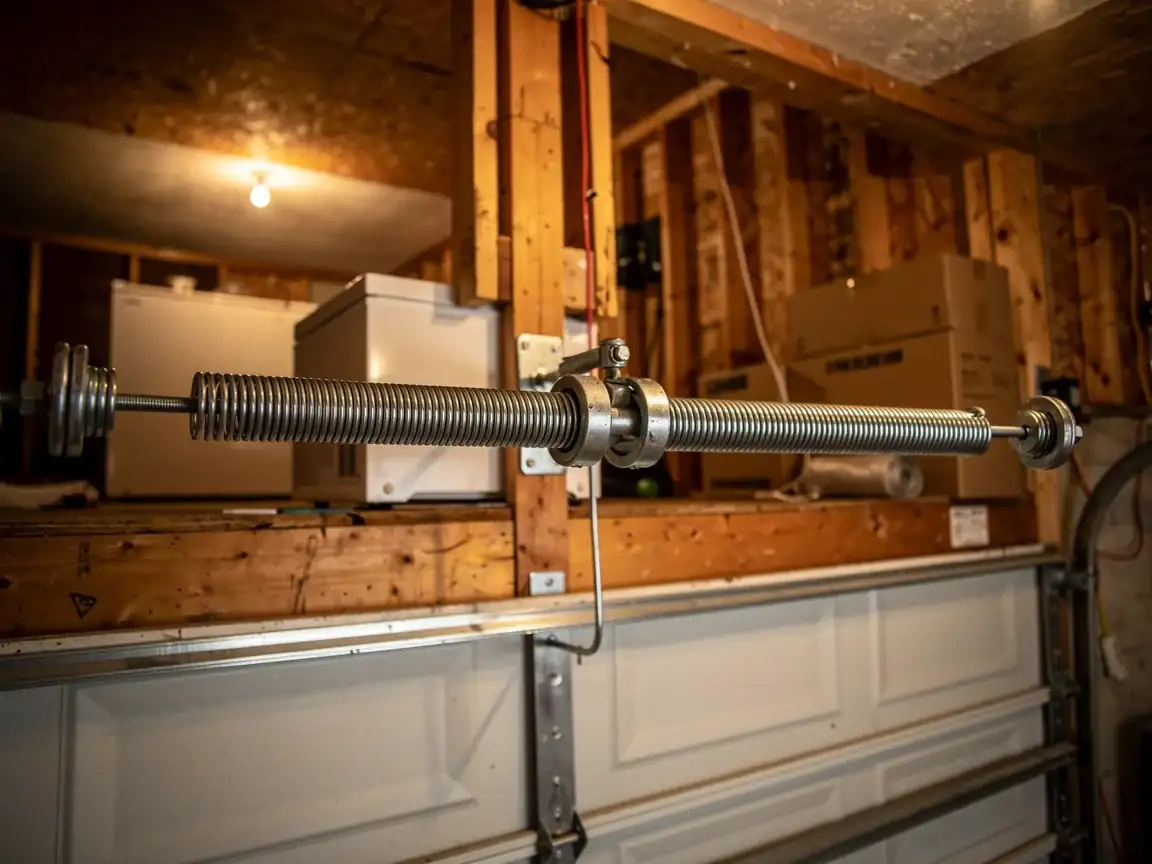
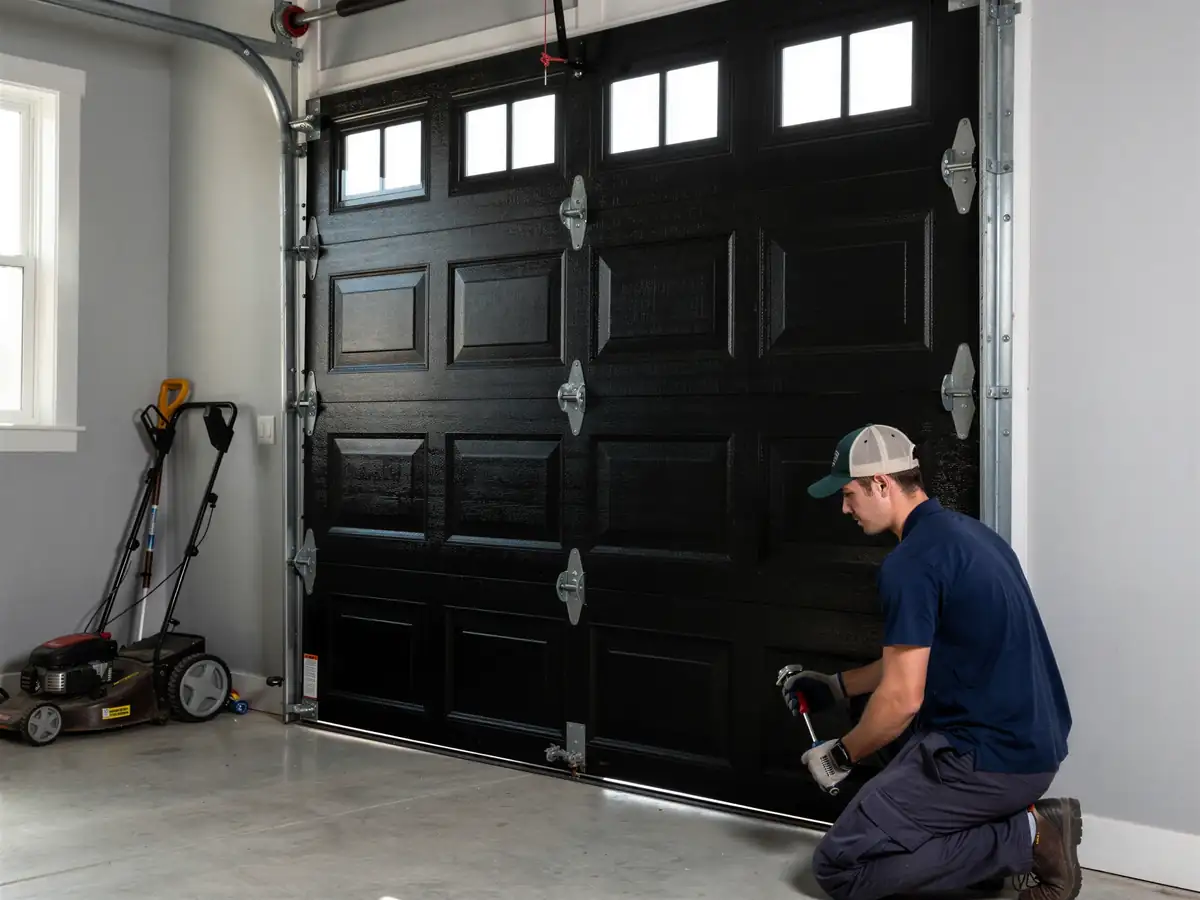
Mechanically, maybe, if you're comfortable with torsion spring tension and you've done it before. We won't pretend otherwise. What we will say is that on a house this age, the measuring and bracket work takes longer than the install itself, and a half-inch error on jamb squareness shows up as a door that won't seal at the bottom corner. If you're set on doing it, measure twice before you order, and know that returns on custom-width doors are not simple. If you'd rather have it done once, that's the job we come out from Oregon City to do.
See our coverage area for Beavercreek here: /coverage/beavercreek/
Parts We Carry
We stock insulated steel sections and torsion springs sized for the openings common on 1960s-through-1990s construction across this area, which covers most of what's standing in Beavercreek. The region sits in a cold-but-moderate climate band, so the doors we spec here carry enough insulation to cut the chill off an attached garage wall without going to the heavier commercial-grade panels some installers push on homeowners who don't need them.
What we don't carry on the truck is every obsolete track bracket or roller size from the original builder lots. If your opener or track hardware is a genuine 1970s original and the bracket spacing is nonstandard, we may need to order a part rather than swap it on the spot. That's the honest limitation: we'd rather tell you a part needs a day or two than force a fit that won't hold tension correctly.
For the door itself, we work in standard single and double widths plus a few of the narrower single-car openings that show up more often on older Beavercreek lots than on newer streets elsewhere in the area. We size the spring to the door weight and the opener to the spring, not the other way around - guessing on torsion spring cycle life is how you end up back here in two years instead of fifteen.
How Long You Are Without the Door
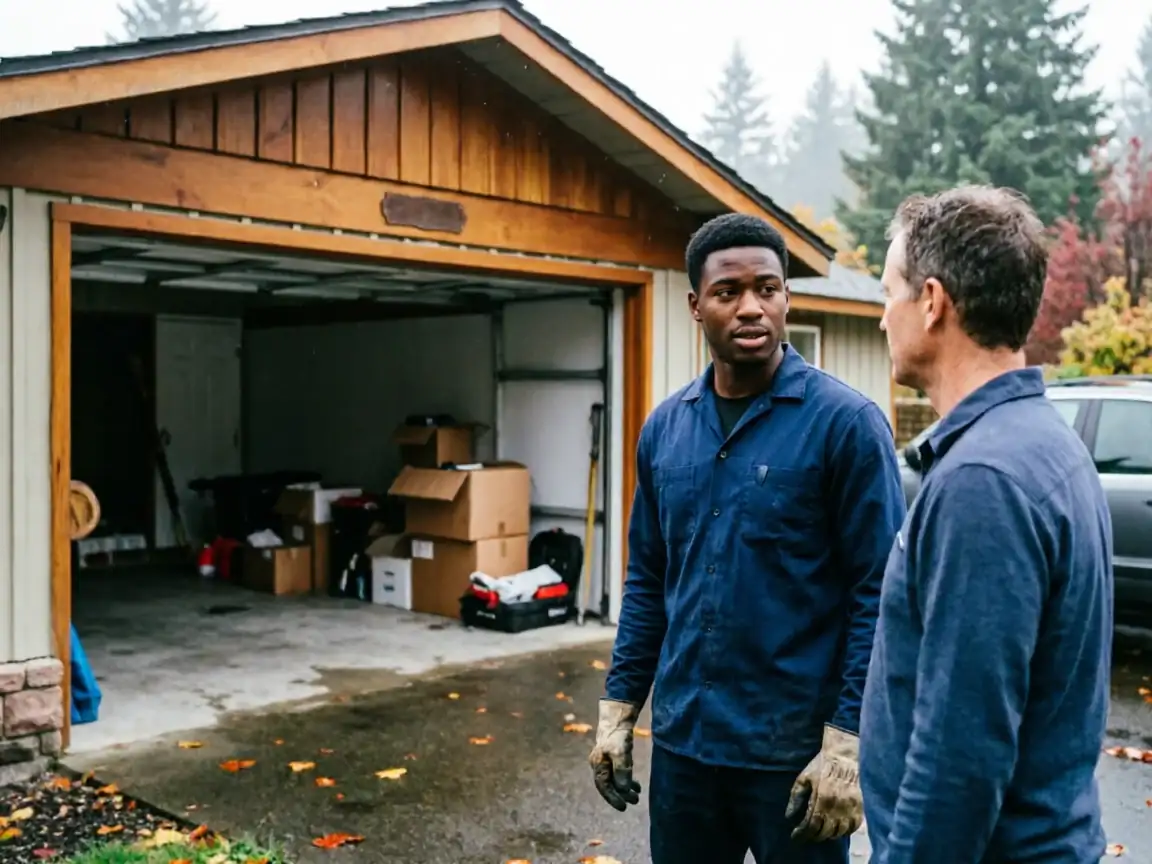
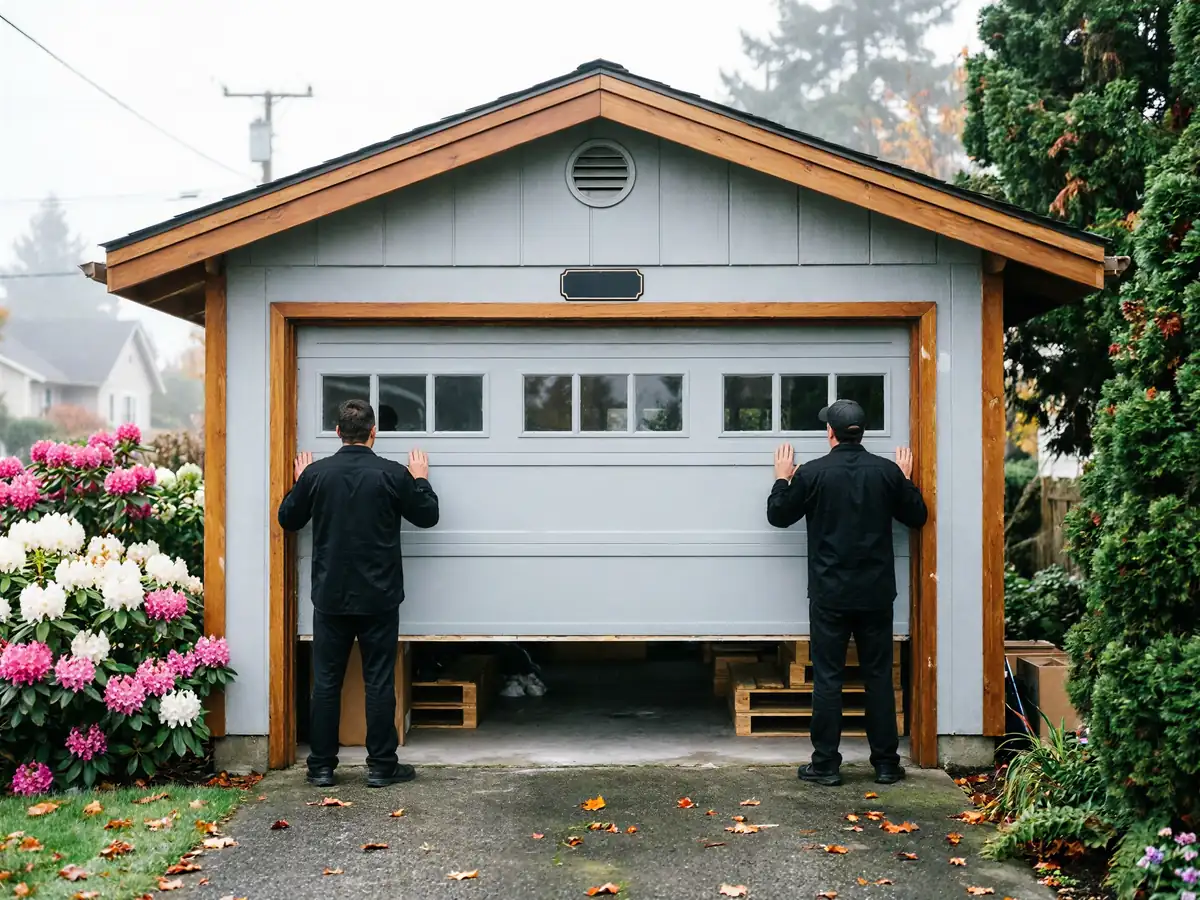
We run this job from the Oregon City shop, about six miles from Beavercreek. There's no branch out here, so the time without a working door includes drive time both ways, not just the hours on the ladder. For a straight swap - same opening, same track position - that's usually a half-day once the crew and the door are on site together.
Where it stretches out is custom sizing. Because Beavercreek's older stock runs narrower openings than a lot of newer construction, a non-standard width sometimes means the door itself is a special order before we ever load the truck. We'll tell you up front if your opening falls into that category rather than promise a same-week install we can't back up.
We don't quote a fixed response time for this area specifically - travel distance and crew scheduling both factor in, and we'd rather give you an honest window when we see the opening than a number that doesn't hold. What we can say is the trip itself isn't the bottleneck most of the time; it's whether your door is a stock width or a special order.
The Complications
The main wrinkle on a 1979-era Beavercreek house is opening width
Builders in that period often framed single-car garages narrower than what's standard today, and some double-door openings used a center post that newer doors aren't built to span without modification. We measure the rough opening before we quote, not after, because guessing on this has burned installers before us.
At 1,630 households, Beavercreek is a smaller market than most of the other areas we cover from Oregon City
Which means we're not working off a long run of identical houses on identical streets - every opening here gets measured on its own, not matched to a template from three jobs ago.
- 1,630 households
The other complication is header clearance
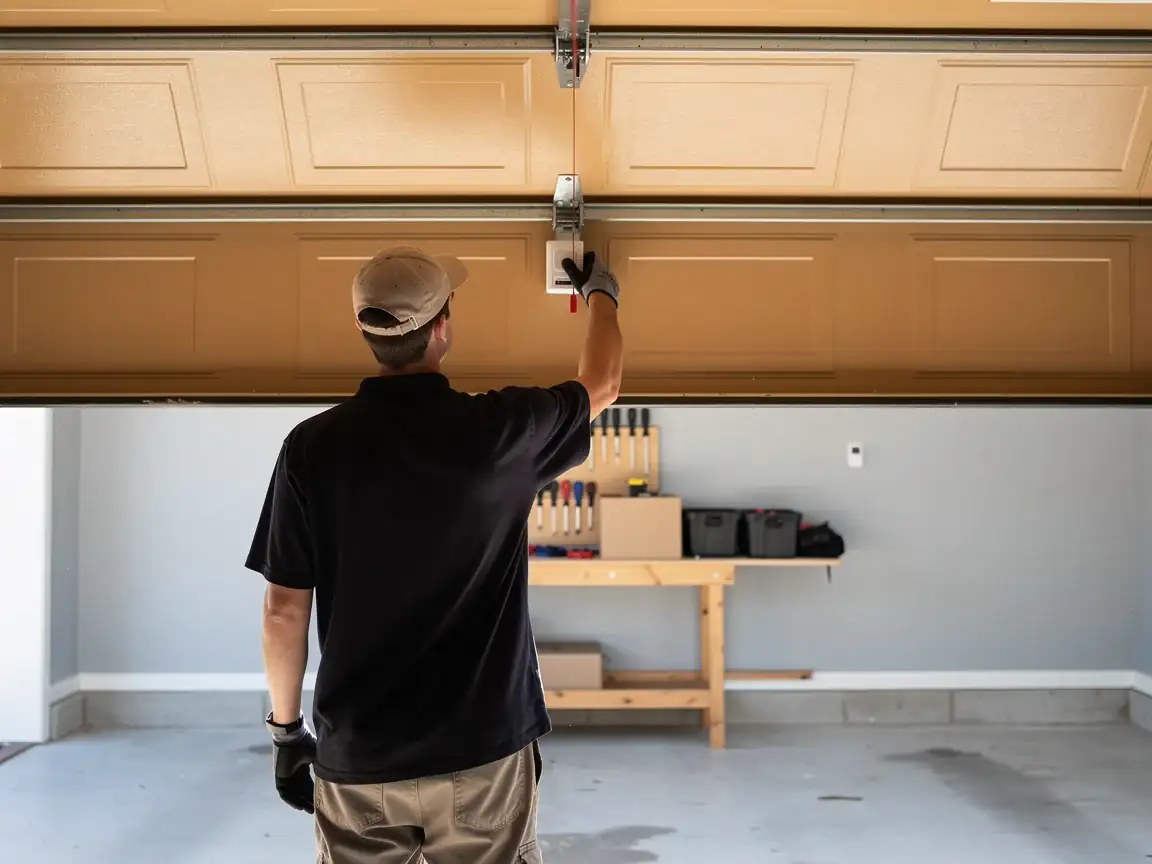
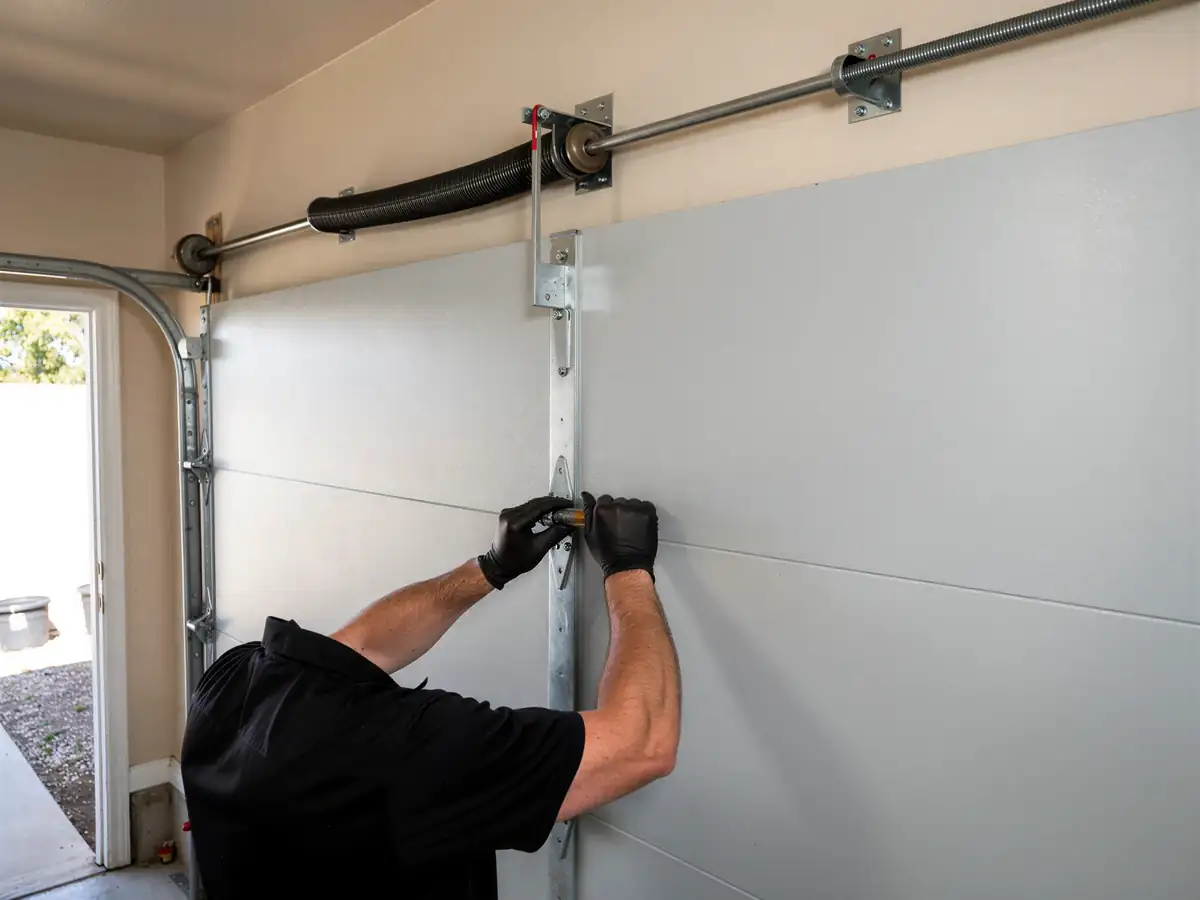
Houses from this era sometimes have less room above the door opening than a modern torsion spring system wants, especially if there's a low truss or a finished room above the garage. When that's the case, we look at a low-headroom track kit rather than forcing a standard torsion setup into a space it doesn't fit. It costs a little more in parts. It's cheaper than redoing the install because the spring binds against the ceiling.
The Cost of This Job
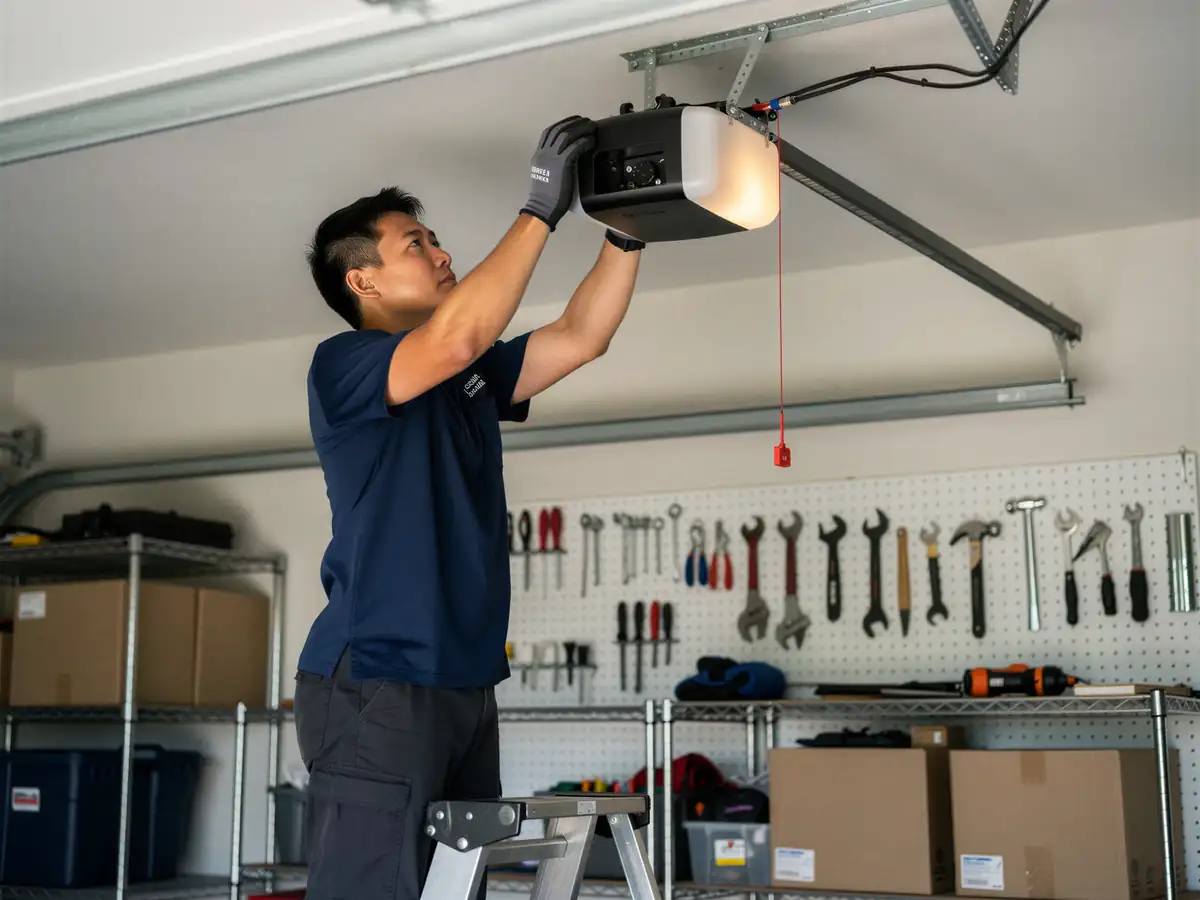
We don't post a flat price for a Beavercreek installation - the door width, insulation level, and whether your opener needs replacing all move the number, and we'd rather quote the actual opening than give you a figure that doesn't match what shows up on the invoice.
What we can tell you is that median household income in Beavercreek runs around $130,588, well above the $102,201 median across the broader area we serve from Oregon City. In practice that shows up less in what people can afford and more in what they choose - more requests here for insulated doors and quieter opener units than the base package, not because the base package is a bad door, but because the budget for the upgrade is there if someone wants it.
The honest trade-off: a wider insulated steel door with a belt-drive opener costs more up front than a basic panel door with a chain drive, and on a house this size, the difference in monthly heating bill from the insulation alone is small. If you're deciding between the two, we'll walk you through what you're actually buying rather than upsell the quieter opener as something it isn't.