Why It Happens Here
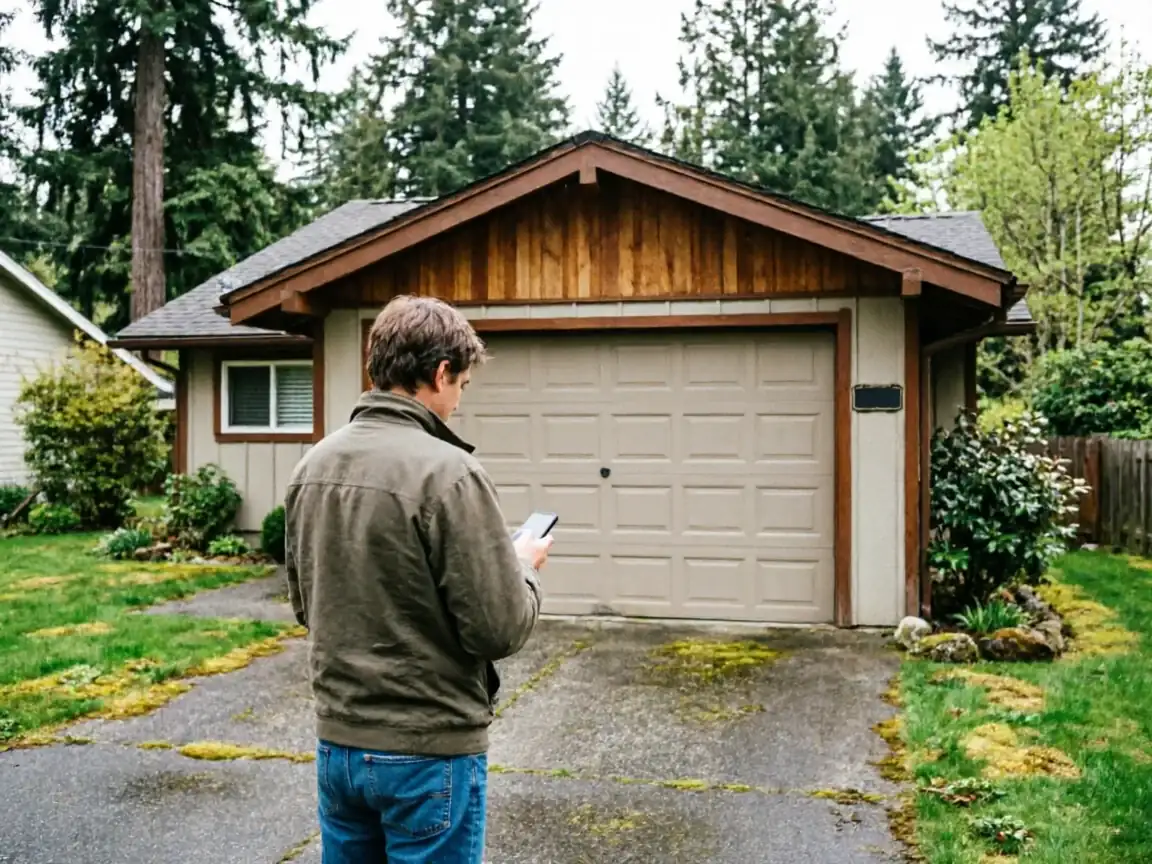
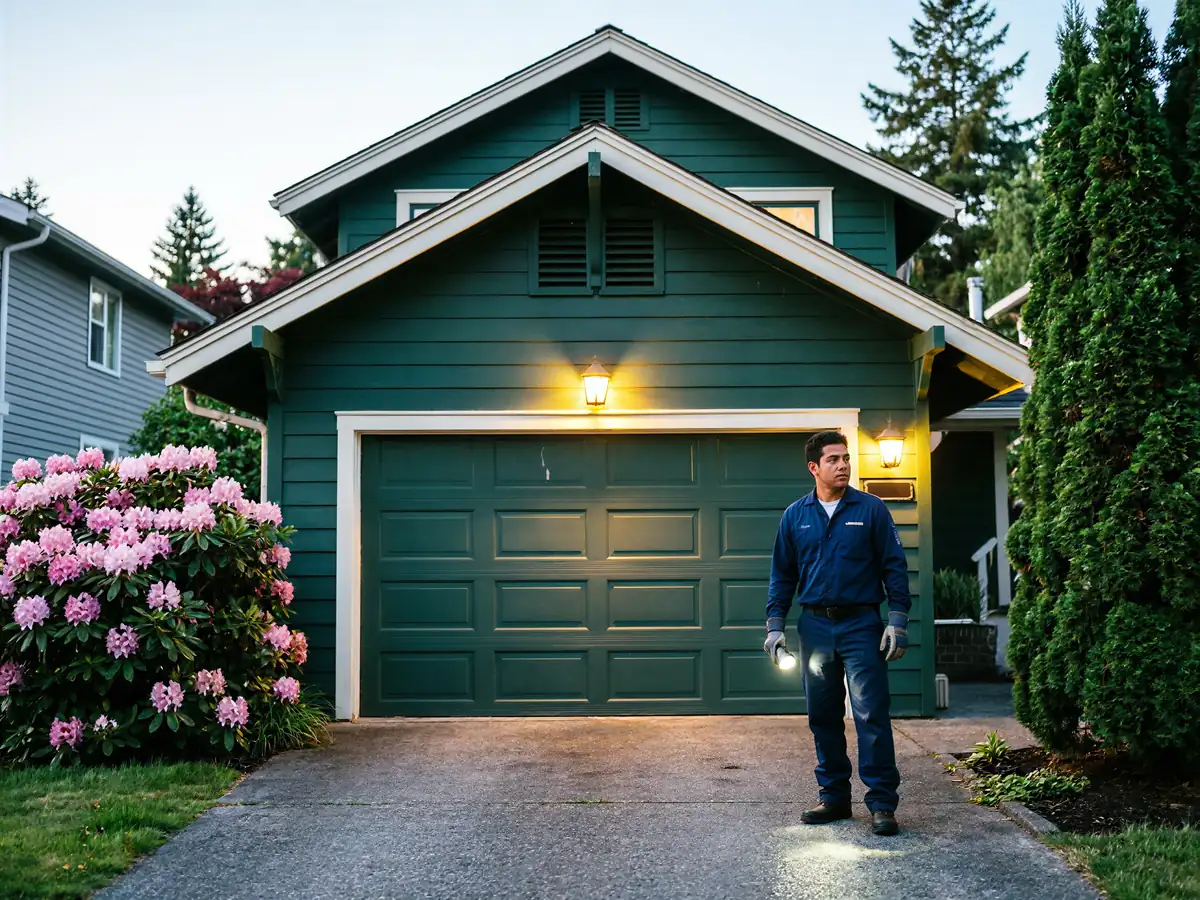
The typical house in Jennings Lodge went up around 1975
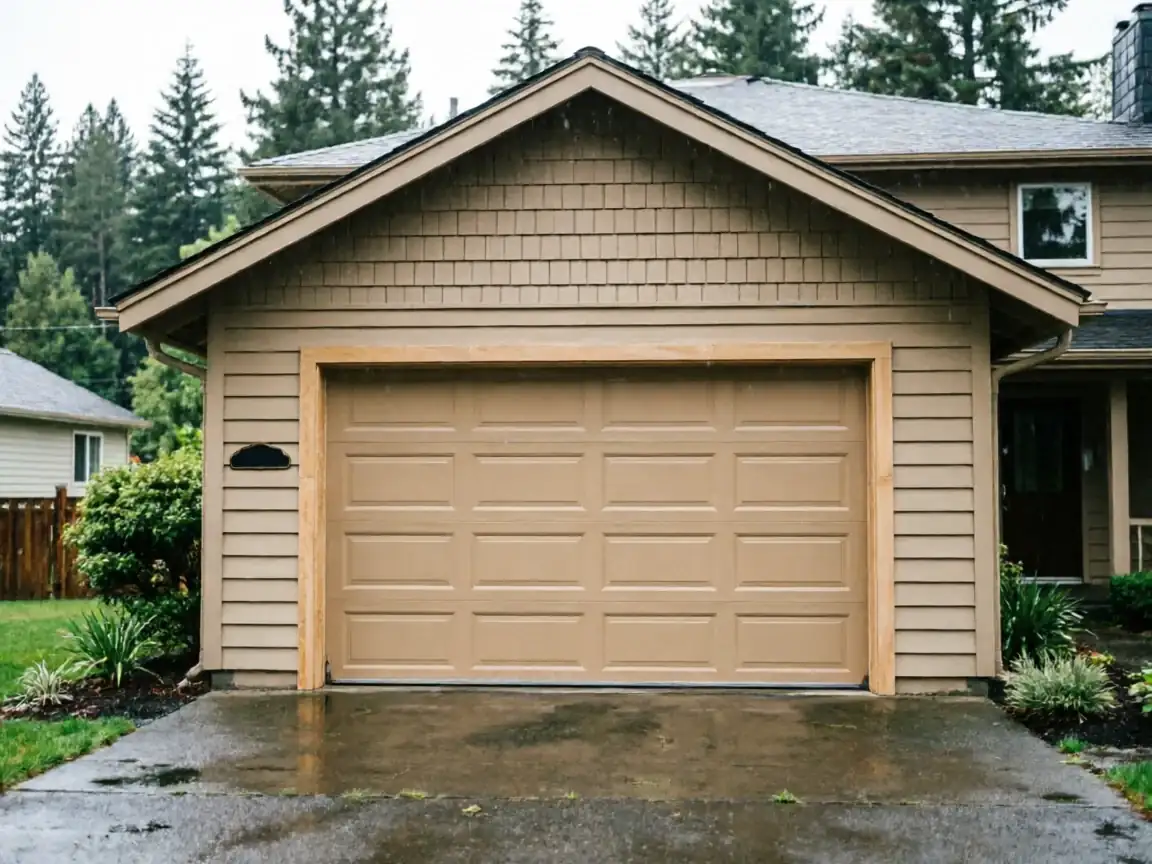
A few years ahead of the 1982 median across the broader service area, which runs from homes built in 1964 clear through 2003. That earlier build date matters for panels specifically. A lot of garages here still carry their original steel or hardboard-composite panel, bolted to hinges and a track that nobody has ever had reason to touch, because nothing broke loudly enough to call someone. With roughly 3,482 households in this pocket, it's a small enough area that we see the same pattern house after house: original panel, original hinges, maybe a replaced opener motor at some point but the door skin itself untouched since the build.
- 3,482 households
What finally brings a panel down isn't usually one dramatic event
It's forty-plus winters of condensation rust along the bottom edge, a dented section from a trailer hitch or a basketball that never got fixed, or hinges that have worked loose in oversized screw holes until the panel racks in the track. This is a cold-moderate climate band, and a mid-1970s steel panel without foam backing has been working against those seasonal swings the whole time, which shows up as warping before it shows up as a hole.
Parts We Carry
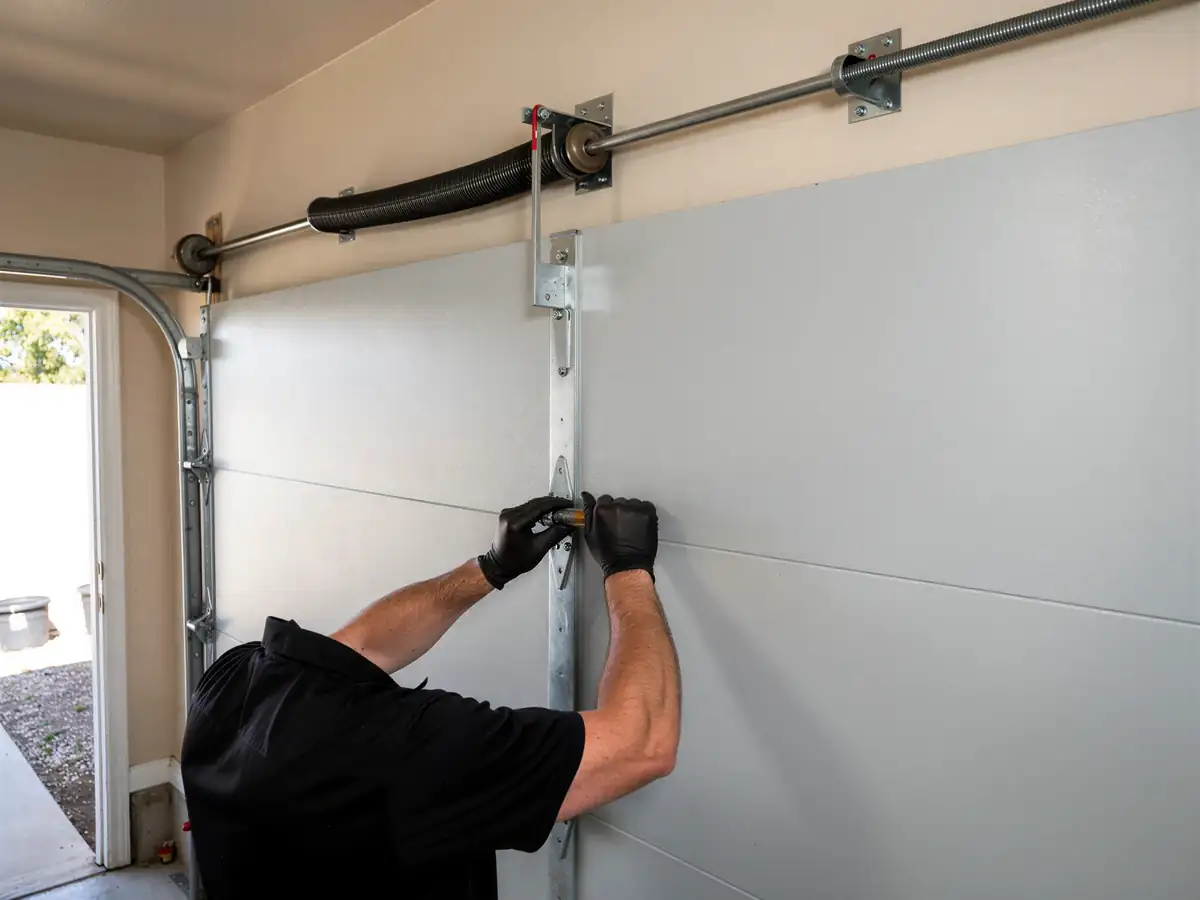
For a house built in 1975, the panel section itself is almost never a stock item anymore - those profiles and embossing patterns have been through several manufacturer redesigns, so a single matching section is a special order more often than not, and lead time depends on what's discontinued versus what's still in a supplier's catalog. What we do carry on the truck from Oregon City: standard hinges, rollers, and end stiles in the sizes that fit most doors from that build era, since those wear out independent of the panel and usually need swapping at the same time anyway.
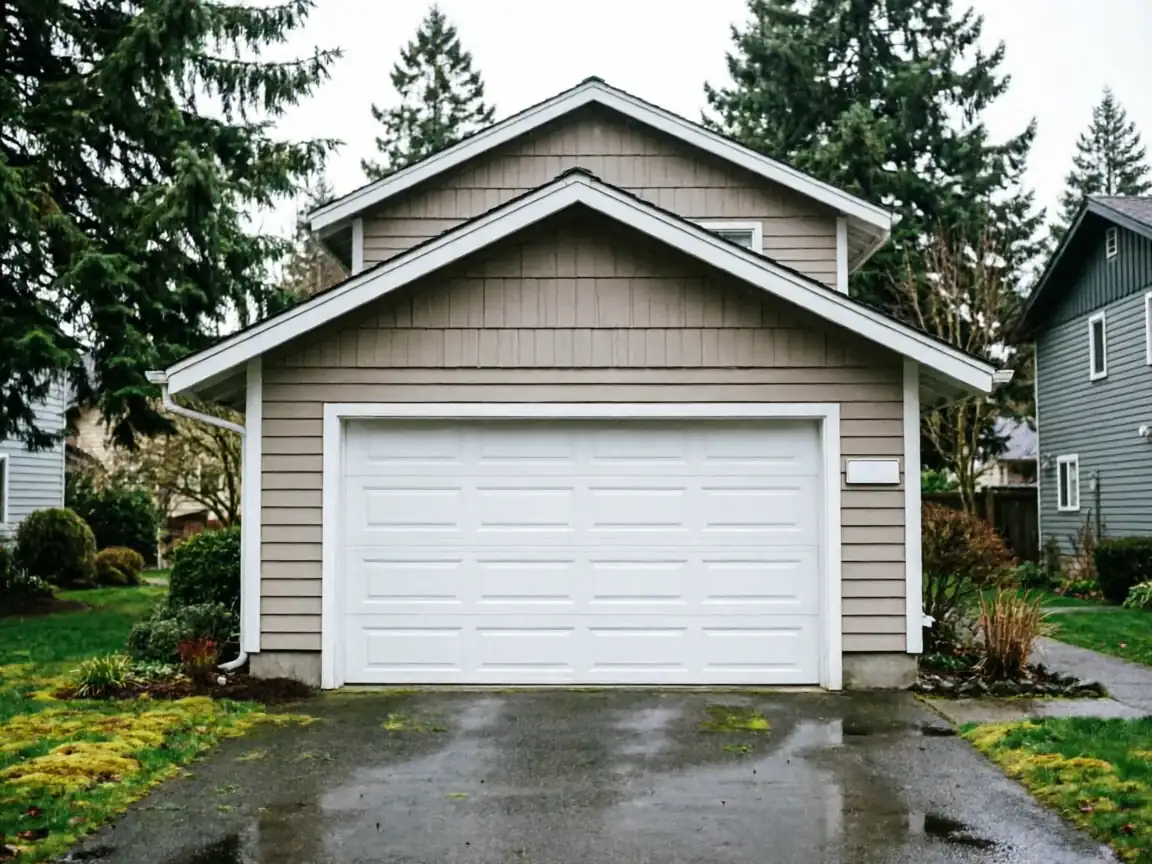
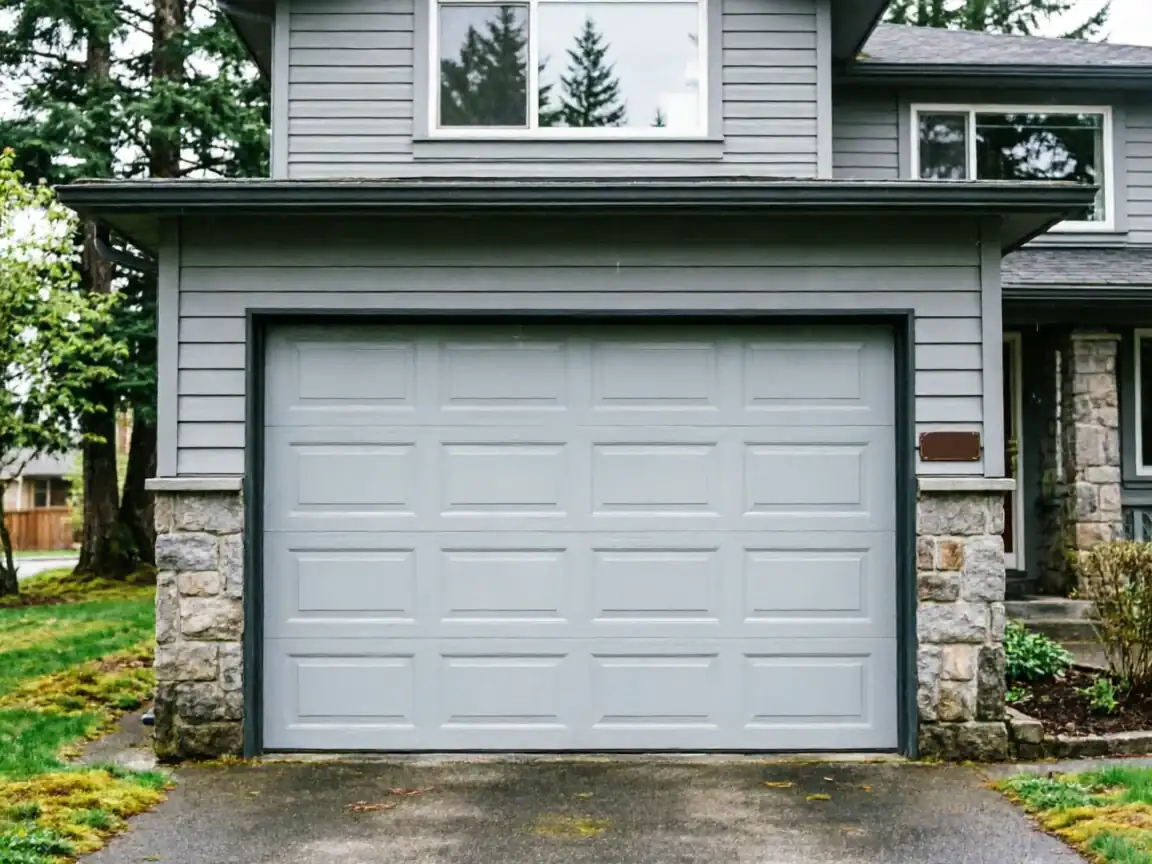
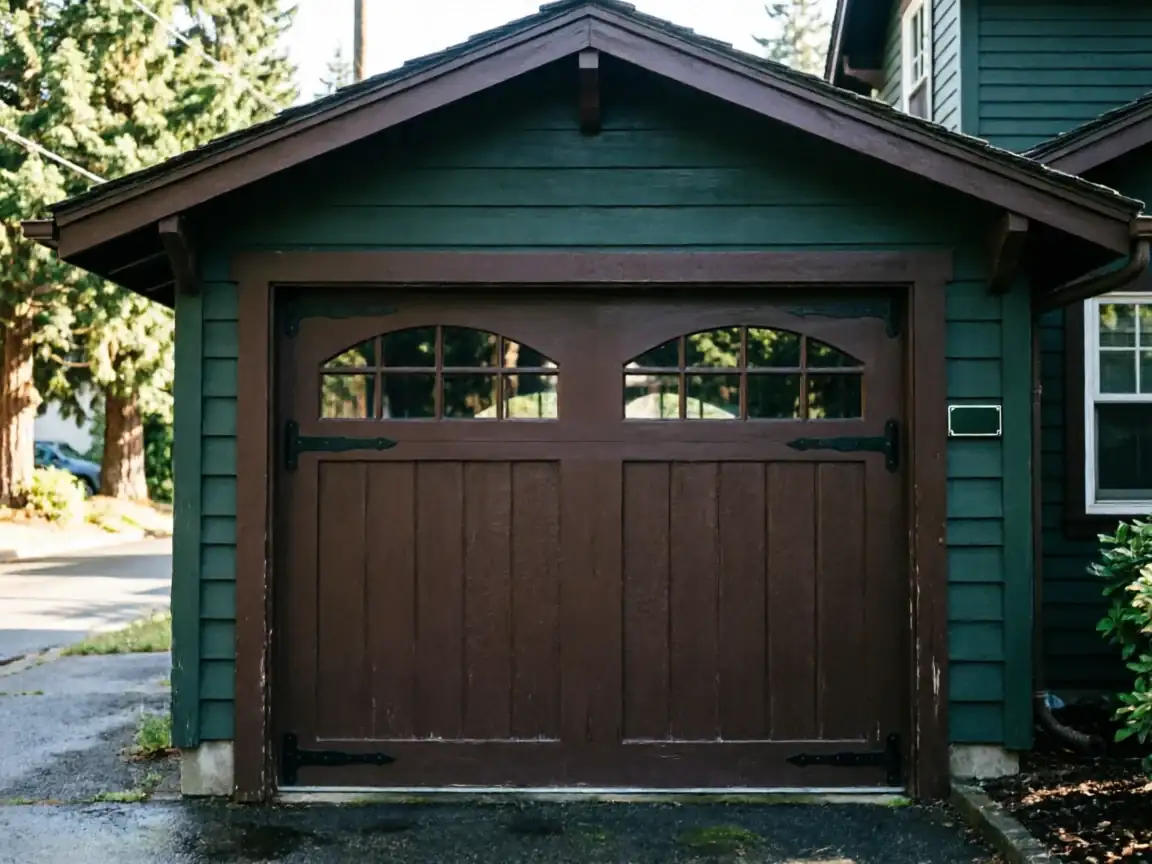
If your door is a flush steel panel without the raised-panel ribbing, that's a simpler match than the textured or carriage-style panels some Jennings Lodge houses picked up during a later remodel. We'll tell you straight when a section is a long-lead special order versus something we can turn around quickly, instead of guessing on-site and leaving you waiting.
The DIY Question
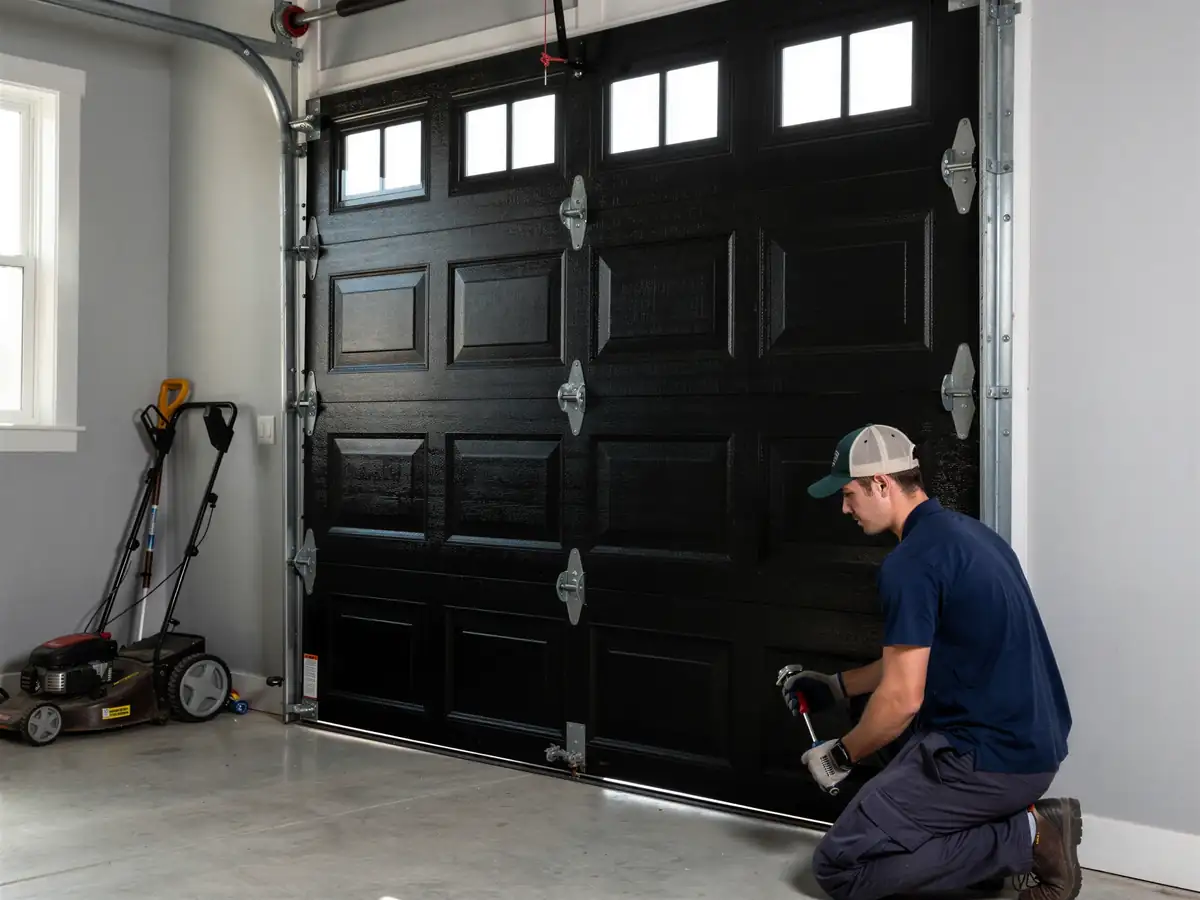
Swapping a single panel section sounds like a bolt-off, bolt-on job, and on paper it is. In practice, a door built around 1975 has forty-plus years of settled hardware around that panel - hinges seated at slightly different angles than spec, a track that's been nudged by a bumped car at some point, screw holes that have worn oval. Pull one section and put in a new one without accounting for that, and the door binds or won't seal at the bottom, which just turns into a second call.
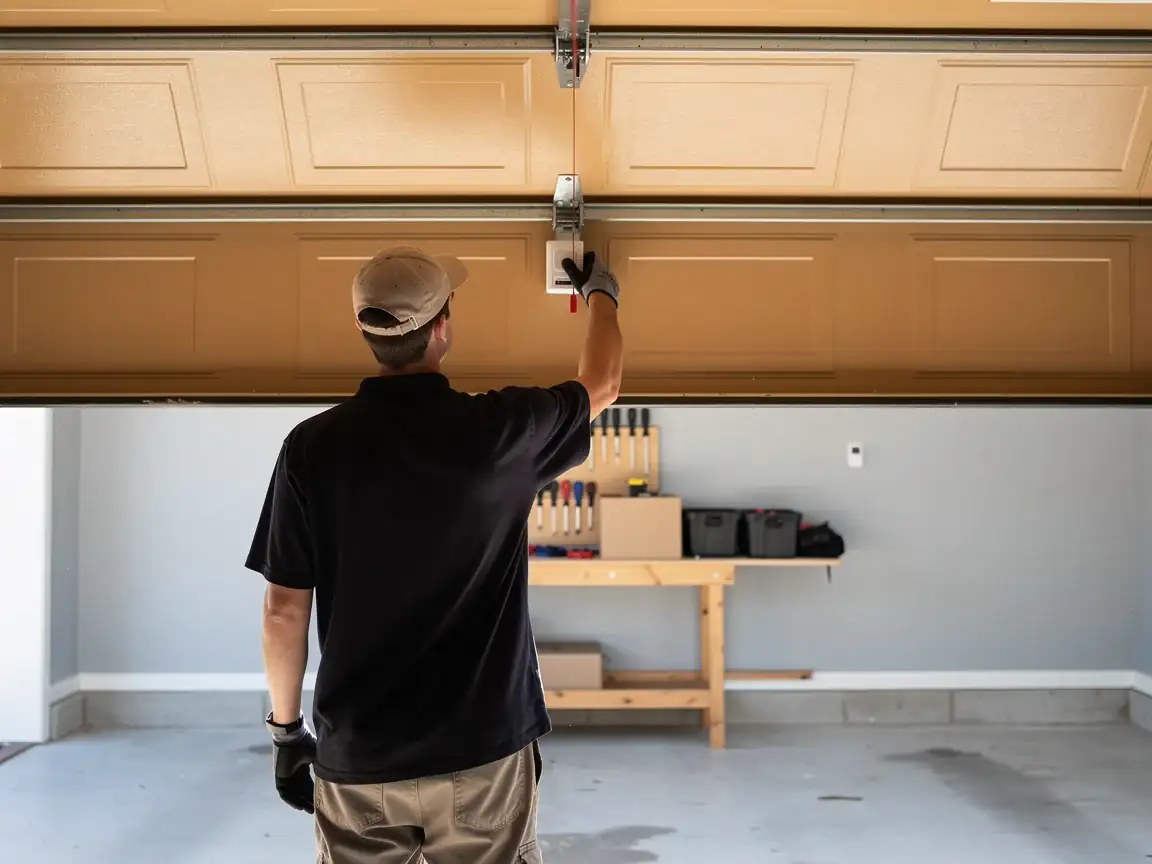
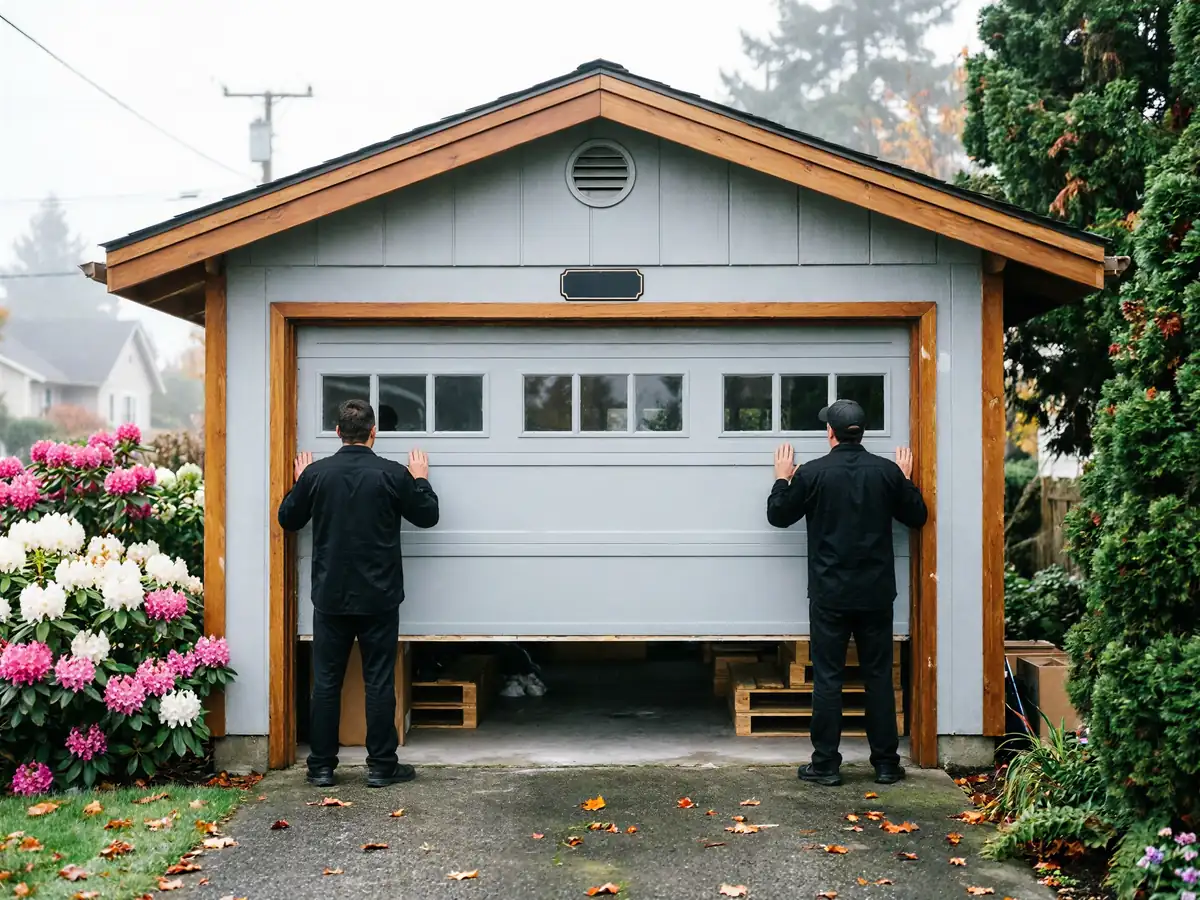
We'll say plainly: a top or bottom end panel, where you're not fighting the full weight of the door, is the one job in this category a handy homeowner can reasonably attempt alone, especially on a single-car door. A middle panel on a double-wide door, where the section is tied into cable and spring tension on both sides, is not a solo job - the honest move there is to call rather than risk a panel pinch or a dropped door.
The Cost of This Job
Median household income in Jennings Lodge runs $67,164
Noticeably below the $102,201 median across the wider Oregon City service area. That gap is worth saying out loud, because it changes which panel grade we lead with. We're not going to walk in and quote a premium insulated composite panel as the only option when a standard steel section does the job for most of these mid-1970s doors.
We don't have a flat number to quote here
Panel cost swings with whether your section is a common profile or a special order, and whether hardware needs replacing alongside it. What we can tell you up front is that if more than two sections are damaged, or the door has already racked out of square, replacing the whole door usually costs less in the long run than chasing one special-order panel after another on a door that's going to need the next section fixed in a year anyway.
What the Repair Takes
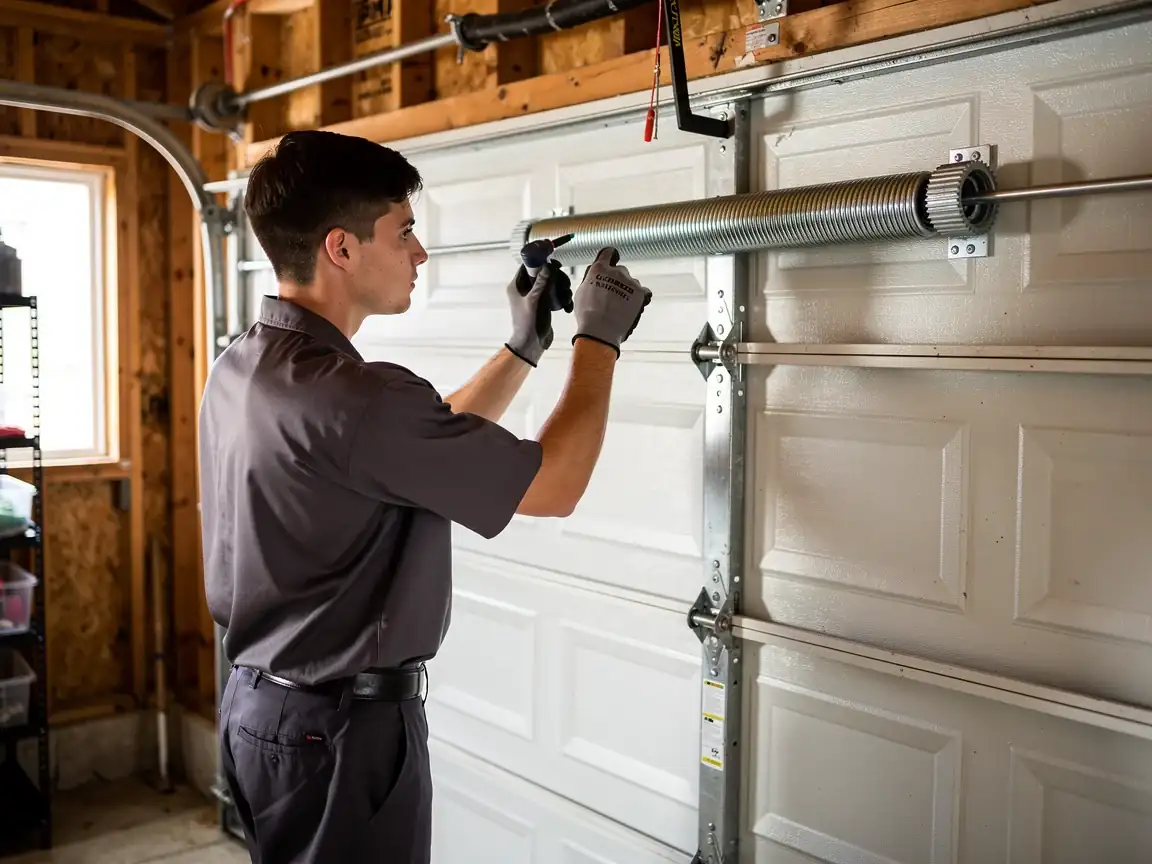
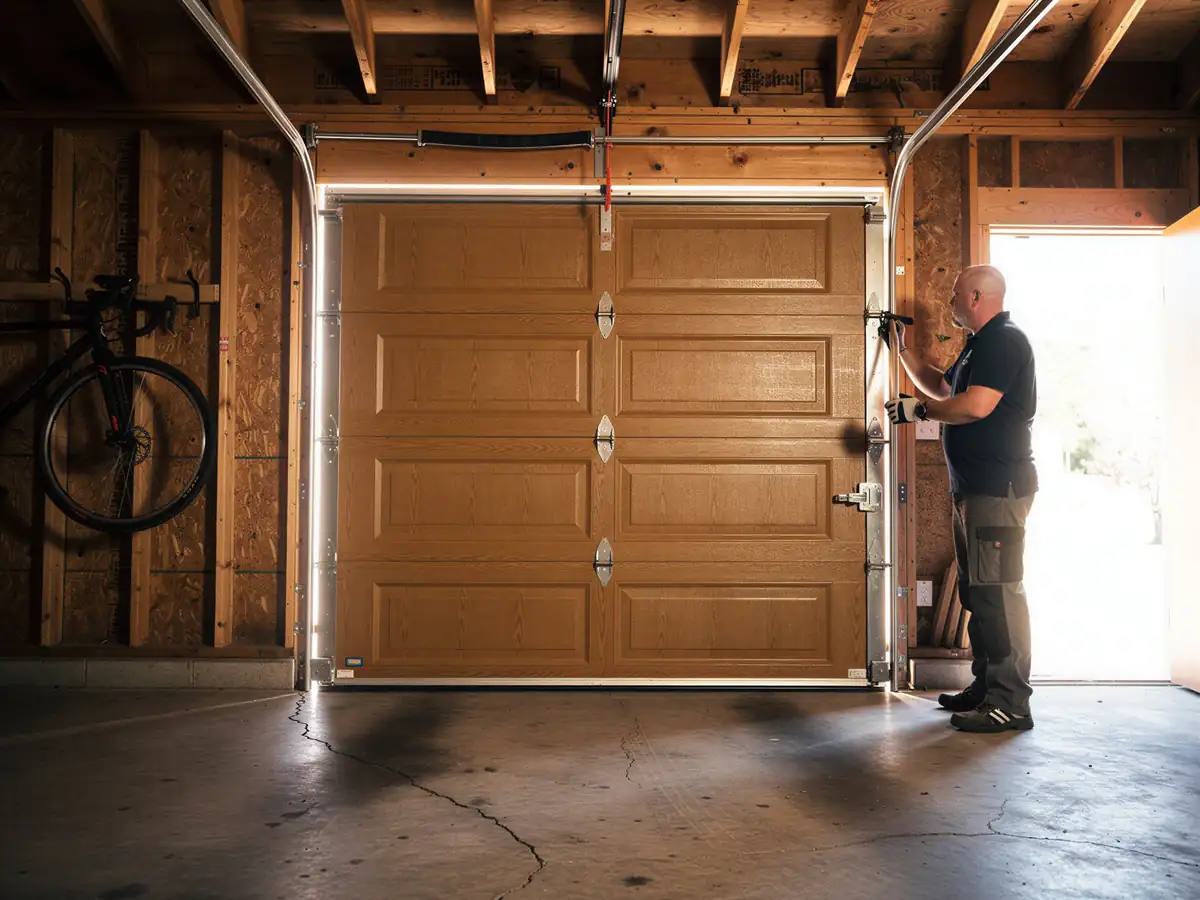
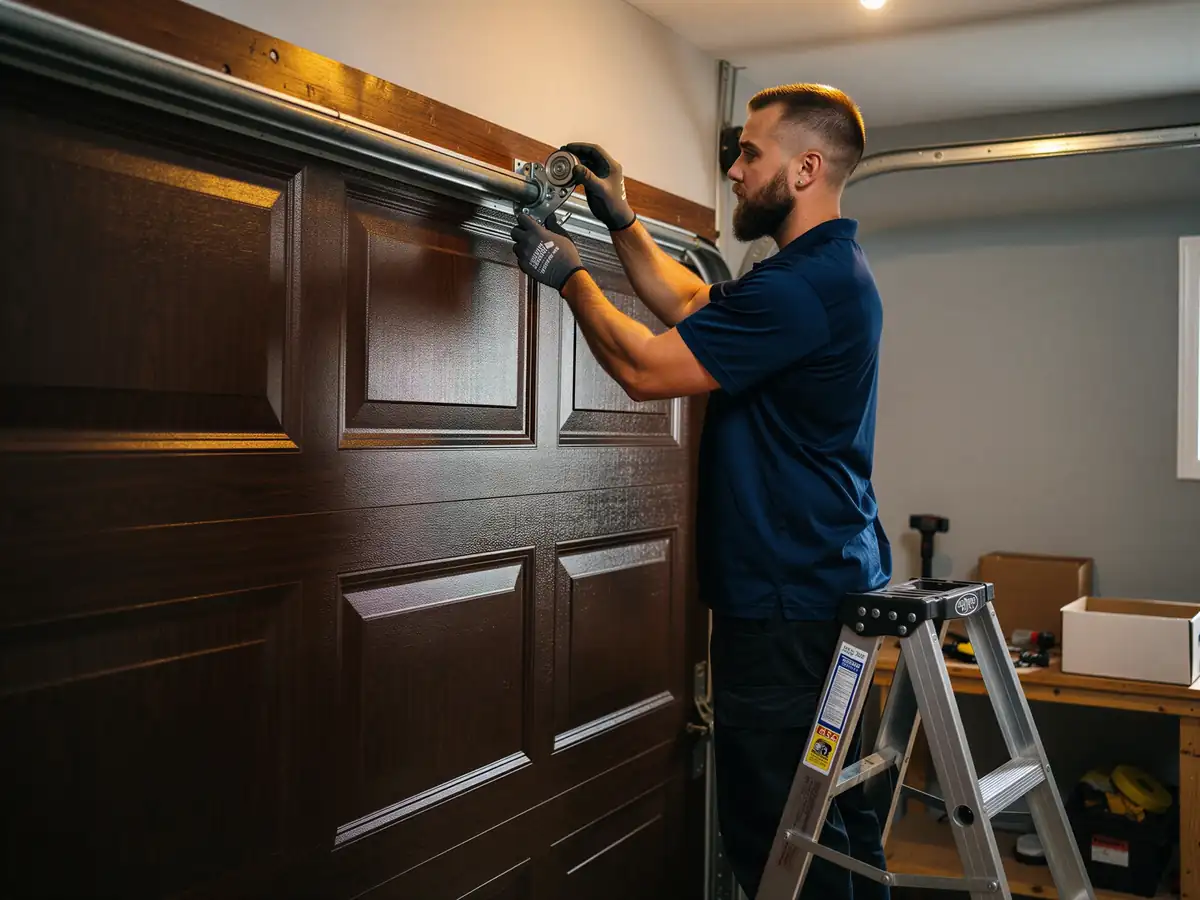
We run this out of Oregon City, about 4 miles from Jennings Lodge - close enough that panel jobs don't turn into a half-day commitment on our end, but we're not based in Jennings Lodge itself and we don't claim a branch or a set response window here. A straightforward single-panel swap, once the part's in hand, is typically an hour or two of work: disconnect the door, pull the damaged section, transfer or replace hinges and rollers, reset the track alignment, and run the door through a full open-close cycle to check for binding.
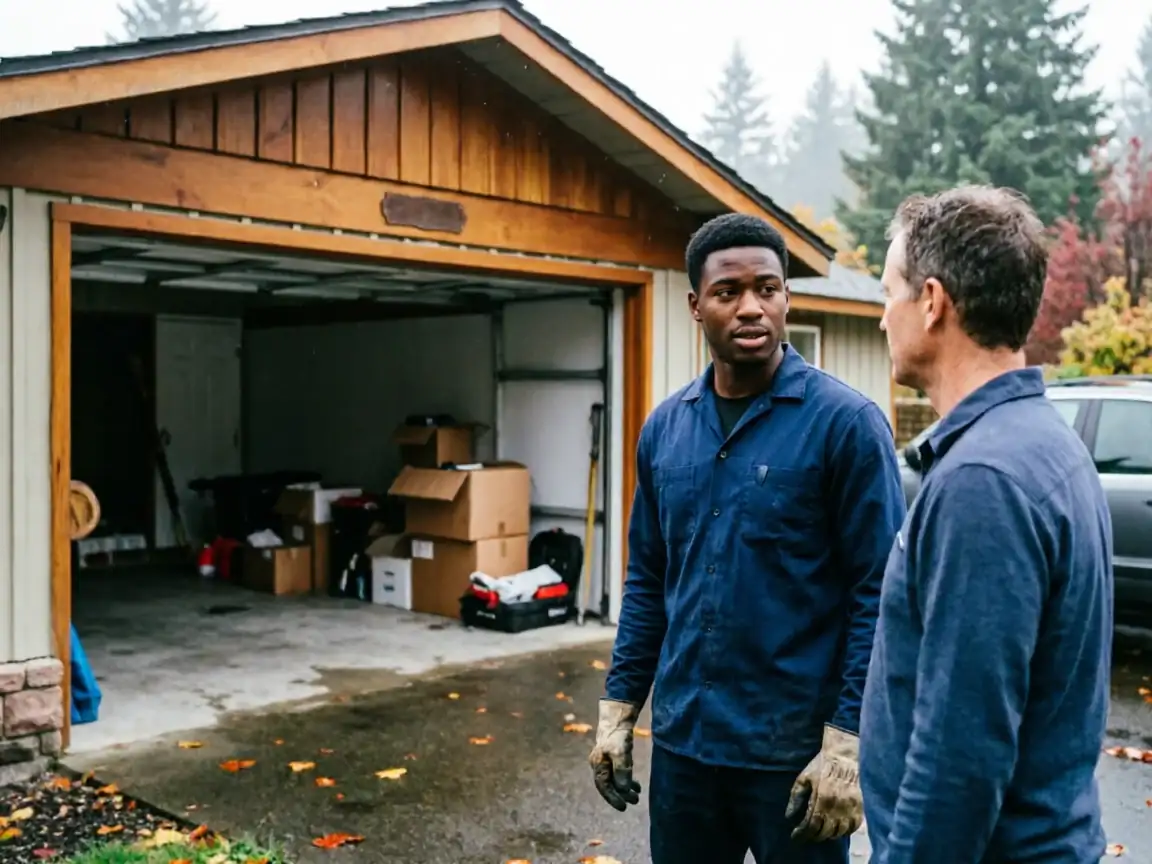
The part is almost always the long pole, not the labor. If your panel profile turns out to be discontinued, we'll walk you through the real choice between waiting on a special order and replacing the full door now. We'd rather tell you that on the first visit than have you wait weeks for a part that was never coming.