Getting It Booked In
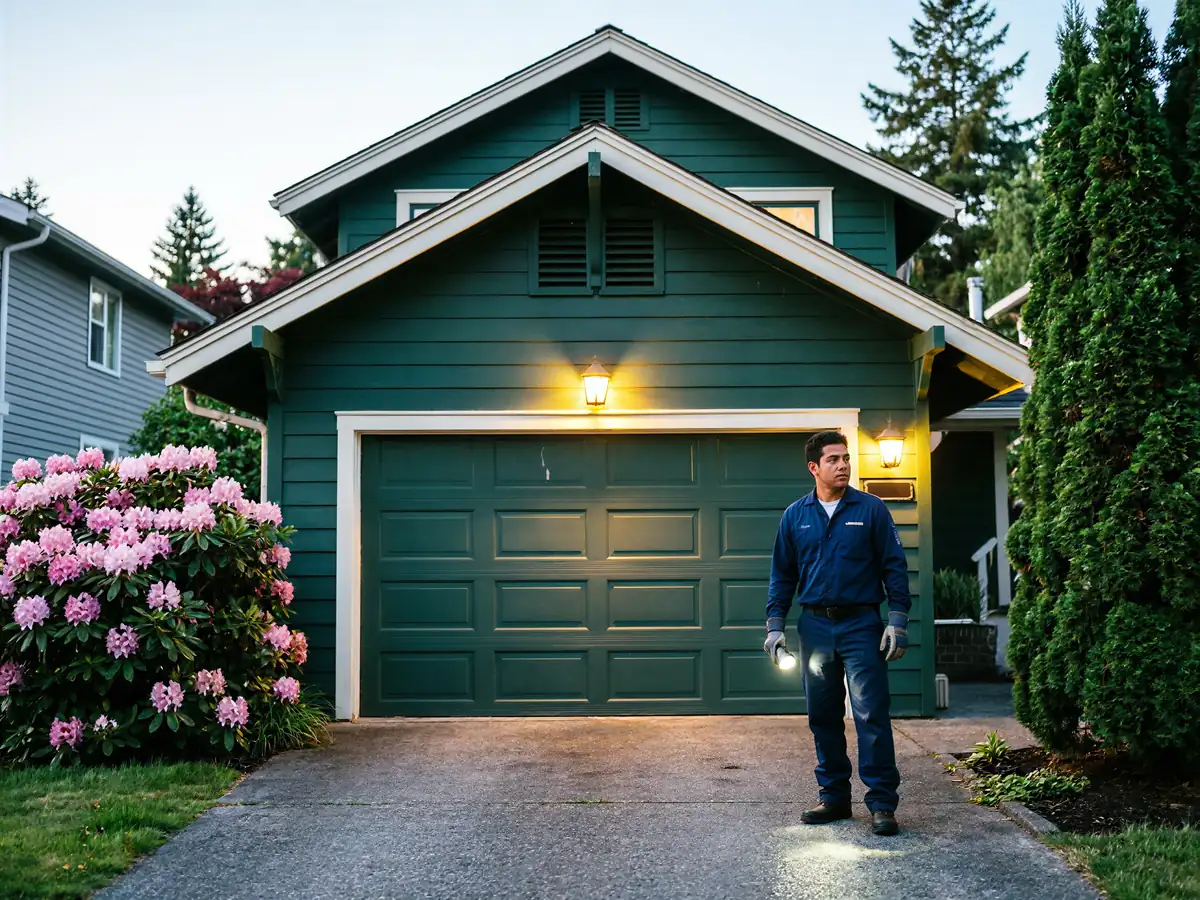
West Linn sits three miles from the Oregon City yard
Which is close enough that a measuring visit and the install itself can usually happen inside the same week rather than needing two separate trips scheduled days apart. That short drive matters more than it sounds like it should - on a job that covers suburbs as far out as Newberg (18 miles) or Woodburn (19 miles), three miles means less of the day gets eaten by travel and more of it goes to the actual work: pulling the old door, checking the opening, setting the new track.
Booking in is straightforward
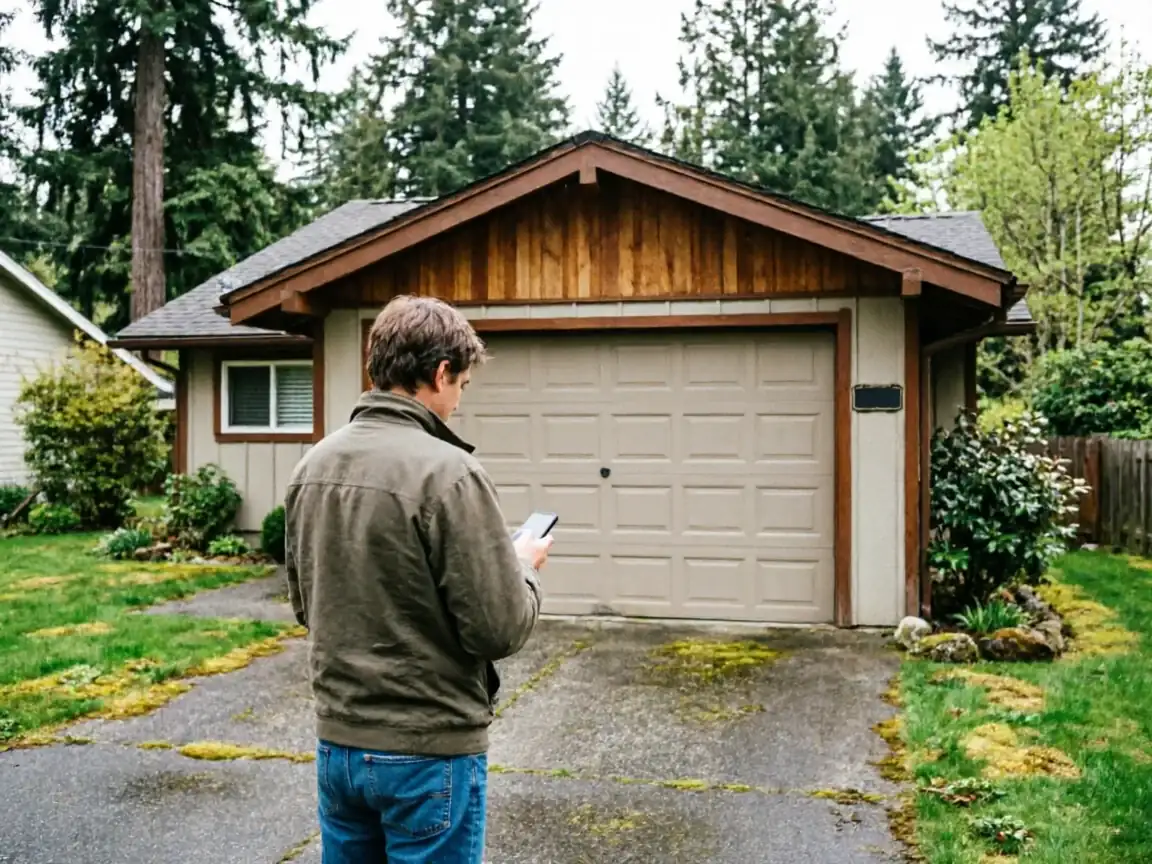
You'll want the width and height of your current opening handy, and if you know roughly when your house was built, mention it - homes in West Linn cluster around 1988, which tells us a fair bit about what we'll find behind the old panel before we ever pull up.
One limitation worth saying plainly
If you need same-day install on a door style that has to be special-ordered, that's not something we can promise. Stock doors move fast. Custom widths, unusual colors, or carriage-style hardware take longer to arrive, and we won't pretend otherwise just to get the job booked.
The DIY Question
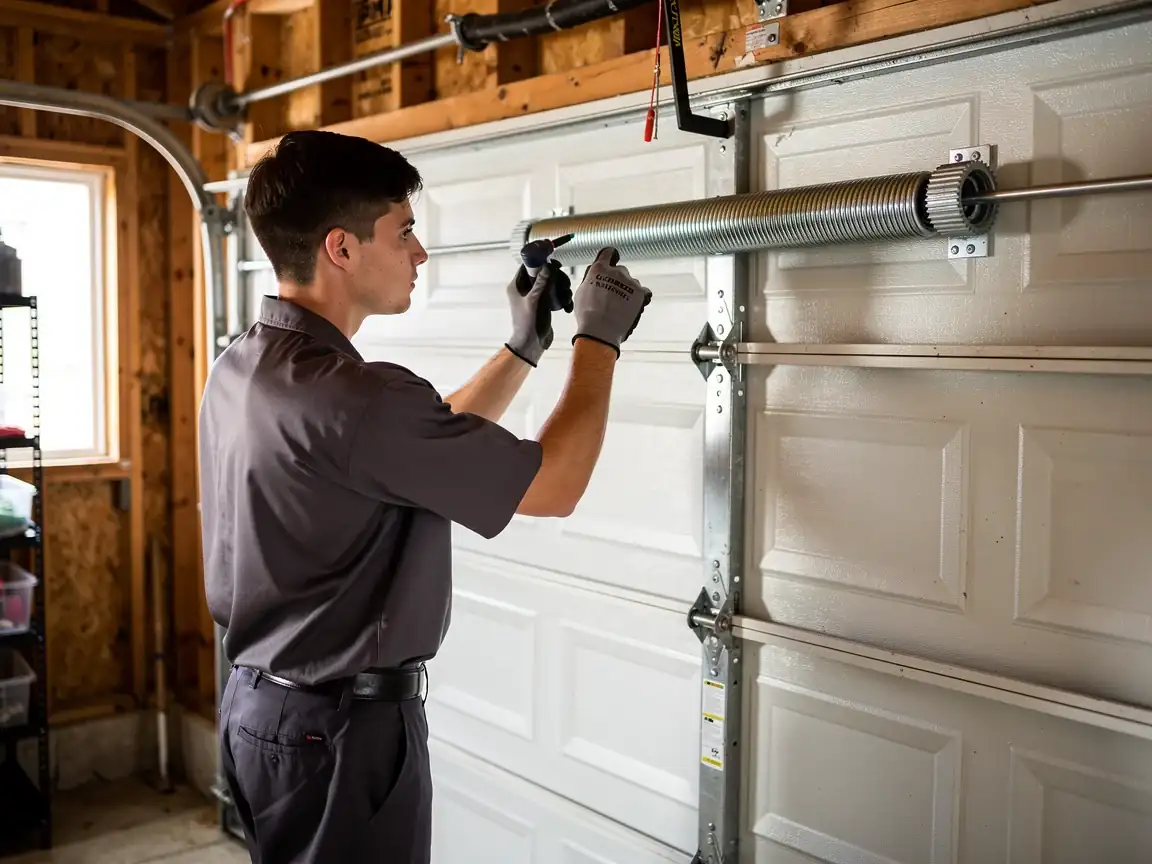
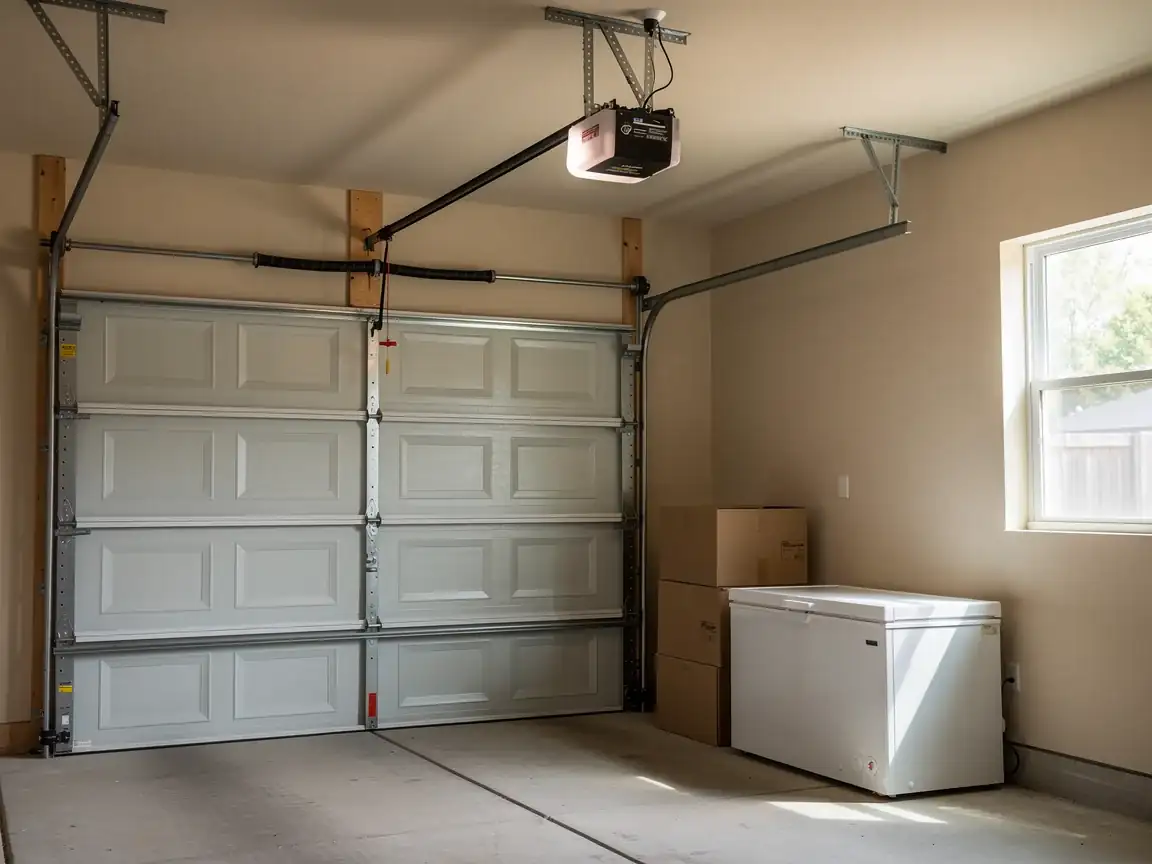
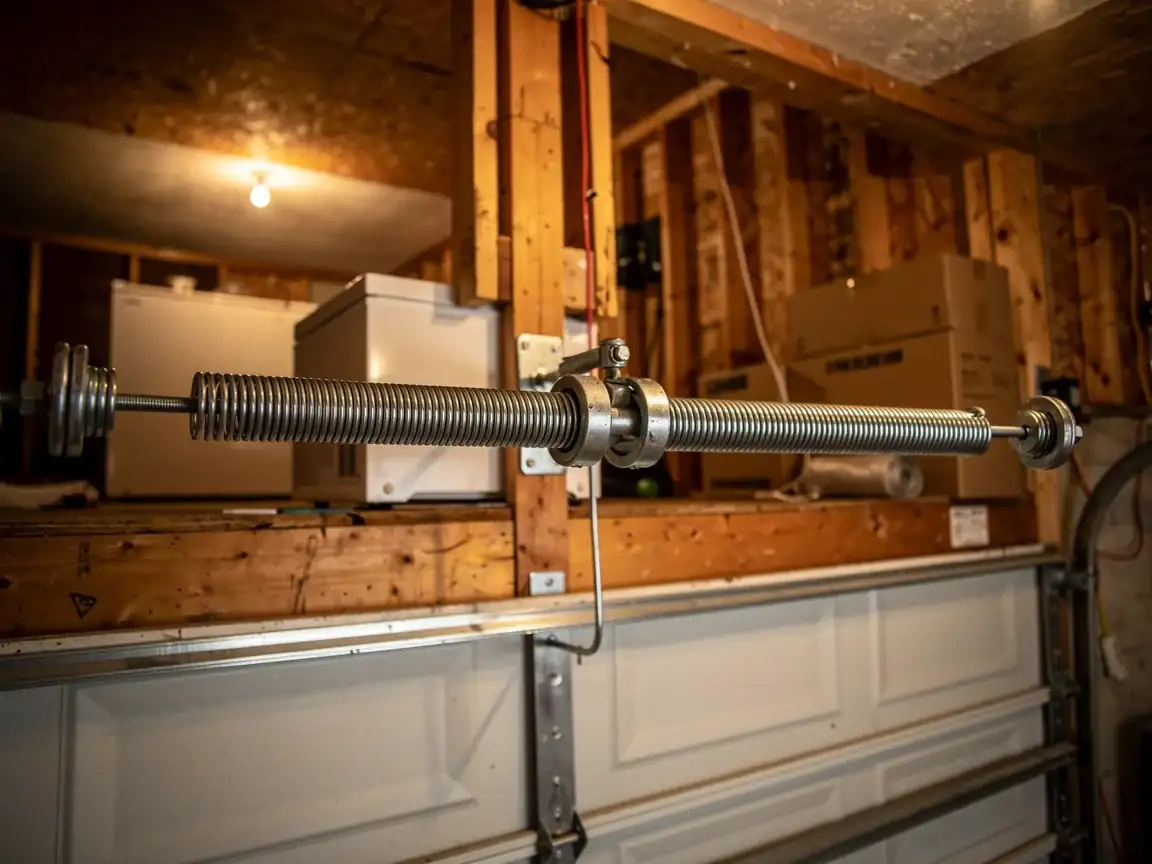
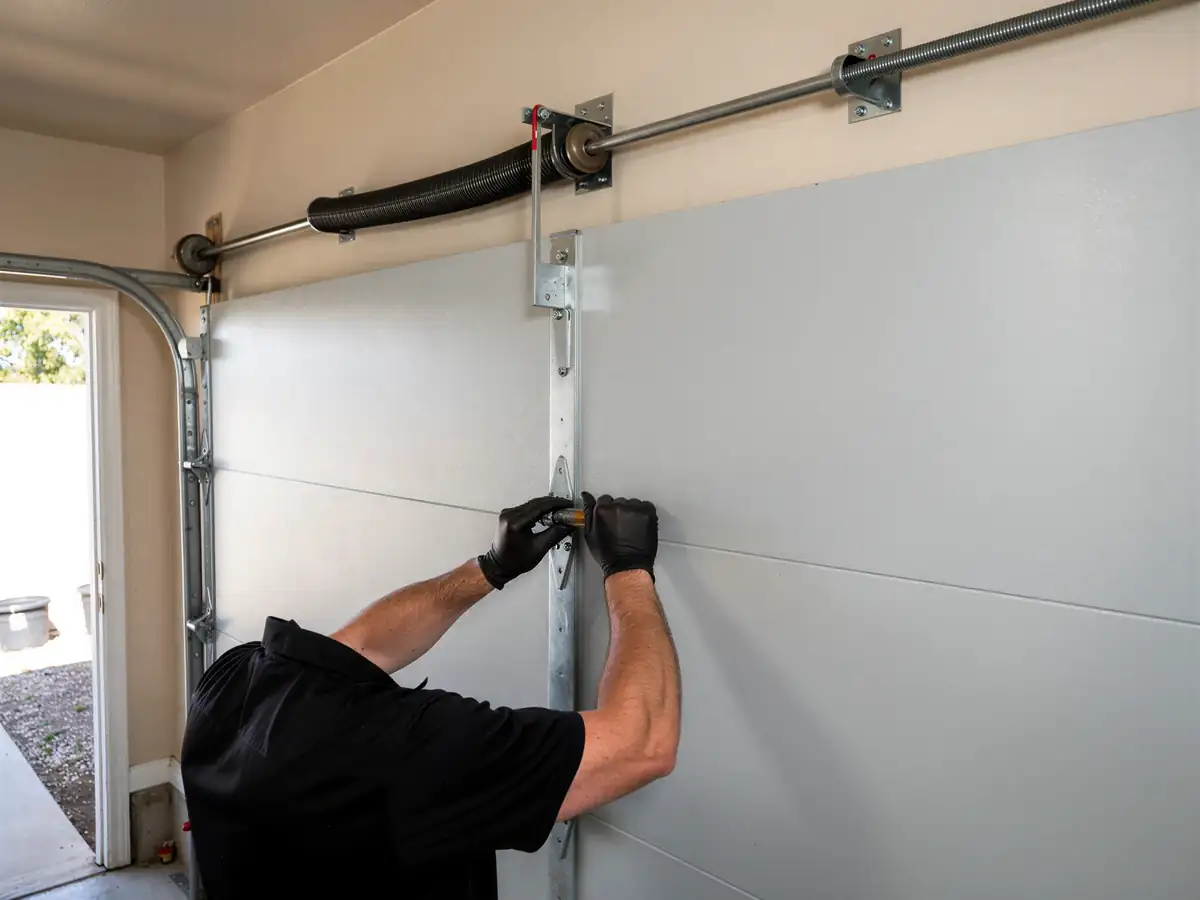
A lot of homeowners look at a new garage door install and figure it's a weekend project - lift out the old one, bolt in the new one, done. The door panels themselves aren't the hard part. The torsion spring system, the cable drums, and getting a double-wide door balanced so it doesn't rack the opener are where DIY installs go wrong, and they go wrong in ways that can put someone in the hospital, not just void a warranty.
If your house is part of West Linn's typical 1988-era stock, there's a decent chance the existing jamb and header were built around a door spec that doesn't match what's sold today. Swapping in a modern door sometimes means shimming the frame or adjusting the track mount, and that's a judgment call made on site, not from a set of printed instructions.
What you can reasonably do yourself: clear the garage, remove shelving or stored items near the opening, and take photos of your current setup before we arrive so we can quote more accurately over the phone. What you shouldn't do yourself: touch the spring, disconnect the opener rail, or try to free-lift a double door off its track. That's not a sales pitch - it's where the injury reports actually come from.
The Complications
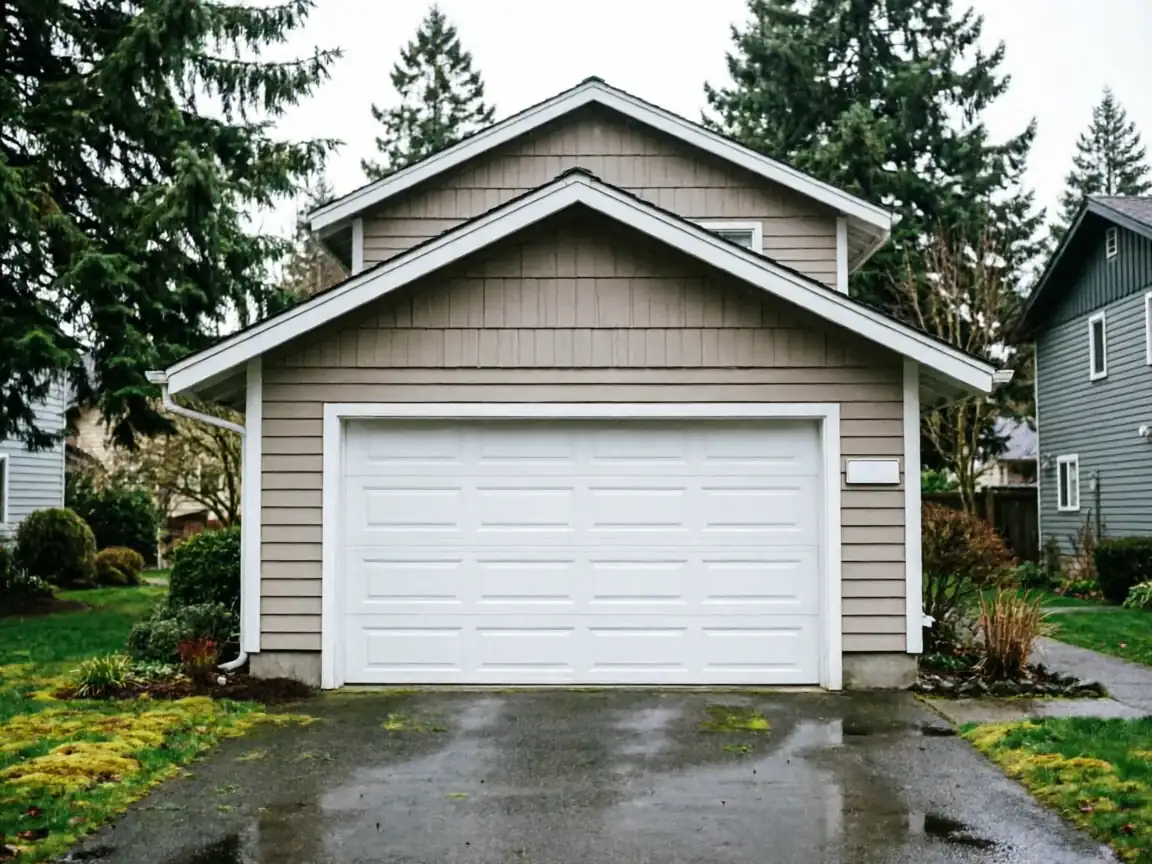
Across the wider service area, the housing stock runs from 1964 to 2003 with a median around 1982. West Linn skews a bit newer than that average, with most homes going up closer to 1988, so the openings we run into here tend to be the 7-foot and 8-foot variety rather than the shorter clearances you'd find on an older 1960s build elsewhere in the area.
The other local number that changes the conversation is income. West Linn's median household income runs around $138,526, well above the roughly $102,201 median across the rest of the service area. In practice, that means more requests here for insulated steel or composite doors with a higher R-value, and fewer requests for the bare-bones non-insulated panel that's still the default swap in older, lower-cost housing stock closer to the 1964 end of the range.
The climate band here is cold and moderate, which is reason enough on its own to care about the thermal break in a new door, but it's the combination of newer framing and higher spend-per-job that tends to steer West Linn installs toward the mid-to-upper end of the product line rather than the cheapest option on the shelf.
How Long You Are Without the Door
For a straight swap
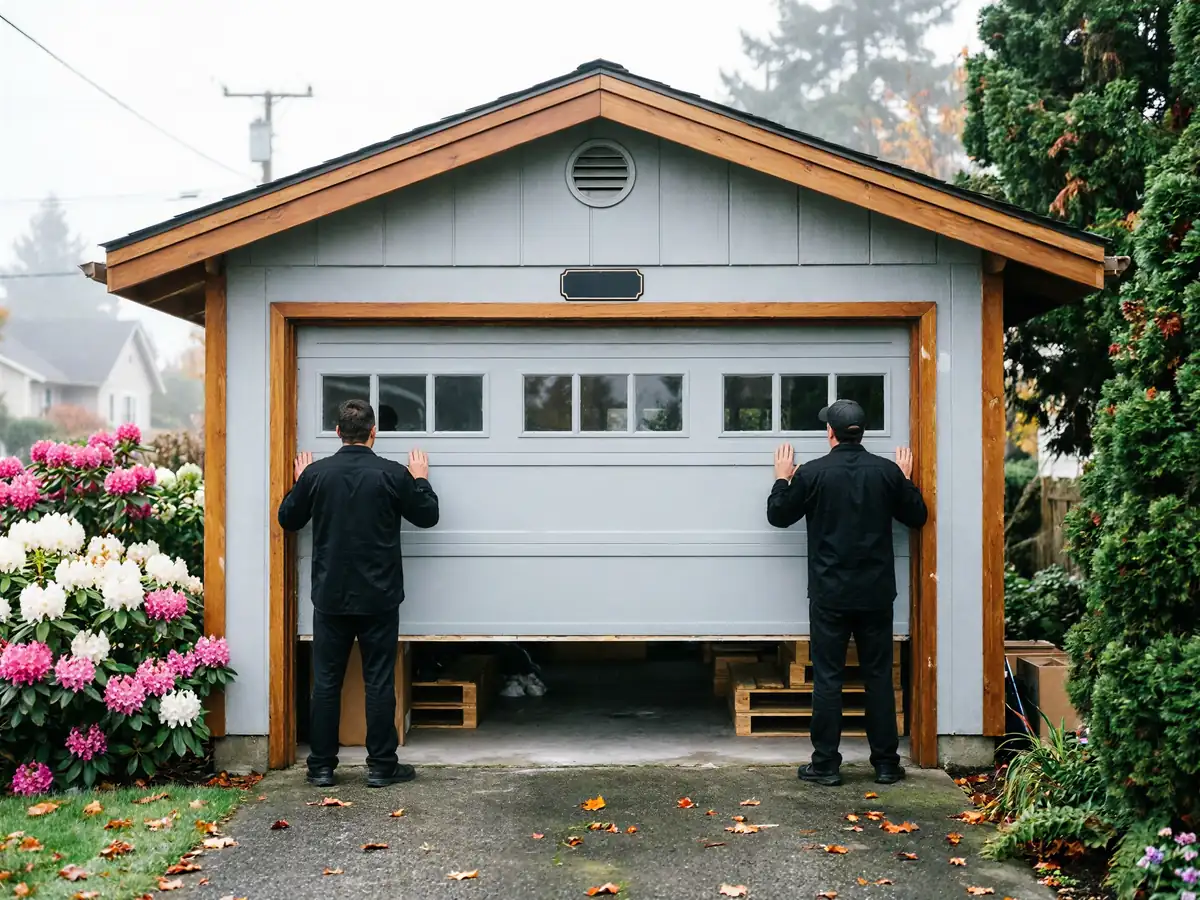
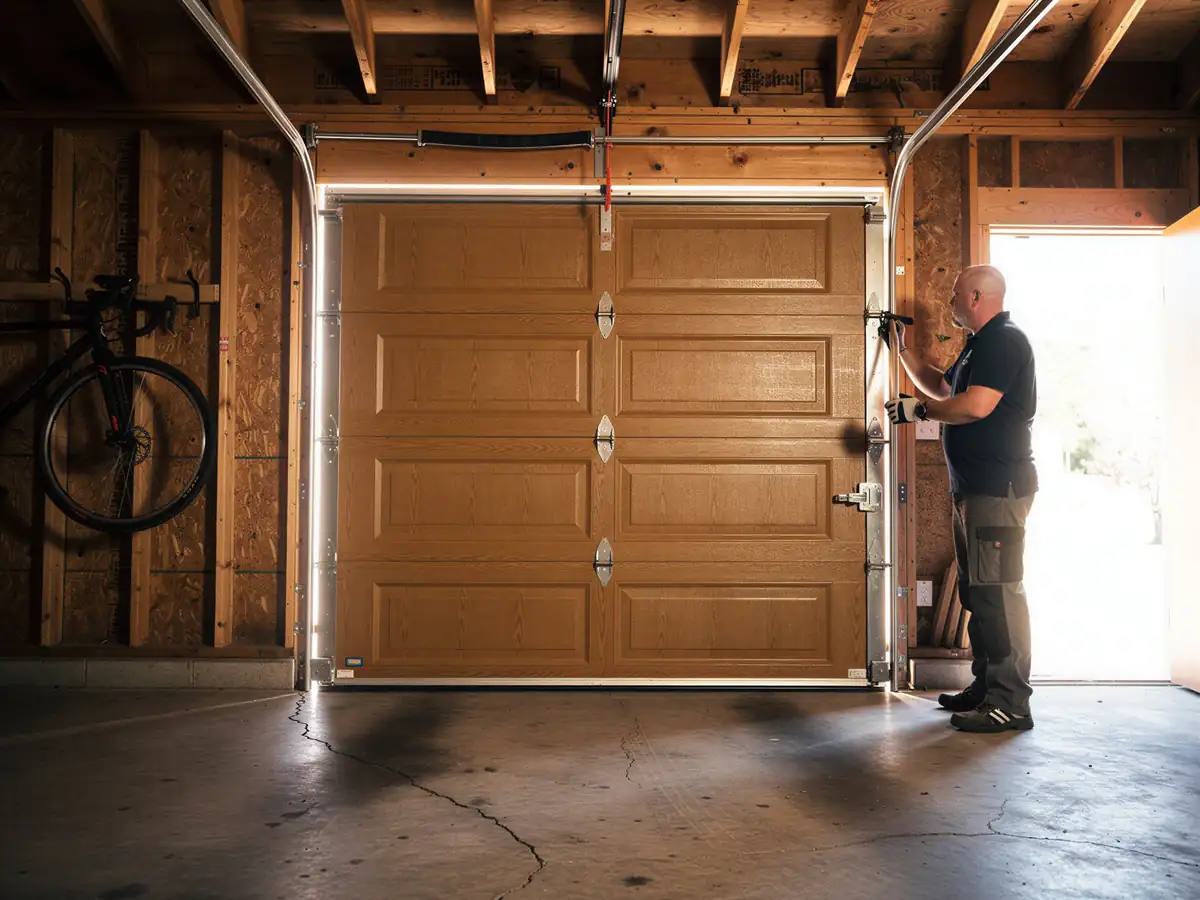
Same opening size, new door, same opener reused - the garage is open to the weather for the stretch between pulling the old panels and setting the new track, which is typically a single work session rather than an overnight gap. We don't leave an opening uncovered at the end of a day if we can help it.
Where the timeline stretches is ordering
If the door you want isn't a standard stock size or color, it has to come from the manufacturer, and that lead time sits outside our control - we'll tell you the estimate as soon as we have it rather than guess. Once the door itself is on site, the physical install, including hanging a new opener if you're replacing that too, is a same-day job.
We can't promise a specific number of hours or a guaranteed same-week install for every order
Because that depends on what's in stock when you call. What we can tell you is that the gap between old door out and new door in, on install day itself, isn't an overnight wait.
The Symptom
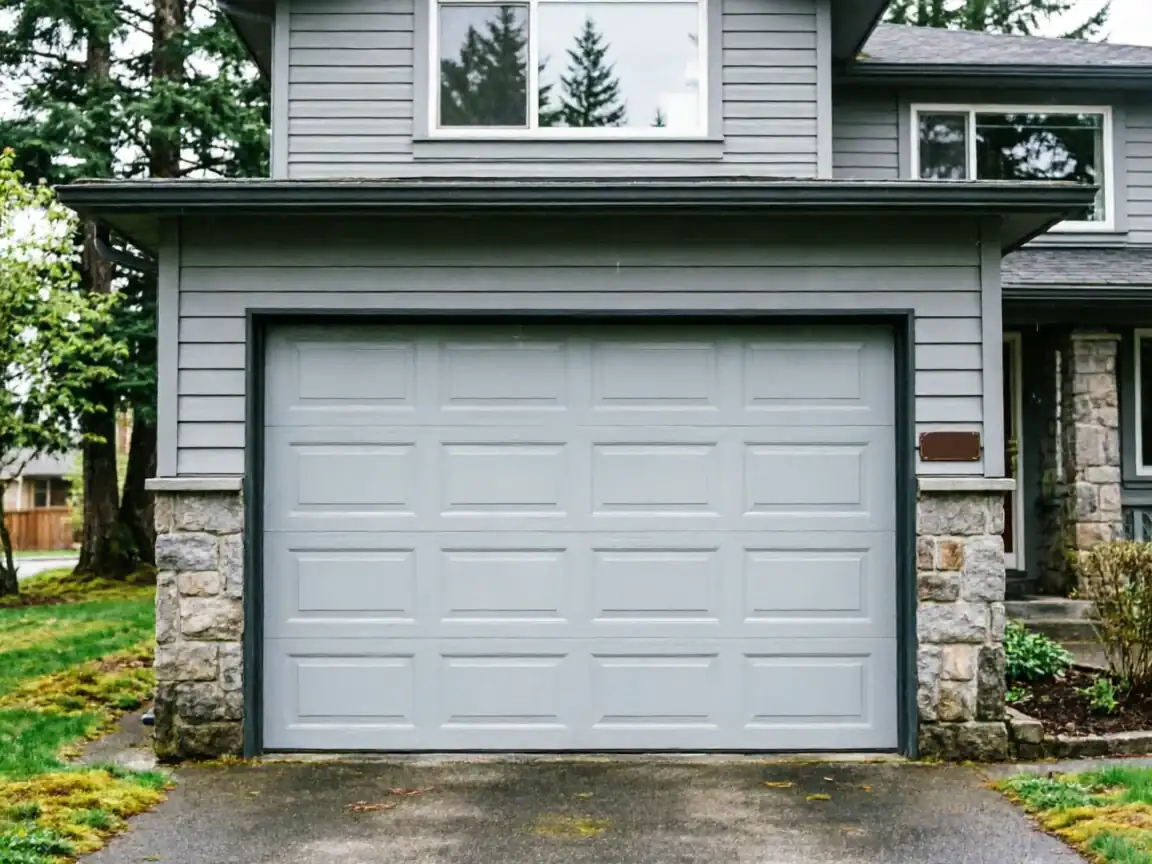
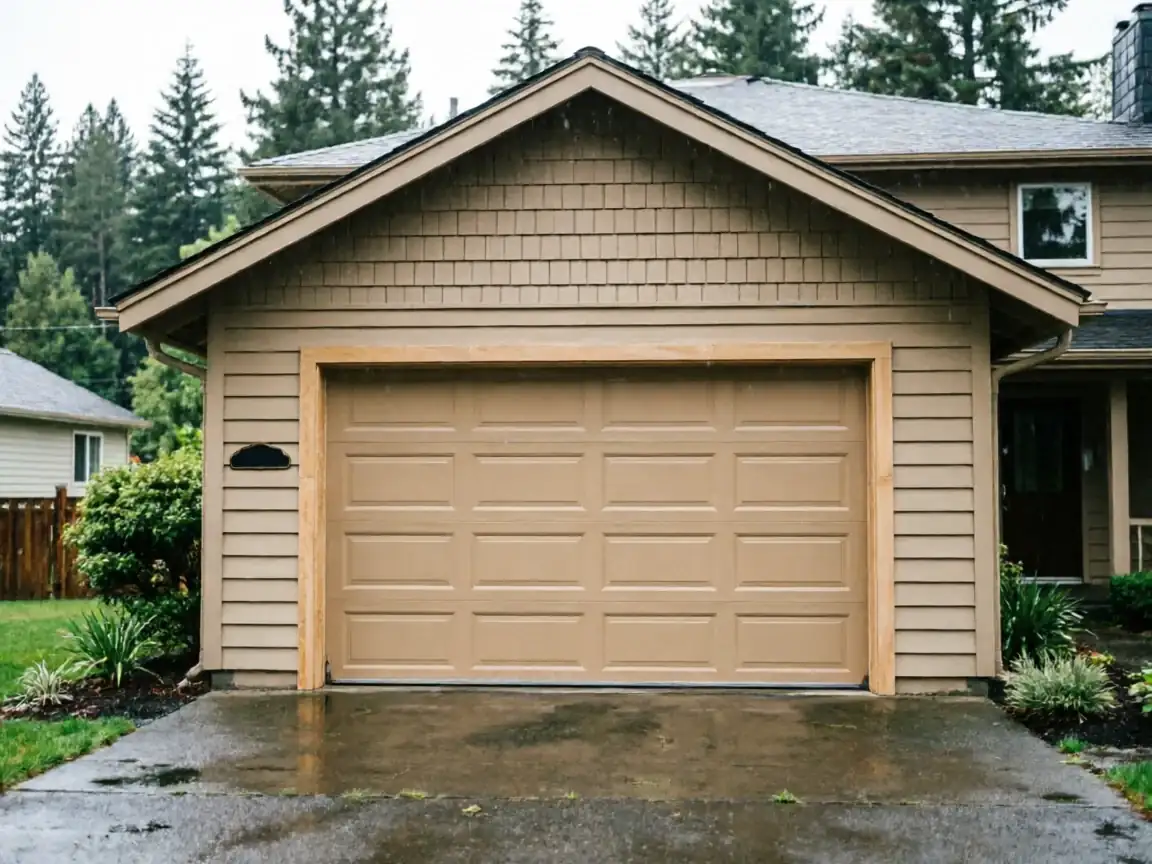
The doors we're replacing in West Linn aren't usually broken outright - they're sagging. A panel that's been in place since the late 1980s has had three decades of expansion and contraction through cold, damp winters, and steel that old often shows it at the bottom corner first: a visible dip, a seal that no longer sits flush, daylight at the edges.
That's different from an active breakdown, like a snapped spring or a cable off the drum, which is a repair call, not a replacement conversation. The replacement conversation starts when the door still runs but costs you more in heat loss and rattling hardware than it would cost to put in a new one. Given West Linn's household income sitting well above the area median, we see more owners make that call earlier rather than waiting for the door to fail outright.
If your door is original to a house built around 1988, it's reasonable to ask whether it's worth fixing at all before you spend money on a repair. Sometimes it is - a worn roller or a bent track bracket on an otherwise sound door is a cheap fix. A door that's out of square at the bottom corner on both sides usually isn't.
What the Repair Takes
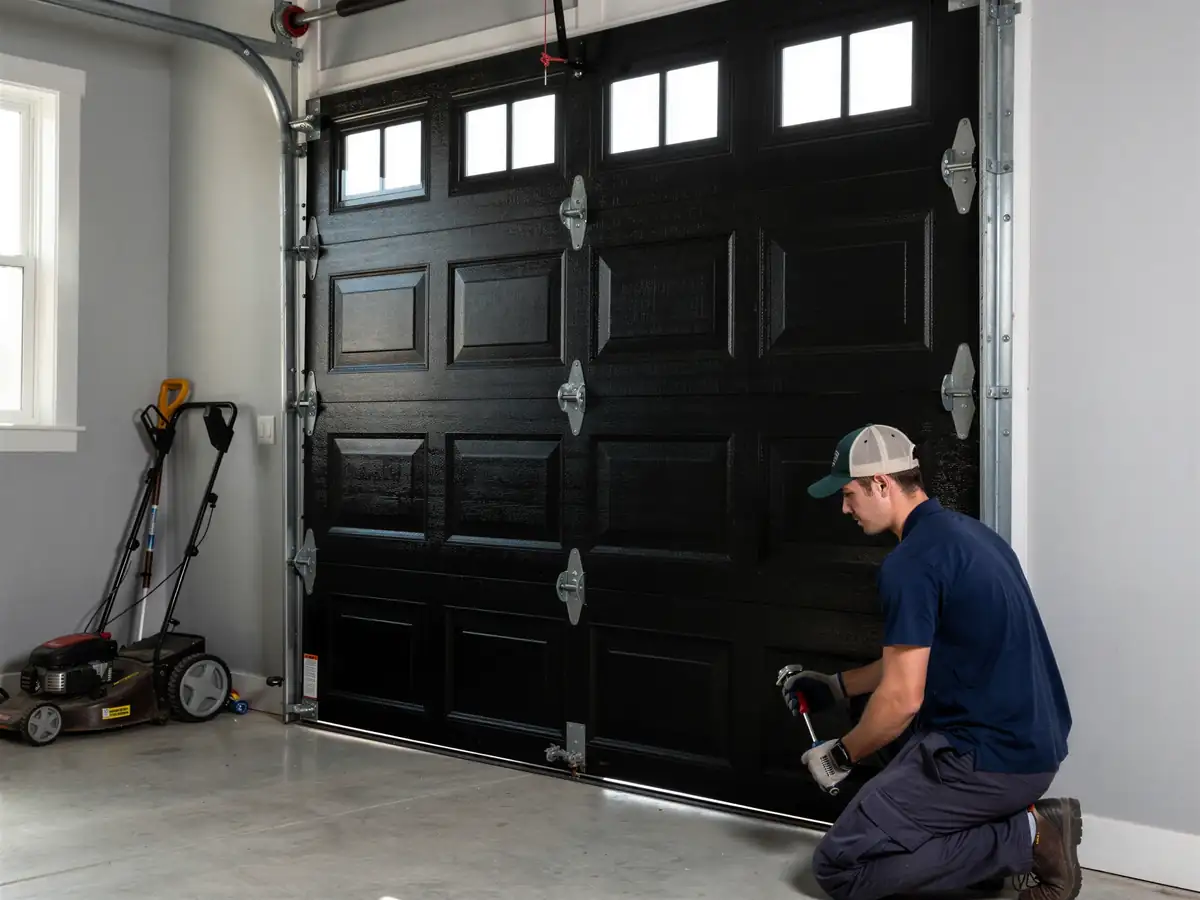
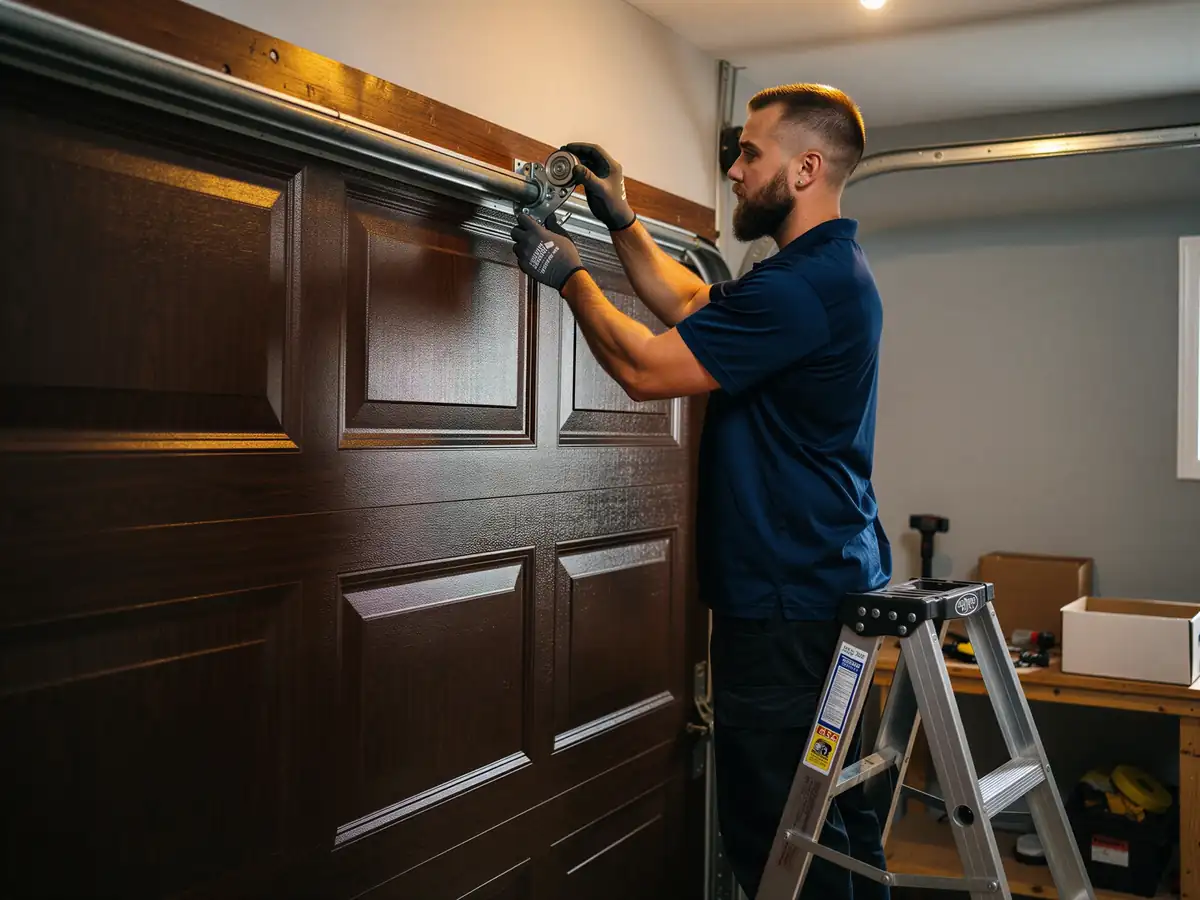
An install job breaks down into a handful of steps, same as anywhere, but the order matters. First the old door comes off the track and the opener gets disconnected safely - this is the part where the spring tension has to be released correctly, not guessed at. Then we check the jamb and header for square, which on a 1988-built house is usually fine but still gets checked, since three and a half decades of settling can shift a frame a little even on newer construction.
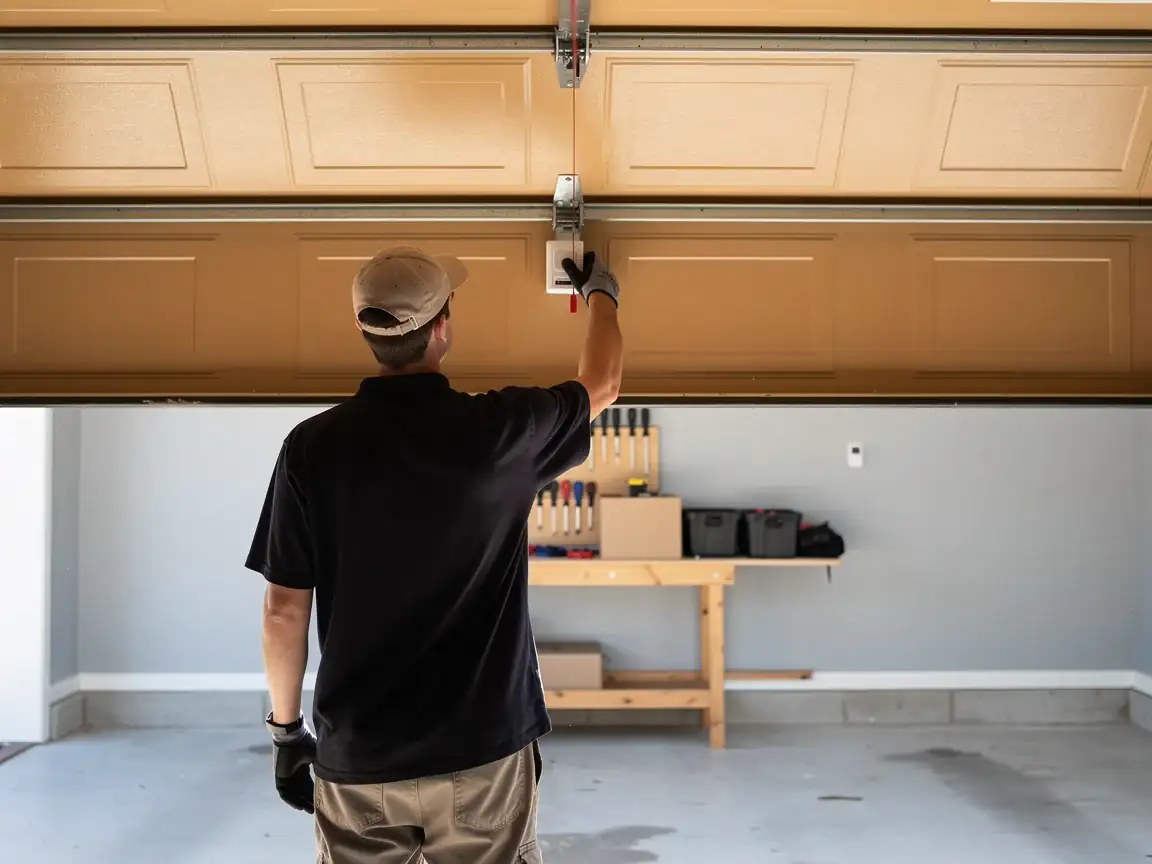
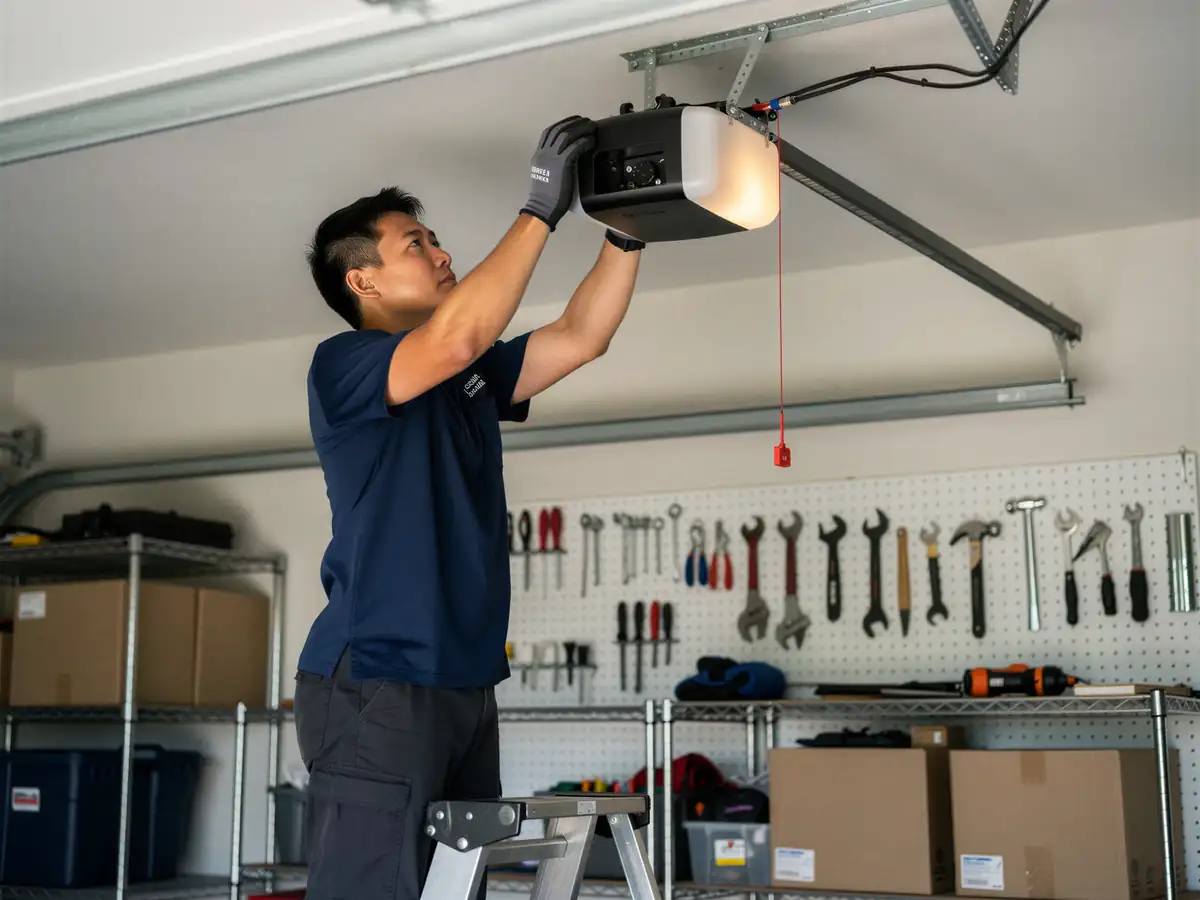
The new door gets hung section by section, the track aligned, and the springs set to the correct tension for that door's weight - a heavier insulated door needs different spring tension than the thinner uninsulated panel it's replacing, which is one more reason this isn't a swap you want to eyeball. Last comes the opener: either reconnecting the existing unit or mounting a new one, then testing the balance by hand before the motor ever takes the weight.
We test the auto-reverse safety feature before we leave, every time, no exceptions. That's not optional and it's not extra.